Iran war may linger into May due to Israeli strike, analysts warn

Add Axios as your preferred source to
see more of our stories on Google.
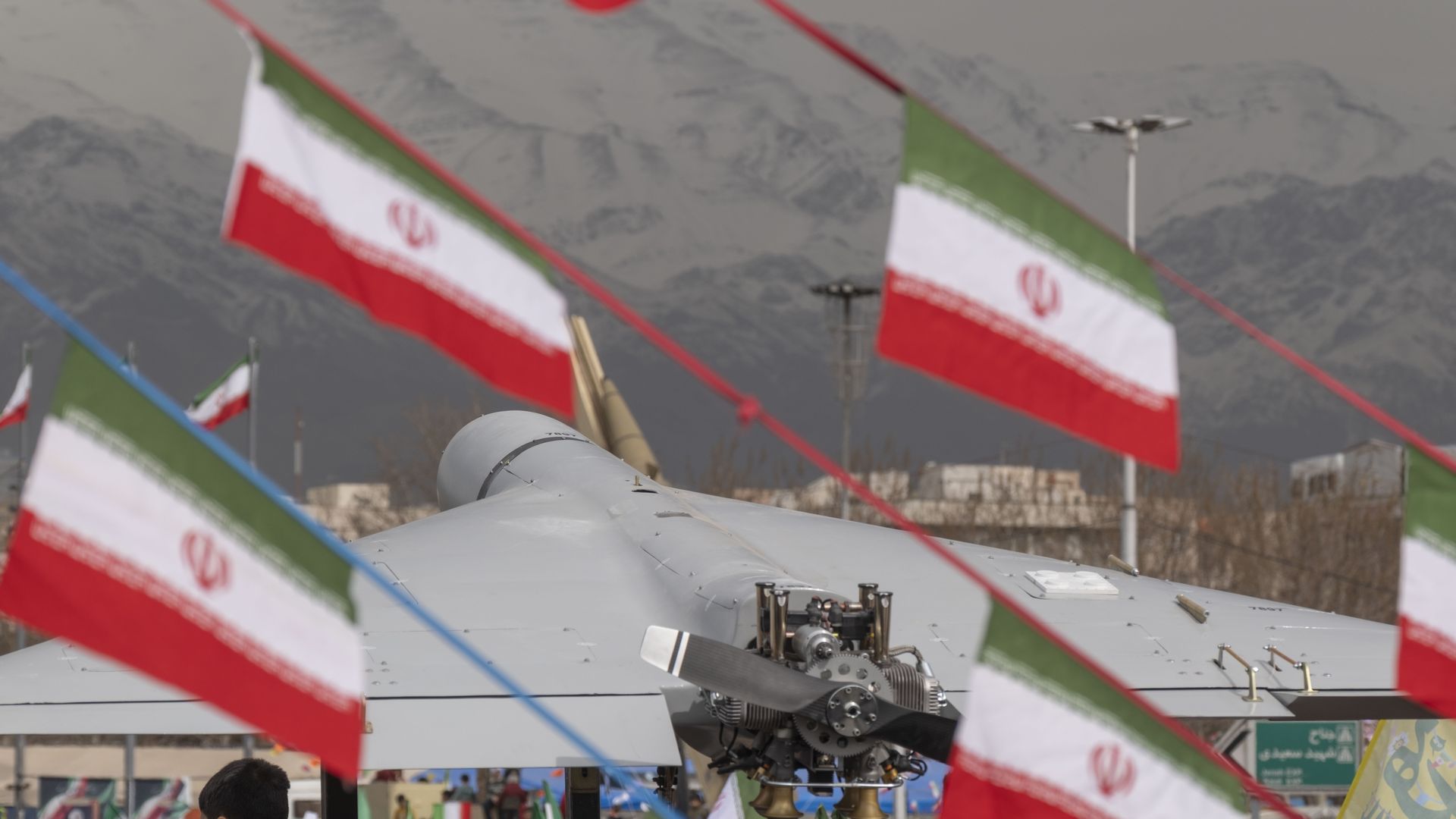
An Iran-made unmanned aerial vehicle (UAV), the Shahed-136, is displayed in Tehran in February. Photo: Morteza Nikoubazl/NurPhoto via Getty Images
The Israeli military strike on Tehran's South Pars gas field facilities means the Iran war will likely extend into May, analysts said Wednesday.
The big picture: Oil prices jumped after Israeli forces' unprecedented strike on the gas field that Axios' Barak Ravid reported was conducted in coordination with and approved by the Trump administration. The global benchmark Brent crude was still hovering above $110 per barrel early Thursday.
- After Tehran responded by attacking critical energy infrastructure in the Gulf region, President Trump said on Truth Social late Wednesday that Israeli forces would not attack the "extremely important and valuable South Pars Field" again "unless Iran unwisely decides to attack a very innocent Qatar."
State of play: Tehran's strikes targeted infrastructure across the Persian Gulf — including what Penn Washington global policy program director Daniel Schneiderman tells Axios is "the Qatari crown jewel," Ras Laffan Industrial City, the "world's largest LNG export" facility.
- Tehran also struck energy facilities in Saudi Arabia and the UAE.
- The strikes sparked angry reactions from the targeted countries, with Saudi Arabia's foreign minister warning, "We reserve the right to take military actions if deemed necessary."
- Qatari officials contacted their U.S. officials, including White House envoy Steve Witkoff, after the first Iranian missile strike, per Ravid.
Meanwhile, Tehran is continuing its prolonged blockade of the Persian Gulf's narrow Strait of Hormuz, choking off a significant share of the world's crude oil supply.
Between the lines: "The decision to target South Pars and associated facilities reinforces our view that the war will most likely extend into May, with no immediate clear off-ramps in view," said Torbjorn Soltvedt, principal Middle East analyst at risk intelligence company Verisk Maplecroft, in a research note Wednesday.
- Schneiderman agreed with this assessment and told Axios in a Wednesday night phone interview that the only reason why oil prices were not higher was because the "U.S. and Israeli military operations have substantially degraded, particularly Iranian ballistic missile capabilities, but also their drone launches."
- Representatives for the White House and Defense Department did not immediately respond to Axios' Wednesday night request for comment.
Zoom in: Schneiderman, a former Defense Department official in the Biden administration, cautioned: "On the flip side, it's not hard to move around a Shahed launcher and make that hard to hit. I just think that the Israelis and the United States are going to be at the effort of trying to hit the individual launchers and stockpiles for a very long time."
- The same is true of some missiles that Iran's military might place on the back of a truck, per Schneiderman, who also served in the State Department. "It's just not that hard to be operationally flexible with mobile launches," he said.
- The Iranian military has a limited amount of these, and they're likely to be "among the top targets that the Americans and the Israelis have been trying to hit," according to Schneiderman.
- "It's harder for them to do this stuff than it was at the beginning of the war, but it's still possible for them to put the Strait of Hormuz under significant pressure," he said.
What we're watching: Noting Tehran's targeting of other facilities in the Middle East on Wednesday, Verisk Maplecroft's Soltvedt said the Israeli military's action against South Pars "could spark attacks against facilities that have so far not suffered damage."
- The "biggest concern" would be "the potential for attacks against Saudi Arabia's East-West pipeline or export facilities on the Red Sea, which, alongside Fujairah, offer the only significant alternative" to the Strait of Hormuz," Soltvedt said.
The bottom line: It's hard to predict an off-ramp, Schneiderman said.
- But "for the moment, the incentive for Iran is not to de-escalate."
Go deeper: Trump waives shipping law as gasoline prices soar
Axios' Ben Geman contributed reporting.
