Democrats face a post-Trump identity crisis for 2028


Add Axios as your preferred source to
see more of our stories on Google.
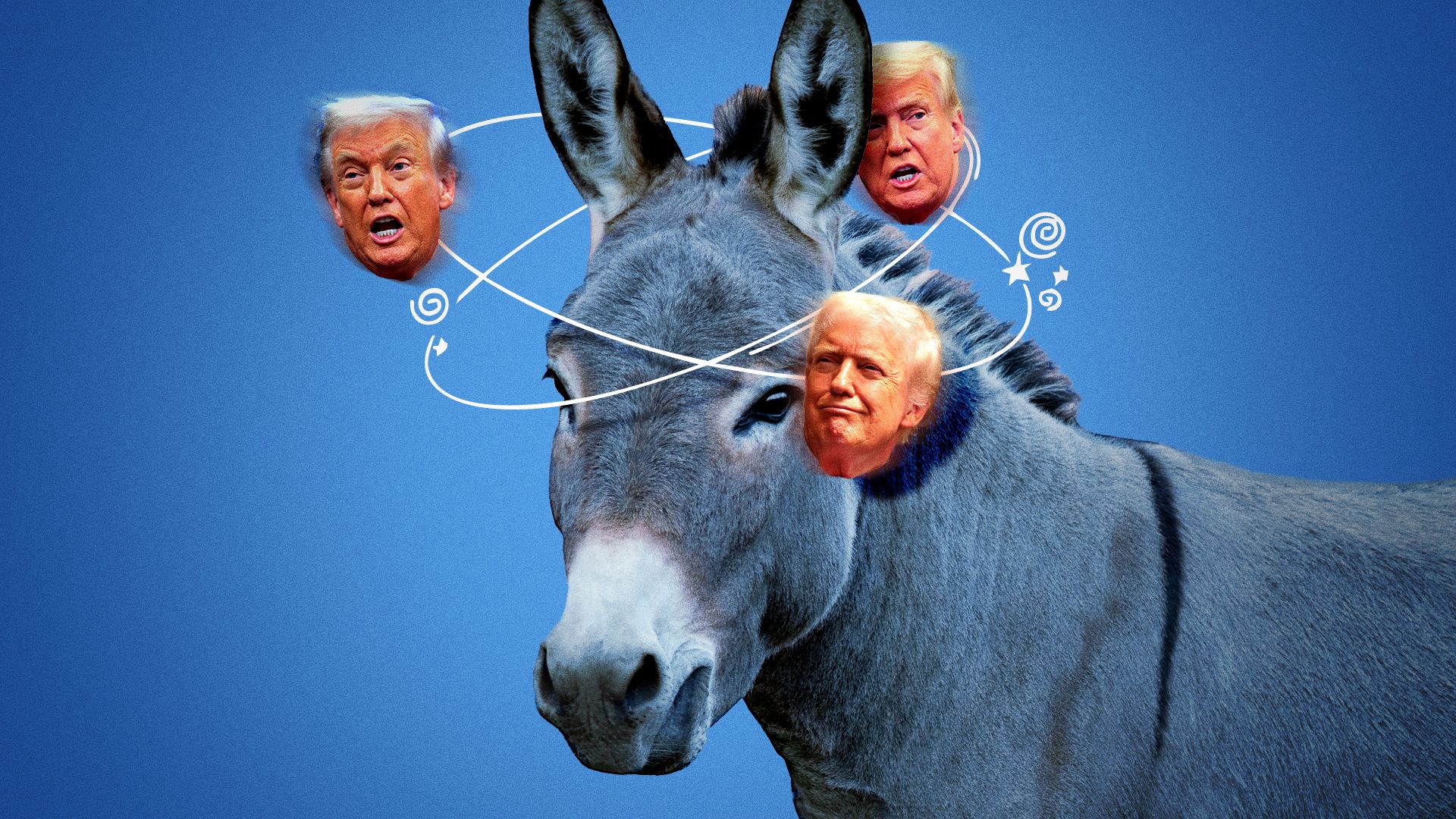
Photo illustration: Maura Kearns/Axios. Photos: Chip Somodevilla/Getty Images
Democrats are barreling toward an identity crisis: When Donald Trump is gone, they're not sure what they'll stand for.
- Top party strategists are warning they can't win back the White House in 2028 by coasting on voters' dissatisfaction with the president and MAGA.
Why it matters: Democrats expect to pick up congressional seats in this year's midterms by riding an anti-Trump wave — and history suggests they're probably right. But some in the party worry they could learn the wrong lessons from victory.
- "You can't win a presidential election on opposition alone," Jim Messina, who was Barack Obama's 2012 campaign manager, told Axios.
- "The midterms are going to be 85-90% driven by voter opposition to Trump and maybe 10-15% based on what Dems stand for," he said. "We cannot rely on that same calculation to win in 2028."
Zoom in: Fighting Trump has been Democrats' driving force for the better part of a decade. But he won't be on the ballot again, and Messina and other strategists argue the party needs a clear, forward-looking agenda soon.
- Democrats criticize Trump's administration on immigration, affordability and foreign policy, but there's little consensus on what their own governing vision should be.
Messina says Democrats leaned too heavily on anti-Trump sentiment in 2024 after outperforming expectations in the 2022 midterms by running as the non-MAGA party.
- He believes Democrats' new vision should focus on the economy.
David Plouffe, Obama's 2008 campaign manager and a senior adviser on Kamala Harris' 2024 campaign, likewise told us that Trump's sinking popularity doesn't mean Democrats have solved their own problems.
- "If your opponent turns the ball over five times in a football game, you'll almost certainly win," Plouffe said. "That doesn't mean you played a great game."
- "Democrats for the next decade have to be able to win elections in what are now red states in neutral and even challenging environments. That is the test. And anyone who thinks we are ready to do that is spending too much time inhabiting a political world that does not exist."
By the numbers: Polls indicate that even as voters turn on Trump, they haven't warmed much to Democrats.
- 52% of voters see the Democratic Party negatively, while only 30% view it positively, according to a recent NBC survey — worse ratings than they give the GOP, which is also unpopular.
- The same poll found voters trust Republicans more than Democrats to deal with border security, crime and immigration. On the economy, Democrats didn't have an advantage despite Americans' anger over continuing high prices under Trump. Voters were split on which party would do a better job handling it.
Friction points: Democrats are deeply divided over what they'd do if they returned to power. They're on the same page on some issues, such as reversing the GOP's cuts to the Affordable Care Act, but they're all over the map on many others.
- Democrats once championed "comprehensive immigration reform," but since Trump's 2024 victory they've mostly been mum on the future of the asylum program, paths to citizenship for people already here, continuing to build the border wall, and more.
- Left-wing Democrats want to overhaul the health care system by implementing Medicare for All, while moderates prefer less dramatic changes such as a public option or fixing parts of the ACA.
- The party has no clear climate-change agenda after voters didn't reward former President Biden's historic investments in green energy.
Democrats' future relationship with Israel remains unclear. The party's left wing questions U.S. support for the Jewish state after its war in Gaza, while centrists largely back the longtime American ally even as some criticize Benjamin Netanyahu's administration.
- Even "affordability" means different things to different Democrats. For democratic socialists such as New York City Mayor Zohran Mamdani, it's free buses and city-run grocery stores. For New Jersey Gov. Mikie Sherrill, a more mainstream Democrat, it's a promise to not hike sales taxes and focus on utility costs.
- Then there are the party's internal differences on AI regulation, tariffs, taxes and policies affecting transgender people.
Yes, but: Many Democrats say they don't need a clear agenda to win this year.
- Midterms almost always are referendums on the party in power, and Democrats have overperformed in elections up and down the ballot over the last year as voters have soured on Trump.
What's next: Left-wing and centrist Democrats, including potential presidential candidates, are beginning to roll out their hopes for the party's direction.
- They're putting forward plans to cut taxes, take on Big Tech and overhaul education — early attempts to shape the party's post-Trump identity.
