Times the U.S. has installed a foreign leader, as Trump zeroes in on Iran

Add Axios as your preferred source to
see more of our stories on Google.
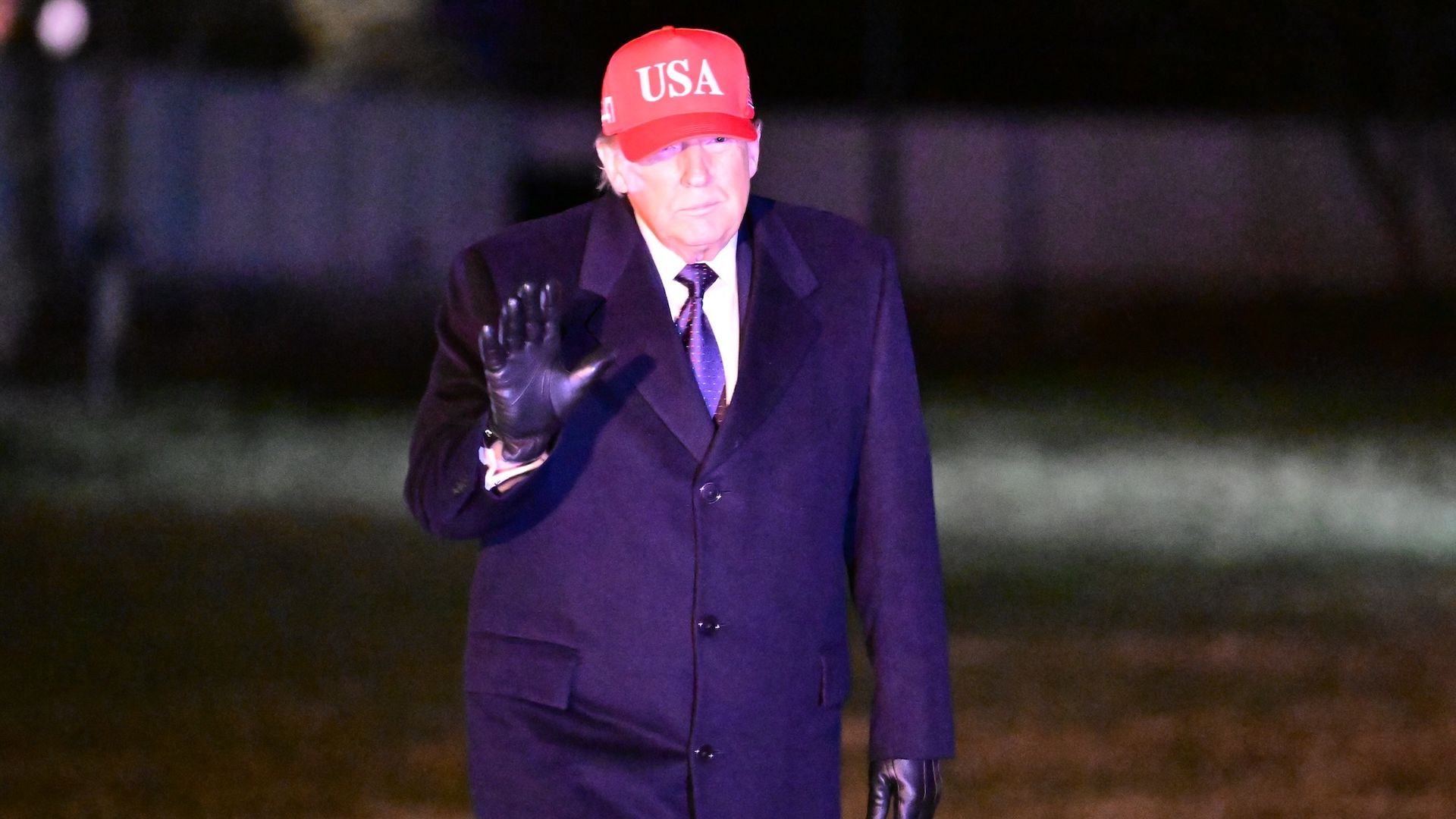
President Trump. Photo by Kyle Mazza/Anadolu via Getty Images
The United States has an extensive history of interventionism, but President Trump has grown especially frank about his intentions abroad in recent months.
The big picture: Trump told Axios this week that he must be involved in picking Iran's next leader, which — alongside his recent moves in Cuba and Venezuela — demonstrate that aggressive military force has become part and parcel of his foreign policy.
- It wouldn't be the first time, however, that the U.S. has pushed for specific leaders to fill the vacancies it helped create.
Catch up quick: Trump on Thursday acknowledged that Mojtaba Khamenei, son of assassinated supreme leader Ali Khamenei, is his most likely successor — a move the president opposes.
- "Khamenei's son is a lightweight. I have to be involved in the appointment, like with Delcy [Rodriguez] in Venezuela," Trump said.
- Trump in January ousted that nation's dictator, Nicolás Maduro, and exerted de facto control over its oil-rich petroleum company.
The latest: "As we achieve a historic transformation in Venezuela, we're also looking forward to the great change that will soon be coming to Cuba," Trump said on Saturday at the first Shield of the Americas Summit, adding the country's "at the end of the line."
Context: The American government frequently cited the spread of communism as a reason for intervening abroad during the 20th century, but many scholars have suggested that in these instances, the U.S. was primarily protecting its own financial interests overseas.
- According to one 2016 study, the U.S. performed at least 81 interventions in foreign elections between 1946 to 2000.
Here are times the U.S. has facilitated foreign leadership appointments:
Guatemala
The CIA orchestrated a coup in Guatemala in 1954, overthrowing democratically-elected President Jacobo Árbenz.
- The operation, called PBSuccess, replaced the left-leaning Árbenz with military dictator Carlos Castillo Armas, ostensibly to freeze the spread of communism.
- U.S.-organized rebels played a crucial role in the plan to oust Arbenz, with the CIA picking Castillo Armas as their leader, according to political scientist Gordon L. Bowen.
- After Arbenz officially resigned, the U.S. flew Castillo Armas into Guatemala City and he was named president shortly after.
Reality check: Fear that Árbenz's land reforms would threaten the American-owned United Fruit Company, which owned 42% of Guatemala's land and paid no taxes, was likely what spurred the CIA into action, historians say.
- Former President Eisenhower's "decision to topple Árbenz was influenced more by commercial interests than by geostrategic interests," political scientist Jaechun Kim noted in a 2010 journal, but "it is true that security and economic interest are intertwined to a certain extent."
Iran
The CIA orchestrated a coup to topple Iran's democratically-elected prime minister, Mohammad Mosaddegh, in 1953.
- Declassified CIA documents include a draft internal history of the coup titled "Campaign to install a pro-western government in Iran," which outlines the CIA's intent to "effect the fall of the Mosaddeq government" and "replace it with a pro-western government under the Shah's leadership with Zahedi as its prime minister."
- Zahedi became prime minister shortly after the coup.
- The documents claim the coup was meant to prevent possible Soviet influence in Iran.
Between the lines: Historian Ervand Abrahamian has argued the U.S. was mainly concerned with securing its oil interests, given that Mosaddegh had nationalized the Iranian oil industry.
Other interventions
Zoom out: The United States has financially and militarily backed many other coups abroad, whether or not it played an outsized role in picking leaders to fill vacancies.
- Notable examples include the Republic of Congo (now the Democratic Republic of Congo), in which the CIA encouraged and assisted in the assassination of the country's first elected prime minister in 1961.
- In Chile, former President Nixon and the CIA spent $8 million on covert actions to oust Salvador Allende, a socialist president elected in 1970. Eventually, Allende was overthrown in a Chilean military coup, which the U.S. government denied having a direct hand in.
- The CIA attempted to facilitate regime overthrows or intervene in governments across Latin America in particular, targeting countries such as the Dominican Republic, Brazil, Honduras and Cuba.
Editor's note: This story has been updated with Trump's latest remarks.
