Heavy metals still detected in baby formula: Consumer Reports

Add Axios as your preferred source to
see more of our stories on Google.
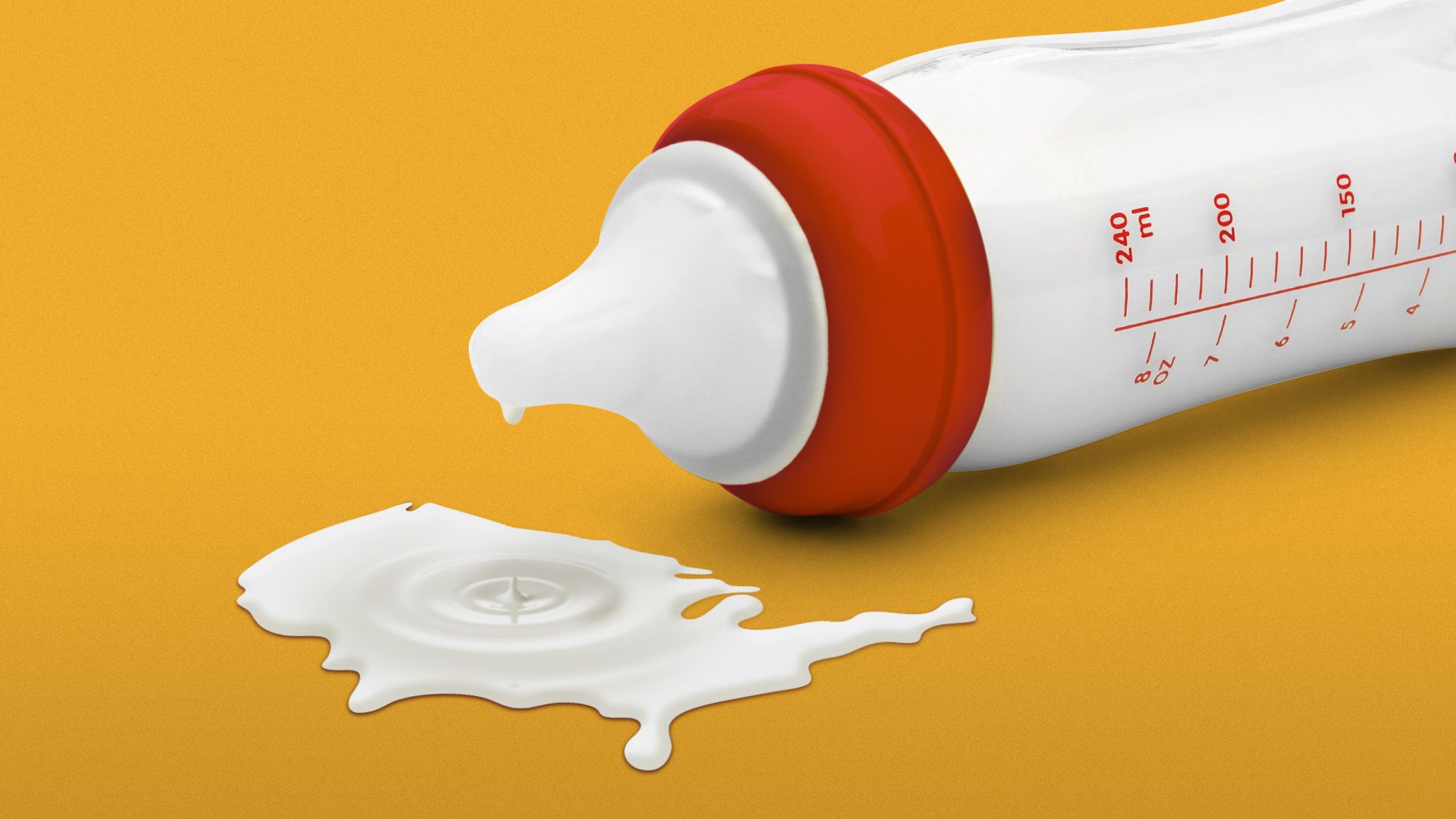
Illustration: Aïda Amer/Axios
A new Consumer Reports investigation found heavy metals in more than half of the infant formulas it tested — despite the Food and Drug Administration's pledge last year to tighten oversight.
Why it matters: Infant formula can be a baby's only source of nutrition — heightening the stakes of any contamination concerns.
- Health Secretary Robert F. Kennedy Jr. launched "Operation Stork Speed" last year to review infant formula standards and increase contaminant testing.
- Yet the U.S. still has no federal limits on arsenic in infant formula, and Consumer Reports' new testing suggests contamination concerns persist.
Driving the news: Consumer Reports tested 49 infant formulas, including powdered, liquid, hypoallergenic and alternative protein varieties.
- 26 of 49 formulas contained inorganic arsenic at or above CR's level of concern.
- Three powdered formulas exceeded CR's level of concern for lead.
- PFAS "forever chemicals" were detected in more than a quarter of products tested.
Zoom in: Nearly half of the formulas tested were considered "good choices," meaning contaminant levels were very low or not detected — similar to last year's findings.
- Some major brands, including Similac and Enfamil, had products in both the "top" and "worst" categories, while Bobbie performed well across products tested, Sana Mujahid, Consumer Reports' senior manager of food safety research and testing, told Axios.
- "Overall, parents should keep these results in perspective," Mujahid said.
What they're saying: "All of the formulas we tested are safe to feed your babies," Mujahid said, noting that none of the levels were high enough to cause immediate harm.
- Still, Mujahid said, "It is surprising to find these contaminants in one of the most tightly regulated food products in the U.S."
- Unlike the European Union and other countries, the U.S. has no regulatory limits for these contaminants in infant formula. Consumer Reports said its benchmark is based on the Environmental Protection Agency's oral reference dose and is designed to be protective for babies who rely on formula as their primary food source.
The intrigue: Manufacturers are not legally required to test for these contaminants — or share results with regulators or consumers, Mujahid said, adding Consumer Reports has not seen improvement since its previous testing last year.
- The nonprofit has expanded its heavy metals testing in recent years, including investigations into protein powders, cinnamon and cassava.
The bottom line: Mujahid urged parents not to panic and to speak with their pediatrician before switching formulas, particularly for babies using specialized or hypoallergenic products.
More from Axios:
