"Survivor 50" hasn't aired yet, but Kalshi, Polymarket have picked a winner

Add Axios as your preferred source to
see more of our stories on Google.
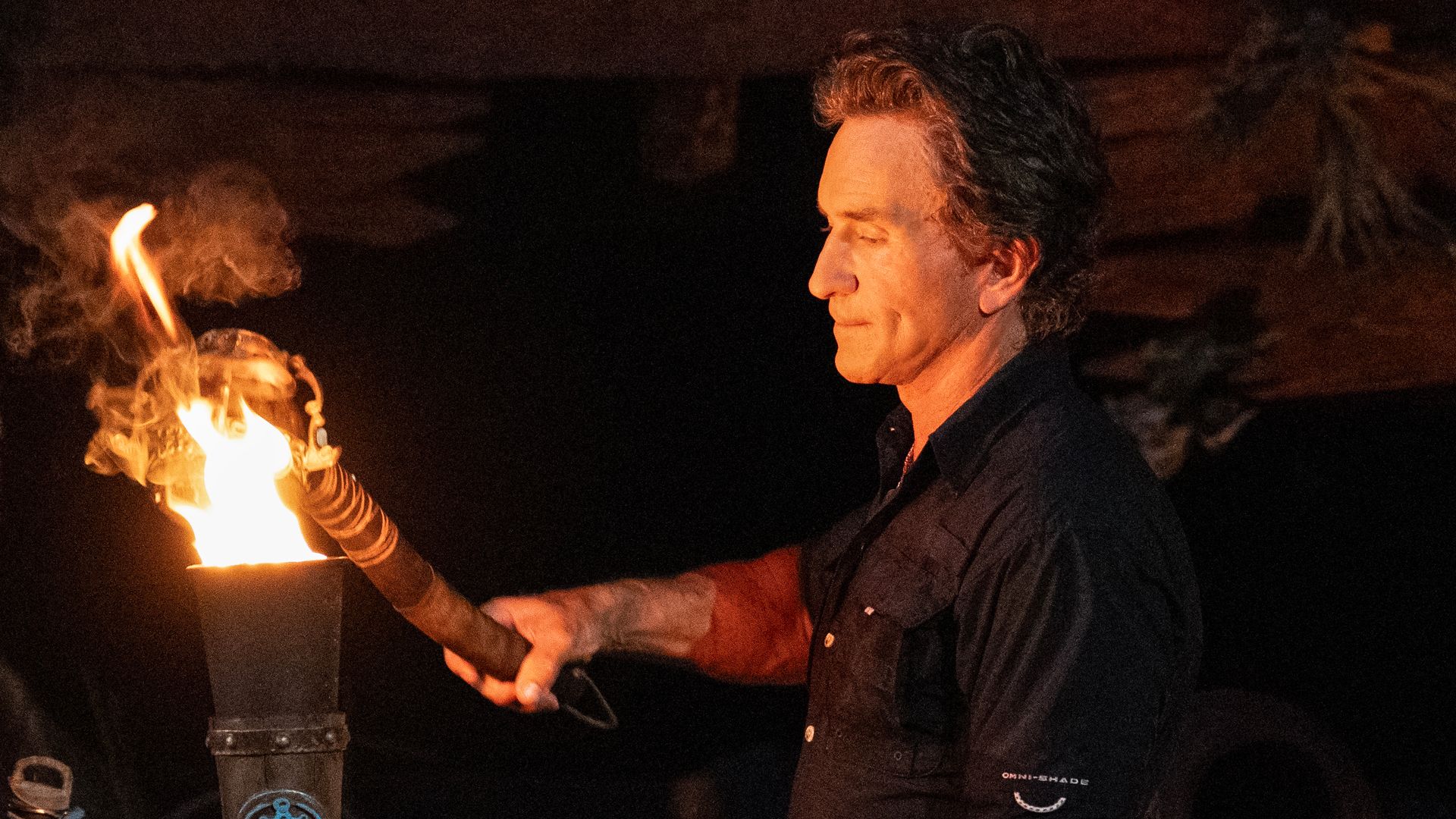
"Survivor" host Jeff Probst snuffs out a contestant's torch. Photo: Robert Voets/CBS via Getty Images
As prediction markets explode in popularity, a thorny question is emerging: Should people be allowed to bet on questions that have already been answered — even something as seemingly harmless as the winner of "Survivor"?
Why it matters: Advocates hail prediction markets for generating actionable insights on economics, politics, business and news — but critics say they open the door to insider trading, market manipulation and gambling problems.
State of play: The landmark 50th season of the CBS reality show "Survivor" is set to premiere on Wednesday, but Polymarket and Kalshi traders have already coalesced around a single contestant as the probable winner among the 24 all-star returnees.
- We won't spoil it for you here, but one contestant is trading at nearly 75% to win on Polymarket and Kalshi — even though the season finished filming in June — raising questions about whether insider knowledge has seeped into the market.
The big picture: If an outcome has already been decided, betting on it starts to look less like prediction and more like knowledge arbitrage — raising questions about whether these markets can prevent insiders from cashing in on nonpublic information.
- "Prediction markets where the result is already known or decided are some of the silliest things that exist in the space," Dustin Gouker, a consultant who writes a newsletter on prediction markets, tells Axios in an email.
- "You aren't predicting anything! It already happened! Events where the information is already known by some cohort probably shouldn't be a thing, in general."
Threat level: On a more weighty matter, questions have been circulating about the potential crisis of insiders making a fortune on prediction markets by trading on national security issues.
- A Polymarket trader made hundreds of thousands of dollars with a suspiciously well-timed bet about the capture of Venezuelan leader Nicolas Maduro in January.
- Israeli authorities this month reportedly arrested multiple people who allegedly used classified information to bet on military operations on Polymarket.
What they're saying: A Kalshi spokesperson says the company conducts "our standard surveillance systems as well as manual, targeted surveillance for markets that present heightened trader risk (like a pre-recorded event)."
- "We continuously monitor all related markets and have run checks on contestants" in Survivor, the spokesperson tells Axios in an email. "No matches to contestants have been found."
- Kalshi says its rules prohibit insider trading and that violations could break federal law, as the company is regulated by the Commodity Futures Trading Commission.
- A Polymarket rep did not comment when reached by Axios.
CBS and "Survivor" reps did not respond to requests for comment.
- The show requires contestants to sign non-disclosure agreements barring them from revealing the outcome before it airs.
The intrigue: For "Survivor 50," the winner won't be revealed until a live reunion show in the spring — unlike seasons 41 through 49, where it was revealed in Fiji immediately after players voted.
- That theoretically means that knowledge of the newest winner may be limited to a smaller group of people than usual.
"In a world where literally everything is an event where you can trade or bet on an outcome under the CFTC, it's clear reality show winners probably are allowed," Gouker says. "But they aren't serving any important purposes from a price discovery or economic hedging perspective."
The bottom line: Sometimes prediction market traders aren't predicting anything, so much as ascertaining what's already occurred.
