Minute Maid puts frozen juice on ice after 80 years

Add Axios as your preferred source to
see more of our stories on Google.
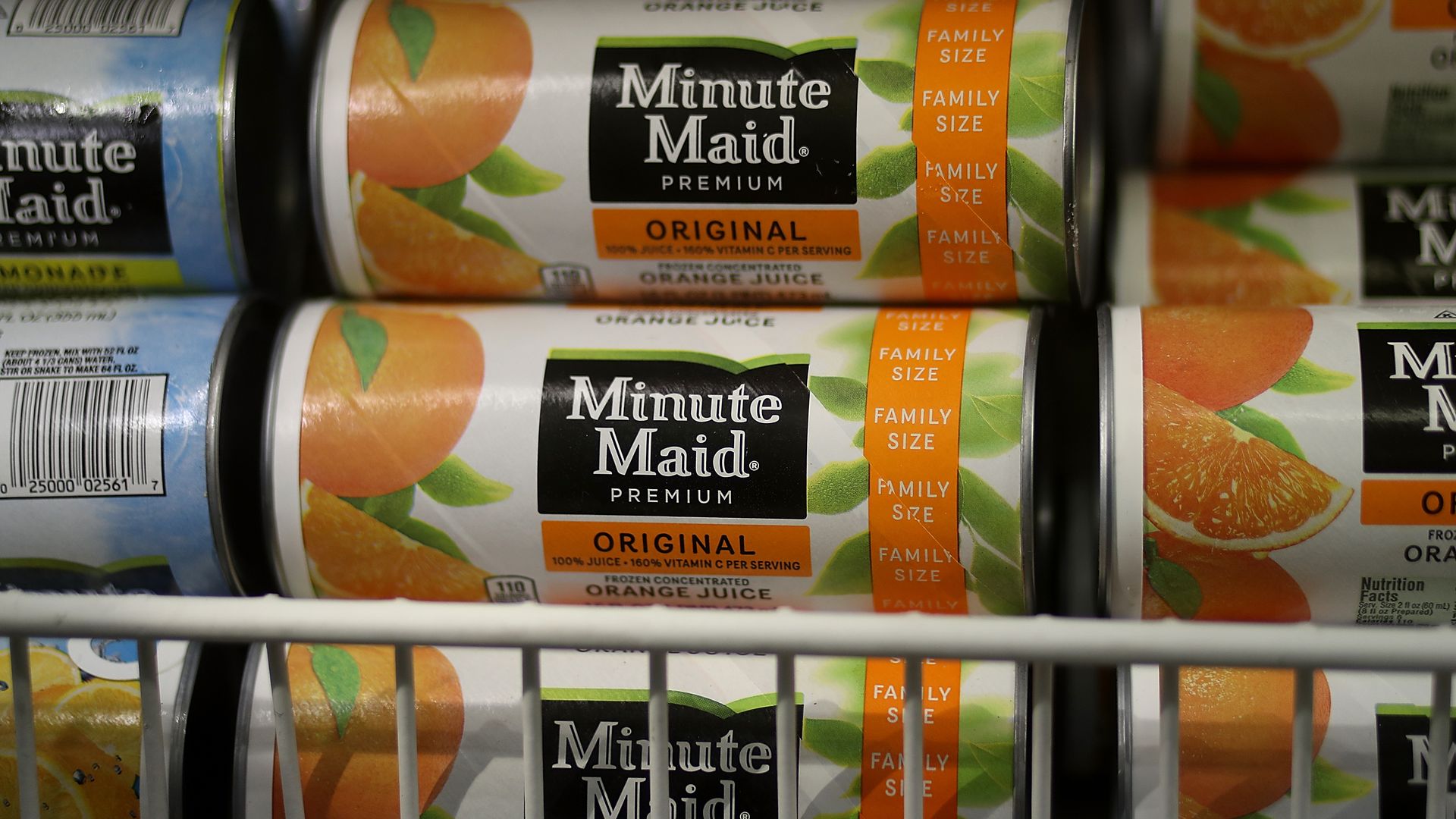
Coca-Cola confirmed it is discontinuing Minute Maid frozen concentrates. Photo: Justin Sullivan/Getty Images
Coca-Cola is discontinuing Minute Maid's frozen juice concentrates in the U.S. and Canada, ending an 80-year run that turned a freezer-aisle cylinder into an American breakfast ritual.
Why it matters: It's not just the end of a mid-century grocery icon — the move could hit lower-income households hardest, as frozen concentrate has long been one of the most affordable ways to buy juice.
- Frozen orange juice concentrate has long been a low-cost option for families participating in the federal WIC program, which provides juice allowances for pregnant women, infants and young children.
Driving the news: Coca-Cola is leaving the frozen can category as it pivots toward other juice formats.
- "We are discontinuing our frozen products and exiting the frozen can category in response to shifting consumer preferences," a Coca-Cola spokesperson told Axios.
- Frozen Minute Maid products, including orange juice and lemonade, will be discontinued early this year, with remaining inventory sold while supplies last.
The decision sparked a wave of nostalgic reactions on social media, with consumers lamenting the loss of frozen Minute Maid and recalling childhood breakfasts and summer drinks.
Flashback: Minute Maid helped turn orange juice into a year-round staple starting in 1946, when it began shipping frozen concentrate nationwide — decades before refrigerated juice cases became common.
- For generations, families cracked open a can, dropped the frozen cylinder into a pitcher and added water, stretching a small purchase into multiple servings.
- Coca-Cola acquired Minute Maid in 1960 and later introduced ready-to-drink refrigerated juice, a format that gradually eclipsed frozen concentrate.
The big picture: Frozen juice has steadily lost ground as consumers gravitate toward energy drinks, protein smoothies and refrigerated beverages.
- Rising orange prices tied to poor harvests in Florida and Brazil have pushed costs higher.
- Shoppers have also grown more skeptical of sugary drinks, pressuring legacy juice brands.
Between the lines: Phil Lempert, a food marketing expert known as the Supermarket Guru, said the decision makes operational sense for Coca-Cola, whose business is built around shelf-stable and refrigerated drinks.
- Still, Lempert said he was surprised Coca-Cola didn't sell the brand instead.
- "It's a strong brand with a good following among consumers of all economics, not just lower income that use it to stretch their dollars," Lempert said.
What we're watching: Coca-Cola's exit doesn't mean frozen juice concentrate is disappearing.
- Tropicana, a longtime rival to Minute Maid, still sells frozen juice concentrate in U.S. grocery stores, along with other brands, including store labels — even as the category continues to shrink.
More from Axios:
