DOJ says Virginia's in-state tuition for undocumented students violates federal law

Add Axios as your preferred source to
see more of our stories on Google.
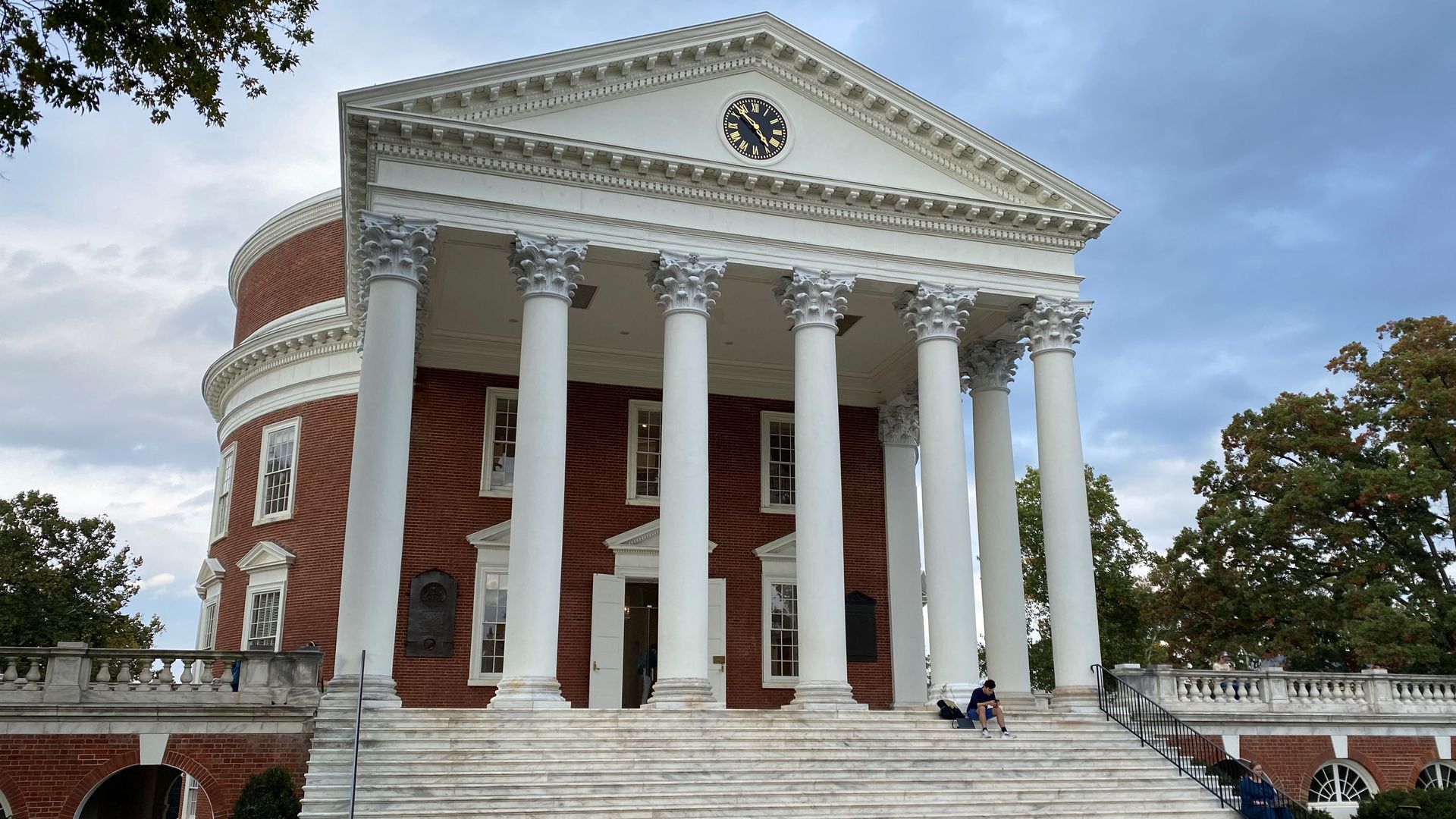
The University of Virginia campus in Charlottesville, Va. Photo: Daxia Rojas/AFP via Getty Images
The Justice Department has sued Virginia over its policy of giving qualifying local undocumented immigrants access to in-state tuition pricing, claiming that it discriminates against citizens living in other states.
Why it matters: It is the latest example of the DOJ's push to limit states from offering tuition benefits to undocumented immigrants, without which higher education could be inaccessible to the nation's estimated 850,000 undocumented minors.
- The DOJ has also sued California, Minnesota, Texas, Kentucky, Oklahoma and Illinois for their tuition benefit policies, with Republican-led Texas and Oklahoma agreeing to consent decrees to sidestep state law requirements, Reuters reported.
What they're saying: "This is not only wrong but illegal," the Justice Department argued in the 13-page Virginia filing on Monday.
- "Federal law prohibits States from providing aliens who are not lawfully present in the United States with any postsecondary education benefit that is denied to U.S. citizens."
- "There are no exceptions. Virginia violates it nonetheless."
- In a Tuesday news release, Attorney General Pamela Bondi said the DOJ "will not tolerate American students being treated like second-class citizens in their own country."
Juan Martinez-Guevara, of the advocacy network United We Dream, told media earlier this year that ending in-state tuition is "a deliberate and wicked effort to keep predominantly Black and brown immigrant students in a permanent caste in society where they are underpaid and exploited."
Context: Virginia law allows undocumented immigrants who attended high school in the state for at least two years — establishing residency — to qualify for in-state tuition at public universities.
- The DOJ argues this violates federal law and wrote in the suit, "States cannot evade express preemption by a de facto 'residency' requirement laundered through the State's high school attendance or tax filing requirements."
By the numbers: Undocumented students in 22 states and the District of Columbia can access in-state tuition if they meet state-specific residency requirements, according to the Higher Ed Immigration Portal.
Zoom in: The Trump administration has been systematically targeting states for their undocumented student policies.
- The Education Department also began investigating scholarships for foreign-born students earlier this year, even those who provide financial aid to Deferred Action for Childhood Arrivals recipients.
- The Education Department and offices of the Virginia attorney general and Gov. Glenn Youngkin did not immediately respond to Axios' request to comment.
Go deeper: Education Department launches probe into foreign-born student scholarships
