These are the countries where Trump pushed deals for rare earth minerals

Add Axios as your preferred source to
see more of our stories on Google.
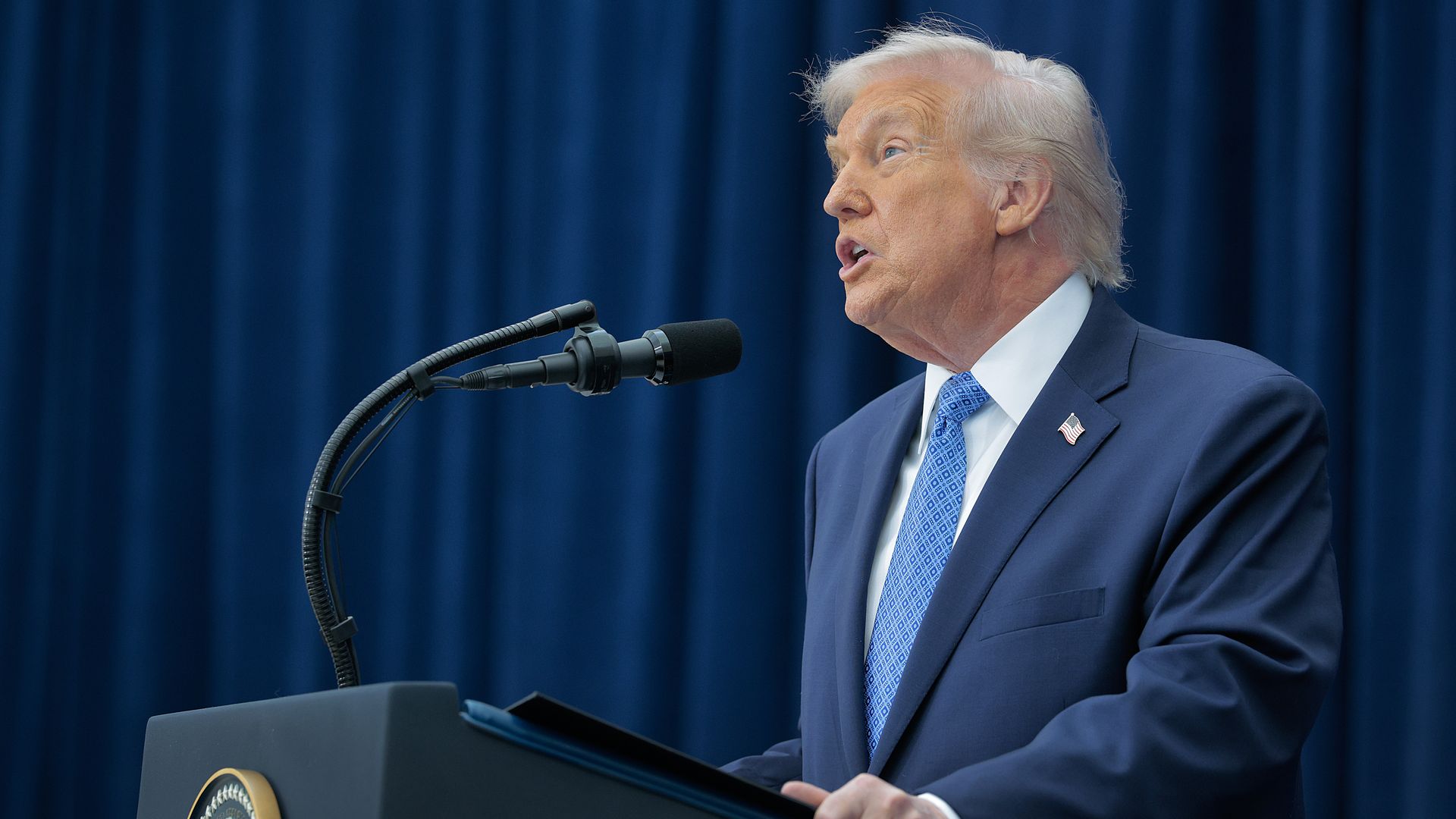
Trump delivers remarks at the Donald J. Trump Institute of Peace on December 04, 2025 in Washington, DC. Photo: Chip Somodevilla/Getty Images
President Trump on Thursday signed a peace deal to end the war in eastern Congo and used the moment to advance another priority: securing U.S. access to critical minerals.
The big picture: The Trump administration has aggressively pursued rare earth minerals and magnets overseas — vital for everything from the production of vehicles to nuclear weapons — after China threatened U.S. access.
- Trump has used everything from trade negotiations to peace deals to maintain access to the vital minerals.
The intrigue: While many of Trump's rare mineral deals seem flashy, most are non-binding and disproportionately favor the U.S. in terms of trade.
Here are the deals Trump has struck so far.
Democratic Republic of Congo and Rwanda
During the peace deal signing, Trump announced that the agreement also creates a new framework for the U.S. to "access critical minerals and provide economic benefits for everybody."
- He added that some of America's "biggest and greatest companies" will be sent to both countries to extract rare minerals, though the exact terms of the deal are unclear.
Australia
In October, Trump and Australian Prime Minister Anthony Albanese signed a critical minerals framework outlining plans for both governments to invest $3 billion in mineral projects over the next six months.
- The White House estimates that the projects could yield around $53 billion in resources.
Malaysia
- Malaysia and the United States agreed to a non-binding document, allowing U.S. access to rare minerals in the country, suggesting both countries will cooperate in the same areas.
Thailand
Trump's agreement with Thailand — also non-binding — commits both countries to promote trade and investment tied to rare mineral extraction.
- Shortly after the agreement was signed, organizations rallied in Bangkok expressing disapproval of the memorandum, citing concerns for the country's environment and sovereignty.
Cambodia
Cambodia signed a seven-section "reciprocal trade" agreement allowing U.S. investment in exploration, mining and extracting critical resources.
- Many articles restrict or set standards for how Cambodia handles trade with the U.S.
- The document also confirms Cambodia cannot impose quotas on U.S. goods without U.S. consent.
Japan
- The White House announced a trade deal framework with Japan in November to expand and accelerate projects and strengthen supply chains.
- Unlike some of the other agreements, Japan's framework focuses exclusively on rare earth mining.
Kazakhstan
Trump in November revealed a $1.2 billion critical minerals deal with Kazakhstan, also unenforceable, and investments in two rare earth startups.
- Kazakhstan has an abundance of minerals and recently announced a major rare earth discovery.
South Korea
Trump and the Republic of Korea struck a deal in October, showing their commitment to diversify mineral supply chains and mining through public-private collaboration.
- The agreement also includes technology deals between the two nations and commits South Korea to significant investment in U.S. energy.
Ukraine
Trump and Ukrainian President Volodymyr Zelensky signed an investment deal in April, giving the U.S. rights to Ukraine's rare earth minerals.
- The agreement did not include U.S. security guarantees or commitment to give further military aid.
- The agreement came as Ukraine sought to salvage a deteriorating relationship with Trump, who, despite his criticism, was necessary in providing the country with support to fend off the Russian invasion.
Argentina
Argentina and the U.S. agreed upon a trade framework in November, agreeing to cooperate on investments and trade of critical earth materials.
- The Latin American nation also granted the U.S. a series of trade benefits.
