The bill to reopen the government would shut down these THC products

Add Axios as your preferred source to
see more of our stories on Google.
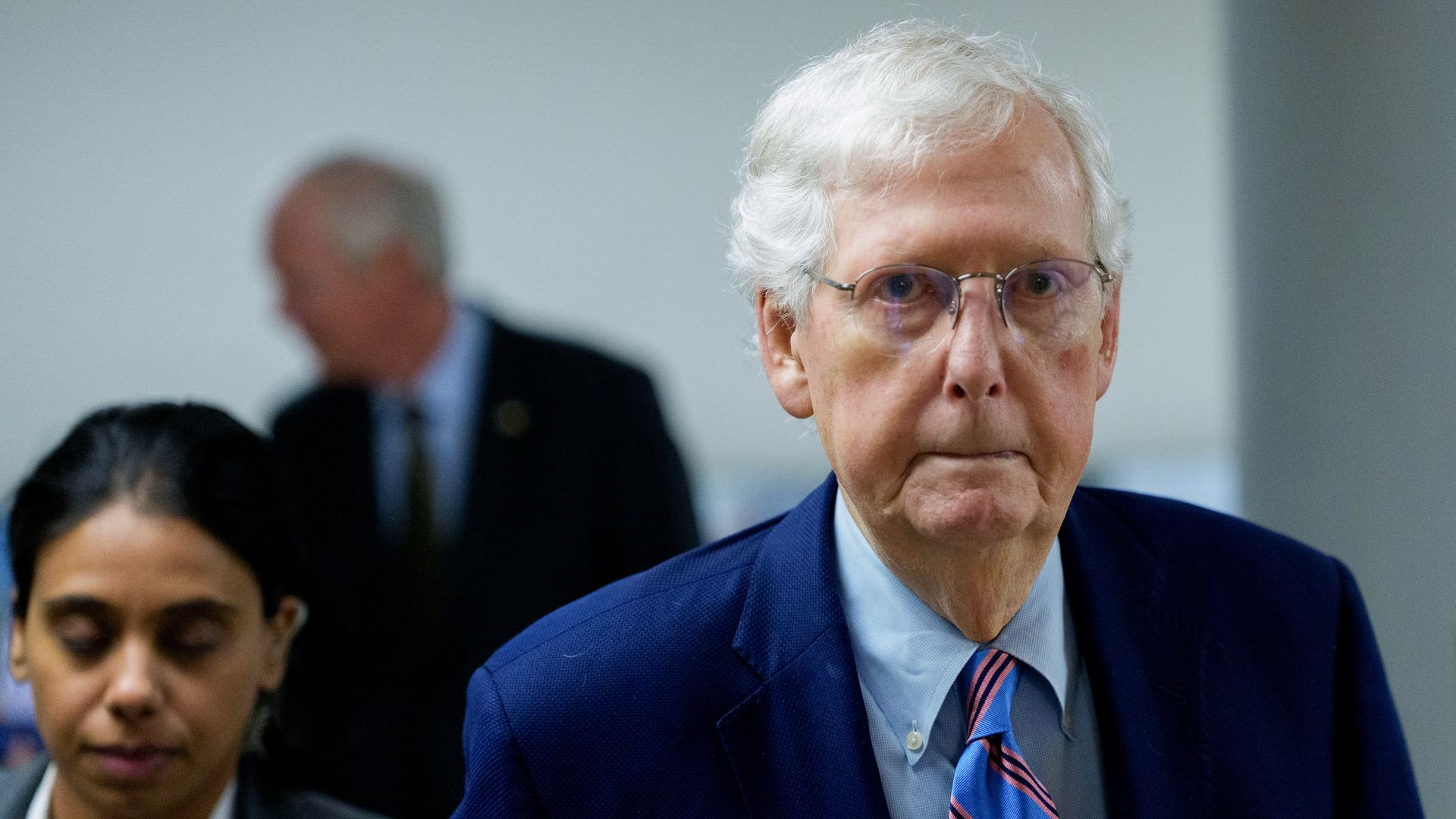
Kentucky Sen. Mitch McConnell has been a leading proponent of closing a loophole allowing intoxicating THC to be sold in low doses. Aaron Schwartz/Bloomberg via Getty Images
Congress is poised to pass a spending bill that will end the record-long government shutdown, but there's a catch: it includes a ban on many THC-infused products.
The big picture: A last-minute provision in the bill would re-criminalize many hemp-derived products, reversing their legalization in the 2018 Farm Bill.
Driving the news: The Senate passed the funding package on Monday.
- Sen. Rand Paul (R-Ky.) waged a last-minute fight against it, threatening to hold up the bill until he got a vote on an amendment to strip the THC language.
Reality check: If Republicans amend the bill, it would have to go back to the Senate and the shutdown wouldn't end tonight.
- Republicans seem largely aligned about avoiding another holdup. Paul and Sen. Ted Cruz (R-Texas) were the only GOP senators who voted in favor of going forward with an amendment.
The other side: Sen. Mitch McConnell (R-Ky.), who authored that 2018 Farm Bill, has been a leading proponent of closing the THC loophole, arguing that companies have exploited it to create intoxicating substances.
- 39 state attorneys general signed a letter on Wednesday asking Congress to outlaw intoxicating hemp products at the federal level.
Here's what to know if the bill passes:
What the Farm Bill says
State of play: Cannabis and its derivatives are considered marijuana unless an exception applies, and the Farm Bill names hemp as an exception, per a 2025 Congressional summary of the bill.
- "Following the enactment of the 2018 farm bill, the cannabis industry began producing certain cannabis products that contain less than 0.3% delta-9 THC but a total THC concentration that exceeds 0.3%. Some of these products may be intoxicating to the user," the bill's summary says.
What the spending bill would change
The 2018 Farm Bill created a loophole for intoxicating THC to be sold in low doses, Carol Moss, a cannabis attorney for Hellmuth & Johnson, told Axios this week.
- The shutdown deal would ban those THC products and also non-intoxicating CBD products, Moss said.
What they're saying: "The bill, as it now stands, overrides the regulatory frameworks of several states, cancels the collective decisions of hemp consumers and destroys the livelihoods of hemp farmers," Paul said on Senate the floor prior to the Tuesday vote.
- "It couldn't come at a worse time for America's farmers."
The new provision "prevents the unregulated sale of intoxicating hemp-based or hemp-derived products, including Delta-8, from being sold online, in gas stations, and corner stores, while preserving non-intoxicating CBD and industrial hemp products," per a Senate Appropriations Committee summary.
Flashback: The proposal was included in the House's initial funding bill for the Department of Agriculture, but it was removed from the Senate version over the summer following a disagreement between Paul and McConnell, The Hill reported.
- McConnell was initially in favor of legalizing hemp in the 2018 bill, but has since said the industry is "unregulated" and poses "increasing concerns for both drug enforcement and youth safety."
The types of products impacted
Zoom out: Hemp products legally permitted for sale vary by state, but typically include food and beverage products, balms or lotions, tinctures, and pills.
Zoom in: Low-dose THC seltzers have been a lifeline for struggling craft breweries in Minnesota, Axios' Nick Halter writes. A 2021 state law, for instance, created a boom of companies that grow, manufacture and sell edibles.
- "This is a poison pill for Minnesota," said Moss.
- Businesses could apply for one of the state's limited number of new adult-use licenses, Moss said, but that would mean much higher taxes as well as additional banking hurdles, and breweries would no longer be allowed to sell beer.
