MLK III, Mi Familia Vota team up to unite Black and Latino voters


Add Axios as your preferred source to
see more of our stories on Google.
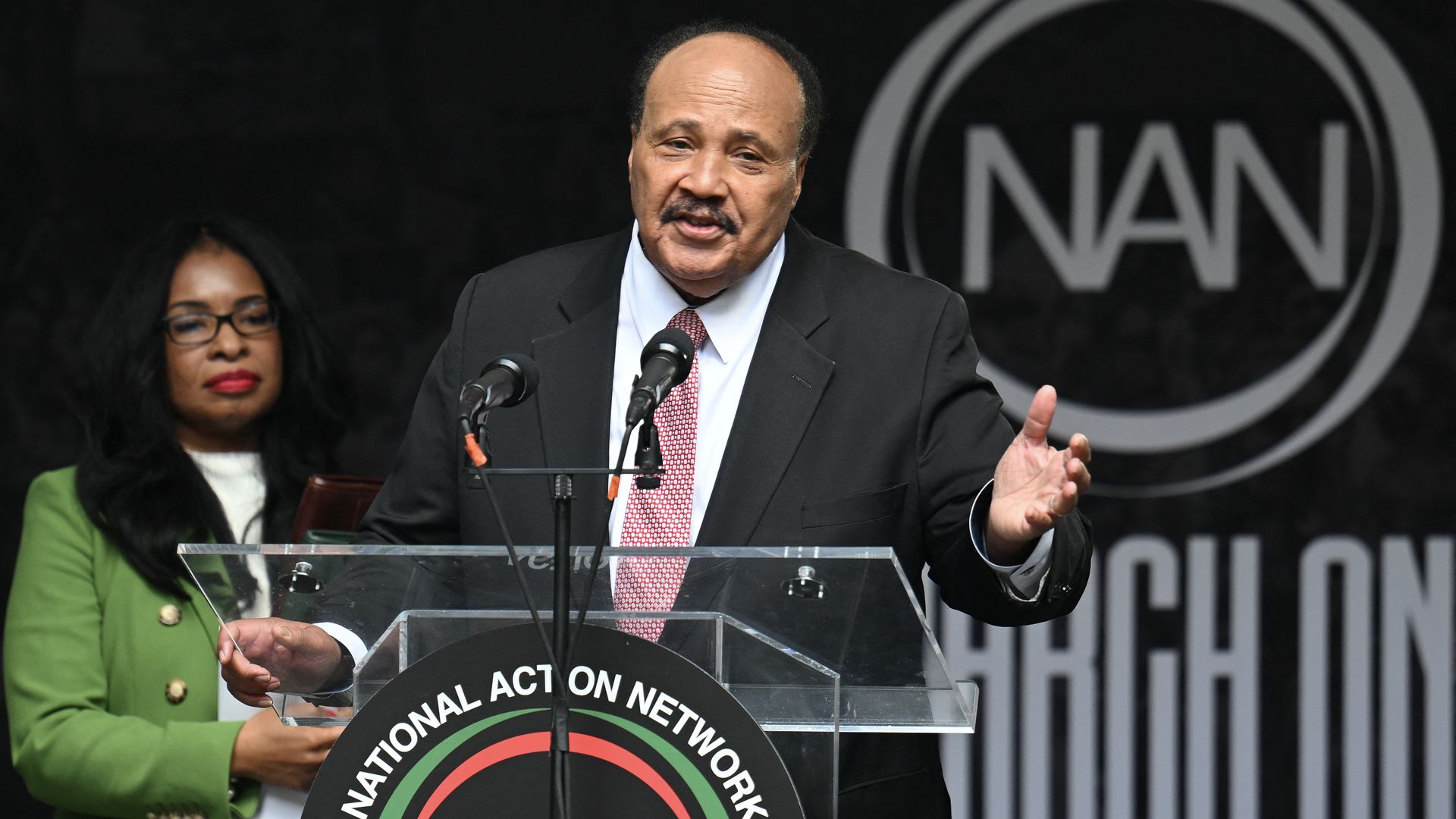
Martin Luther King III speaks during the "March on Wall Street" rally for economic justice on Aug. 28, 2025, in New York City; his wife, Arndrea Waters King, appears in the background. (Angela Weiss / AFP via Getty Images)
A coalition led by Martin Luther King III and a Latino group has launched a new campaign to boost civic engagement of Black and Hispanic voters in important states.
The big picture: The initiative comes as the Supreme Court takes up a crucial case that could gut a key piece of the 1965 Voting Rights Act, which has historically preserved the political power of people of color.
Driving the news: King and his wife, Arndrea Waters King, announced this week that their group, Drum Major Institute, and the Latino organization Mi Familia Vota will hold a series of meetings over the next year.
- The coalition plans to unite civil rights leaders, community organizers, and policymakers and develop a new agenda for Black and Latino voters in response to redistricting fights and rising polarization.
- The organizations will roll out coordinated campaign efforts.
What they're saying: "Renewing this partnership signals that Black and Latino communities are united in solidarity, and with the shared purpose of building a future centered in community, peace and prosperity," Arndrea Waters King said in a statement.
- "Unity is paramount — we're marching as a community for economic, racial, and voting justice," said Martin Luther King III.
- Hector Sanchez Barba, Mi Familia Vota president and CEO, added that the new effort will ensure Black and Latino voices are heard.
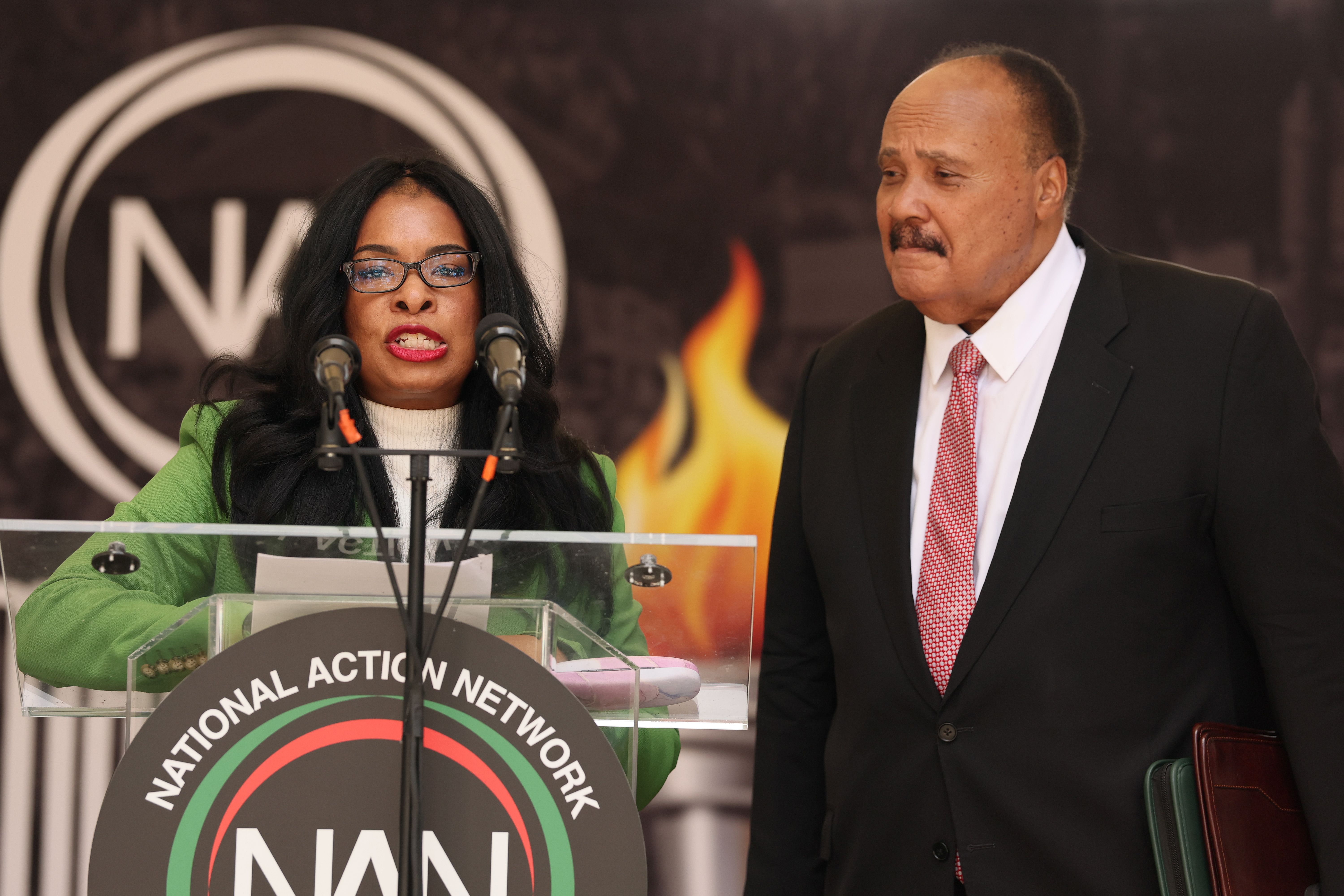
The intrigue: Martin Luther King III told Axios, if the Voting Rights Act is weakened, the democratic process will be severely undermined.
- "If the Supreme Court eviscerates it, they will actively tip the scales against voters of color. Yet, we cannot lose hope in this moment," he said.
- "My father famously warned that 'injustice anywhere is a threat to justice everywhere.' This moment harkens us back to that call and serves as a stark reminder of the importance of solidarity and unity in trying times."
Zoom out: The "Black Brown" campaign is rolling out across 10 states, including Texas, Georgia, Arizona, and California.
- The groups first partnered at the 2024 Democratic National Convention and have since hosted regional events, including a major 2024 D.C. conference on democracy and justice.
Between the lines: The effort echoes past Black–Brown coalitions dating back to the civil rights era.
- Martin Luther King Jr. sought to organize Black Americans, Latinos, Native Americans and white Americans for a Poor People's March before his assassination.
- The elder King had sent telegrams to farm workers' union leader Cesar Chavez and met with Chicano Movement leaders ahead of the planned march.
Flashback: Latinos and Black Americans have sought to build alliances since the time of enslavement.
- Mexican Americans in Texas helped Black people escape bondage through the Underground Railroad to Mexico via a series of clandestine paths and secret homes, historians say.
- Mexican American scholar and activist George I. Sanchez corresponded with NAACP lawyer Thurgood Marshall on strategies for court challenges to school segregation before the 1954 landmark Brown decision.
- A Latino-Black coalition in Houston led to the election of Barbara Jordan to the U.S. House in 1972. She was the first Black woman elected to Congress from the South.
What's next: Regional convenings and policy planning sessions will continue into 2026, with a national agenda expected early next year.
