MLK's son helps form new "Black-Brown coalition"

Add Axios as your preferred source to
see more of our stories on Google.
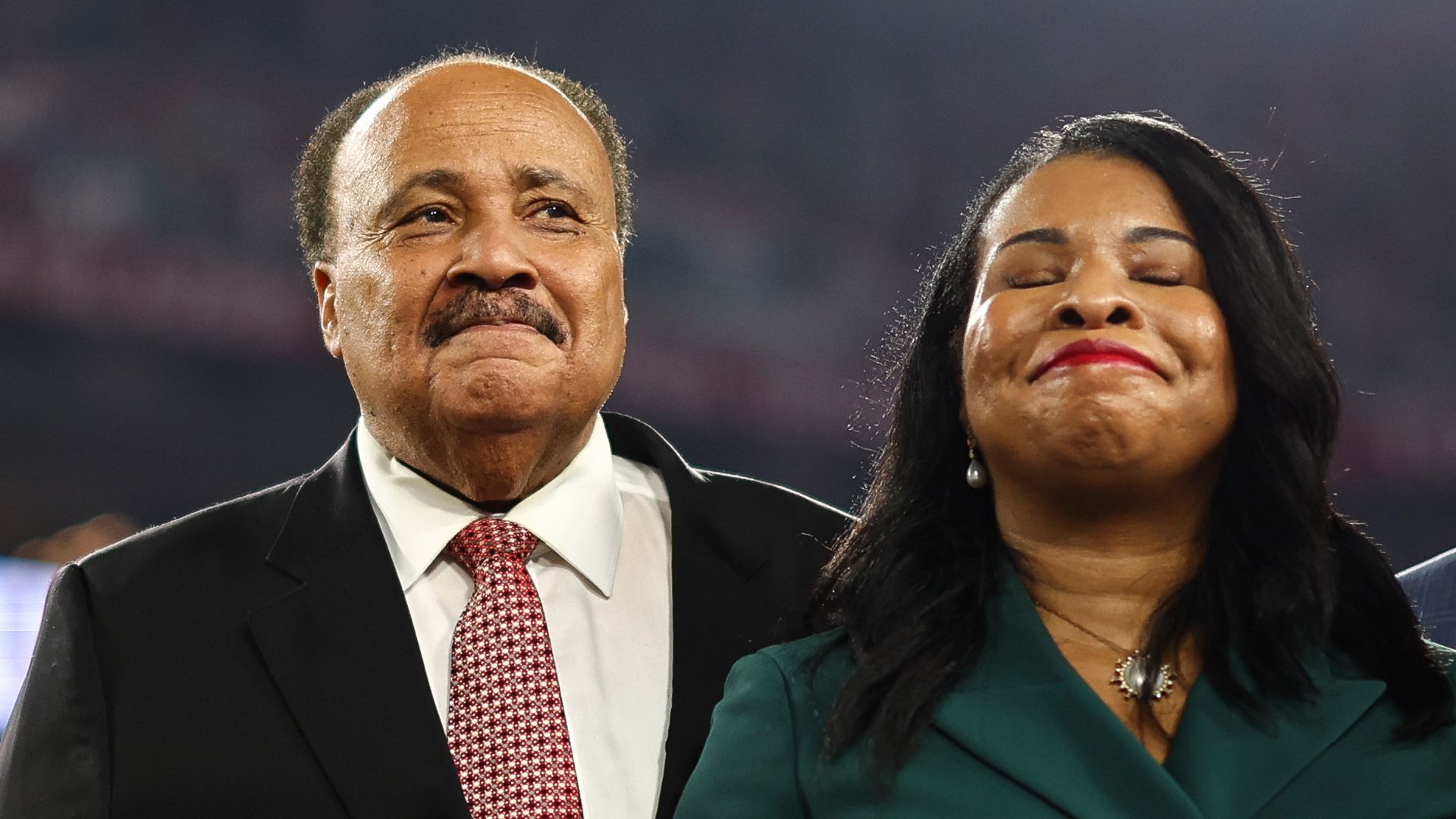
Martin Luther King III and Arndrea Waters King. Photo: Kevin Sabitus/Getty Images
The son and daughter-in-law of the late Martin Luther King Jr. have spearheaded efforts to create a national Black-Latino coalition similar to one the civil rights leader sought to launch before his assassination.
Why it matters: Martin Luther King III and his wife, Arndrea Waters King, tell Axios now is the right time to start a new "Black-Brown coalition" as income inequality grows and voting rights are under attack.
Yes, but: Previous similar attempts have faltered or struggled to stay afloat long-term due to infighting and competing agendas, though many local coalitions have worked together for years.
State of play: The latest effort comes as the share of Latinos in the U.S.(19%) has over the past 20+ years surpassed that of Black Americans (12%), making some historically Black districts and areas now majority or plurality Hispanic.
- The demographic changes have sometimes led to tensions and distrust in cities like Chicago.
Driving the news: The formation of the coalition was announced at the recent Democratic National Convention.
- More details about its planned work will be unveiled at a conference on Wednesday at the University of the District of Columbia in Washington.
Zoom in: The nonpartisan initiative is by the Kings' group, the Drum Major Institute, and Mi Familia Vota, an advocacy group seeking to encourage Latino civic participation.
- The goal will be to increase civic participation and political representation; tackle hate crimes; and push for elected leaders to talk about poverty and income inequality.
- "While this is not a new effort, it is a new and renewed effort to bring communities together to forge an agenda that is representative of the Black and brown communities," King III says.
Arndrea Waters King says the rise in hate crimes and the separation of families because of immigration policies compel both communities to unite.
- "We want to organize for this election, but we are also understanding that these issues that impact our communities go far beyond that."
What they're saying: "We are tired of infrastructures in the nation, on purpose, making us fight" each other for political representation, says Héctor Sánchez Barba, president of Mi Familia Vota.
- "This is about unity."
Context: Martin Luther King Jr. sought to organize Black Americans, Latinos, Native Americans and white Americans for a Poor People's March before his assassination.
- King had sent telegrams to farm workers' union leader Cesar Chavez and met with Chicano Movement leaders ahead of the planned march.
Flashback: Latinos and Black Americans have sought to build alliances since the time of enslavement.
- Mexican Americans in Texas helped Black people escape bondage through the Underground Railroad to Mexico via a series of clandestine paths and secret homes, historians say.
- Mexican American scholar and activist George I. Sanchez corresponded with NAACP lawyer Thurgood Marshall on strategies for court challenges to school segregation before the 1954 landmark Brown decision.
- The Black Panther Party in the late 1960s organized Puerto Rican radicals and Confederate flag-waving white Southerner transplants to help tackle poverty and discrimination in Chicago — an effort that drew attention from the FBI.
- A Latino-Black coalition in Houston led to the election of Barbara Jordan to the U.S. House in 1972. She was the first Black woman elected to Congress from the South.
Subscribe to Axios Latino to get vital news about Latinos and Latin America, delivered to your inbox on Tuesdays and Thursdays.
