OpenAI's push to make ChatGPT the new OS

Add Axios as your preferred source to
see more of our stories on Google.
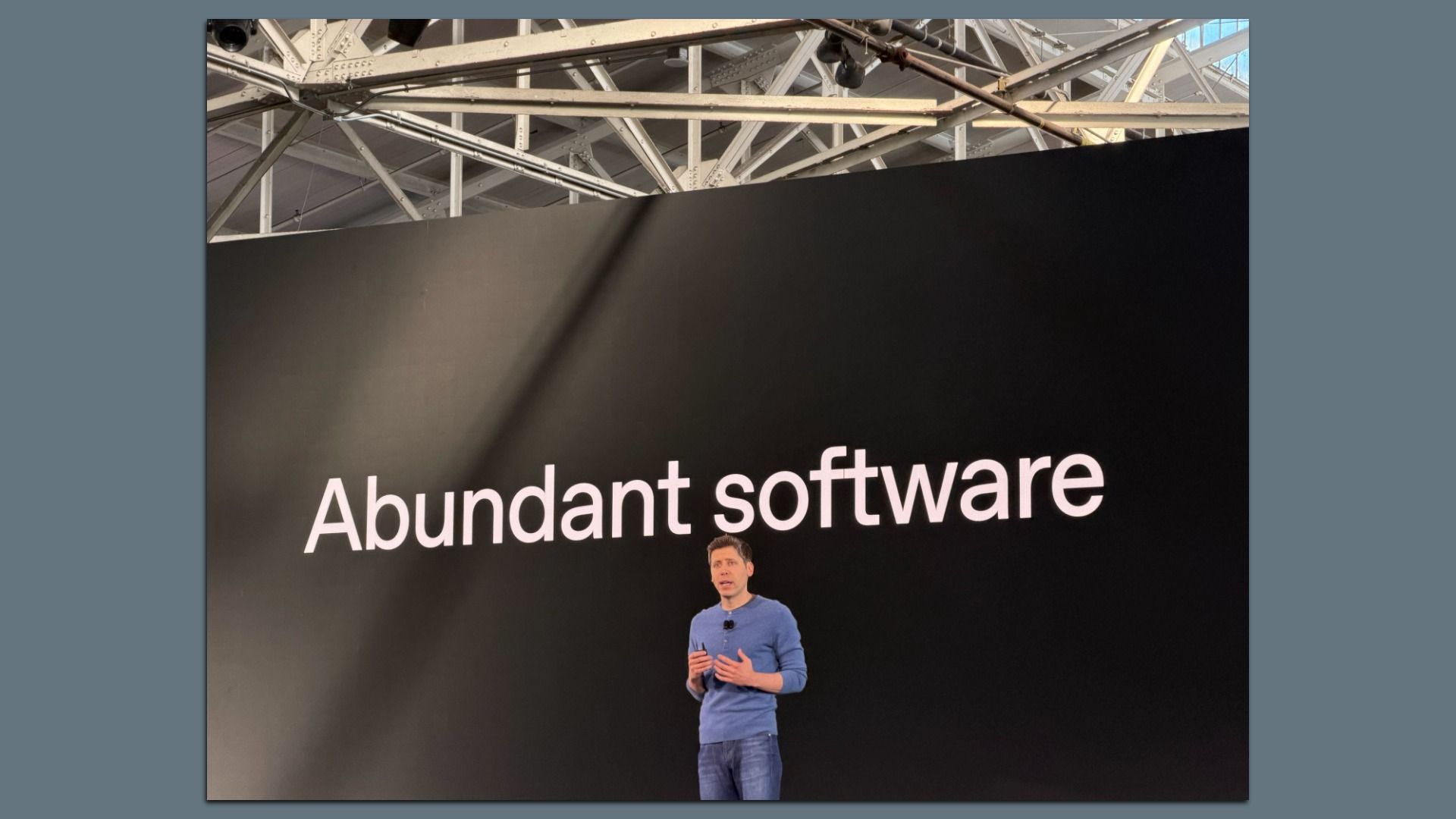
OpenAI DevDay 2025. Photo: Ina Fried
OpenAI isn't just opening up ChatGPT for app developers. It's looking to turn today's leading chatbot into tomorrow's operating system.
Why it matters: OpenAI — following a playbook honed by Apple, Google, Microsoft and Meta — aims to transform its product into a platform that developers can extend and users will rely on to meet more of their needs.
Driving the news: OpenAI on Monday announced its second effort to allow developers to build apps that run within ChatGPT.
- Starting Monday, a handful of apps will appear in ChatGPT — including Spotify, Zillow, Figma, Canva and Booking.com — through a partnership with OpenAI.
- Next, OpenAI will open ChatGPT to all app developers willing to follow the guidelines it detailed on Monday. The company said it will start reviewing and listing those apps "later this year."
- OpenAI promised developers will be able to make money — somehow — but how that money will change hands remains murky.
- "I would expect us to try a lot of things over the next few months and then, hopefully, we'll find what most of the market wants," CEO Sam Altman told reporters.
The big picture: ChatGPT head Nick Turley told Axios that OpenAI sees a chance to expand its popular chatbot into a core way people interact with their devices.
- "It's not inconceivable to me that over time, you perceive ChatGPT to be a type of operating system," Turley said in an interview.
- "Now, literally speaking, it's obviously running on something; it's not a real OS in that sense," he said.
- Turley suggested that ChatGPT will be both an "access point to get into other pieces of software" and a place for developers to innovate. "So, in that sense, it's very much becoming an operating system."
Flashback: This isn't OpenAI's first time opening up ChatGPT to developers.
- OpenAI launched custom GPTs and its ChatGPT store at its first developer event in 2023.
- There was an initial wave of interest in the store, but it largely became a tool for companies to build their own apps for internal use, with no clear way for developers to make money.
Between the lines: OpenAI's effort to turn ChatGPT into a platform doesn't mean it expects users to do everything through a conversational chat interface, Turley said during a question-and-answer session with reporters earlier in the day.
- "Not all software needs to be a chatbot," Turley said in response to a question from Axios. "Not all interaction with the commercial world needs to be a chatbot."
- ChatGPT, Turley said, wasn't even meant to be OpenAI's big bet. "We never meant to build a chatbot," he said. "We meant to build a super assistant and we got a little sidetracked."
- Turley said that spending all your time in a chatbot would be a dystopian future, but he sees a path to broadening the experience.
- "If we can evolve ChatGPT the right way, if we can let people build into it, then maybe you will be spending a lot of time in ChatGPT, the sort of operating system," Turley told Axios in a follow-up interview. "But it won't feel like you're in a chatbot."
Yes, but: OpenAI is far from alone in wanting to be the next platform.
- Google, Microsoft and Apple, whose operating systems power the vast majority of phones and computers, are keen to extend those positions into the AI era.
- Meanwhile, the tech giants who missed out on the mobile revolution — Meta and Amazon — also aim to position themselves at the center of whatever comes after the phone.
- And then there are countless startups who themselves dream of being the next tech giant.
The intrigue: Just what hardware we'll be using in a few years' time also remains unsettled. PCs and phones probably won't be going away, but they are likely to be complemented by new devices, including smart glasses.
- OpenAI is developing a "family of devices" and earlier this year paid $5 billion in stock to acquire io, the Jony Ive-led hardware startup Altman had been working with.
- Altman and Ive appeared on stage to close Monday's event, but in 45 minutes they dropped nary a hint at the hardware they're cooking up together.
