The fate of U.S. economy may lie with the Supreme Court

Add Axios as your preferred source to
see more of our stories on Google.
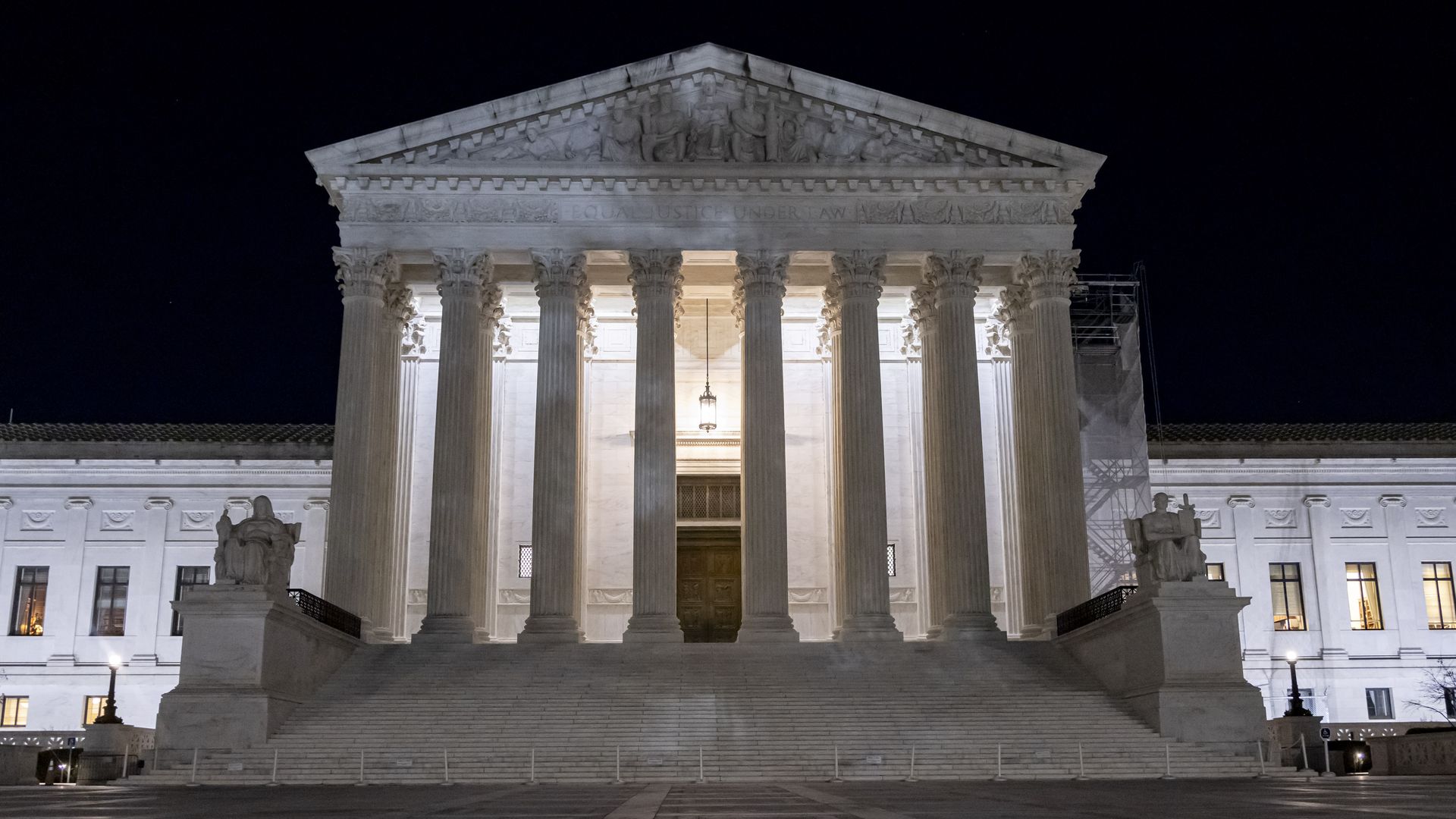
The west facade of the United States Supreme Court building. Photo: Nicolas Economou/NurPhoto via Getty Images
Two of President Trump's key economic policies appear headed for the Supreme Court: high global tariffs and his unprecedented firing of a Federal Reserve board member.
Why it matters: These cases could not only have an enormous impact on the U.S. economy, but they could also reverberate throughout the global financial system.
Driving the news: Late Friday, the U.S. Court of Appeals for the Federal Circuit ruled that Trump can't use emergency powers to impose sweeping tariffs.
- Nothing changes immediately. Ultimately, the issue appears headed for the high court.
- Another case, less far along, challenges the president's firing of Lisa Cook, who sits on the Federal Reserve Board of Governors. That litigation involves the independence of the most important central bank on the planet.
The big picture: Both cases reckon with a big question:
- Does a U.S. president alone have the authority to overhaul the critical mechanisms of U.S. business and global trade in unprecedented ways?
Zoom out: The stakes are "huge," both economically and on constitutional grounds, says John Vecchione, senior litigation counsel at the New Civil Liberties Alliance, a conservative legal group that has challenged the tariffs in a different lawsuit, and filed a brief supporting the small businesses that brought the appeal decided Friday.
- "According to the administration, [tariffs are] going to bring in something like $4 trillion in taxes on Americans," Vecchione says. "It's hard to imagine a bigger economic effect."
- Also, the idea that the president can use emergency powers to unilaterally tax Americans violates a core congressional power, he says.
As for Cook's firing, though the Supreme Court has greenlit other Trump firings, it carved out protections for the Federal Reserve in a recent decision. Justices have acknowledged the Fed's special status in previous rulings.
- The White House argues that the firing of Cook is for cause, which is legal and wouldn't violate the Fed's status.
Zoom in: The tariff case was filed by several small businesses, including a wine importer, plastic manufacturer and fishing retailer that say the tariffs harm their ability to do business.
- With some exceptions, in industries like steel and shrimp, most large businesses and trade groups also oppose these higher tariffs. But they've taken a less aggressive approach in fighting them.
- "It's fear," Vecchione says. Plus, big companies think they can either get around the tariffs or live with them. "Small businesses don't have that, and small businesses also could be ruined in a year. They don't have the ability to wait this out."
The other side: The president would agree that the stakes are high in the tariff case, but in the other direction.
- "If allowed to stand, this Decision would literally destroy the United States of America," Trump posted Friday.
Follow the money: This year the Supreme Court's largely ruled in Trump's favor — clearing the way for deportations, the firing of agency heads and federal employees and the gutting of the Department of Education.
- But these two cases could break that winning streak.
- They pit the White House against one of the court's other favored parties: the business community. The win rate for businesses in Chief Justice John Roberts' court is 63%, per an analysis published in 2023.
What to watch : The tariffs case could reach the Supreme Court in early 2026, says a note from the investment firm Jefferies.
