Google's new Pixels show how AI is reshaping the smartphone

Add Axios as your preferred source to
see more of our stories on Google.
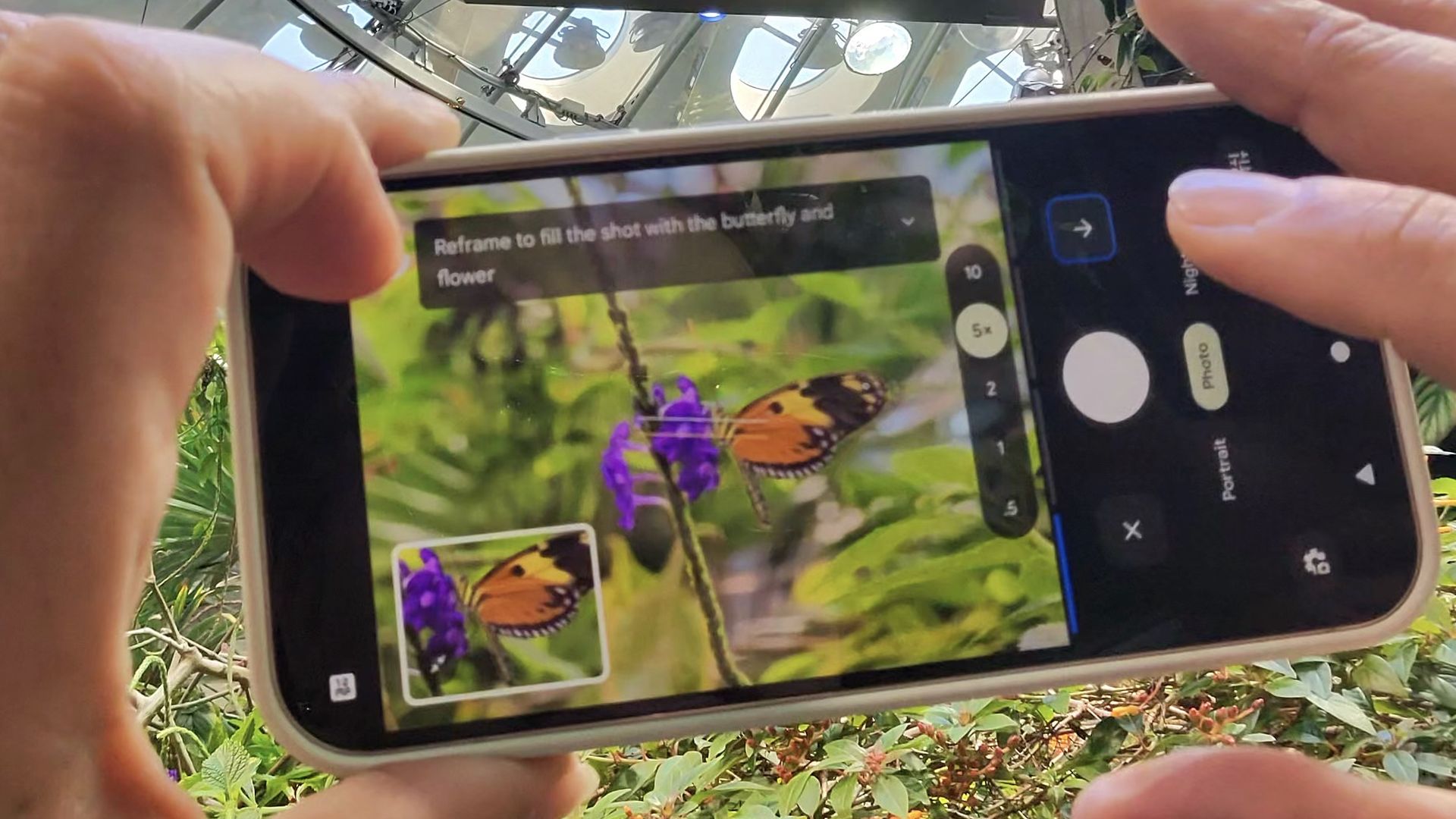
An image of the Pixel 10's Camera Coach in action, offering on-screen tips to capture the perfect image of a butterfly. Photo: Ina Fried/Axios
Google's new Pixel 10 lineup leans heavily on AI, with tools for sharper photos, real-time translation in your own voice and the beginnings of a truly personal AI assistant.
Why it matters: Smartphones haven't changed much in the last few years, but AI offers the potential to reshape the phones we rely on daily.
The big picture: Artificial intelligence shows up across the Pixel 10 experience and notably in the functions you use most — the camera, phone and messages.
- Apple laid out a similar vision last year for how AI could help the smartphone experience. But it has struggled to deliver and delayed its upgraded Siri, central to its ambitions.
- Google's AI features — significantly more ambitious than last year's enhancements — also seem better suited for everyday use than those served up by other Android phone makers.
Zoom in: I've been using a loaner Pixel 10 Pro for a little while. This review focuses on the AI features, specifically three key areas.
Camera
Google already equipped its phones with an impressive array of lenses and features, but this year it uses AI to make the camera both more capable and easier to use, as I experienced during a local photo safari at the California Academy of Sciences.
- A built-in "camera coach" offers tips and tricks, from basic photography techniques to offering up different angles. This feature seems super helpful for a patient beginner. I wouldn't describe myself as either.
- Also, the coach offers multi-step suggestions and I found the fish and butterflies I was trying to capture weren't keen on hanging around. That said, I left with an album full of great photos.
- A super-long zoom offers the ability to get far closer than the 5x optical zoom allows, with AI helping to fill in the details that might otherwise be blurry. In practice, this offered mixed results. It worked quite well on a long-distance shot of Sutro Tower, but struggled with some of my nature shots. It did allow me to capture really nice bird close-ups.

- Meanwhile, in the Google Photos app, you can now describe the edits you want to make to a photo rather than making the edits yourself. This lets you type or say things like "zoom in and fix the lighting" or even do broader AI transformations, such as making the Moon the background.
- Being able to edit photos by just asking for the changes you want is a big deal that I expect to set the stage for a radical shift in how we control our software more broadly.
Live translation in your own voice
A growing number of devices offer the option of real-time translation. The Pixel 10 is the first to make the translated audio sound like the person speaking.
- In practice calls with coworkers, the voice cloning worked quite well and the translation, while not perfect, was more than good enough to get the point across. The fact that it can do all this in near-real time is impressive and suggests a future where language differences need not be a barrier.
Magic Cue
Magic Cue offers in-the-moment suggestions using the Gemini Nano model that is running on the device itself. On-device AI allows for a feature that doesn't need the time or cost of going to the cloud, but also offers the potential for greater privacy — important since the feature works by mining data from sensitive sources including your email, calendar and contacts.
- For now the Magic Cues are relatively limited, designed to serve up things like flight details from an email while messaging with a friend. I struggled to get this working properly, in part because of the settings, and also because for now it works only with personal accounts, and most of my contacts and email are in my work account.
- My biggest request here is more. I want Magic Cue to work with more of my apps and data, so long as Google ensures the information either won't leave the device or, at a minimum, won't be used to train AI models or target ads.
Zoom out: The new crop of Pixel phones, which start at $799 for the base model and $999 for the Pixel 10 Pro model, raise the bar for what a powerful, easy-to-use Android phone can be.
- As a longtime iPhone user, I've long found the Pixel to be the easiest Android phone to pick up and use.
- With the Pixel 10 Pro, I find myself reaching for the device to see what it can do, even when I have my iPhone handy.
Bottom line: Google's Pixel 10 is forcing Apple and other rivals to accelerate their AI game, which means better phones for everyone in the coming years.
