LA 2028 Olympics to sell venue naming rights

Add Axios as your preferred source to
see more of our stories on Google.
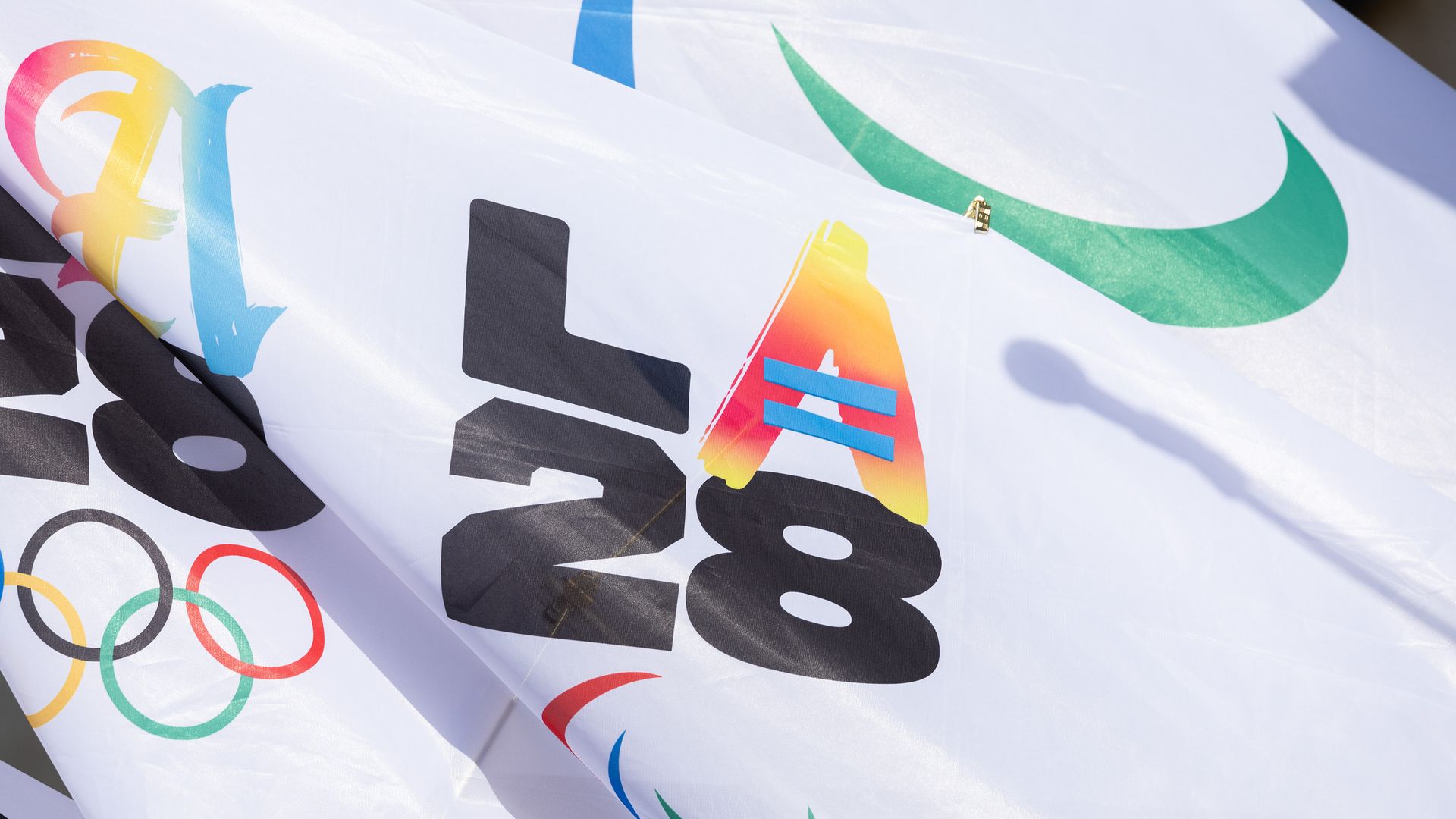
The 2028 Olympic logo. Photo: Myung J. Chun / Los Angeles Times via Getty Images
For the first time in the history of the Olympic and Paralympic Games, LA28 — the organizing committee for the 2028 Summer Games — is selling temporary naming rights at competition venues.
Why it matters: Unlike other host countries, the U.S. government does not directly fund the Games, which has forced the host committee to find creative ways to raise capital.
- The committee has already laid out a commercial sponsorship revenue target of $2.5 billion, which it says would be the largest commercial revenue raise in sports.
- A spokesperson told Axios the committee is on track to meet that goal.
Zoom in: Companies that already hold naming rights for venues will have the option to retain those rights during the Summer Games by becoming LA28 partners.
- If they decline, the Olympics' longstanding "clean venue" rules will remain, which means that the venue will be stripped of all non-official Olympics sponsor branding.
- The 2028 Games will repurpose permanent venues throughout Los Angeles, including SoFi Stadium and Crypto.com Arena.
The first named venues, announced Thursday by LA28, are the Comcast Squash Center at Universal Studios and the Honda Center in Anaheim, home to the Anaheim Ducks NHL team, which will house indoor volleyball.
- Comcast's Peacock Theater will host boxing, weightlifting and goalball, as has been previously announced.
Between the lines: There are 19 temporary venues that are eligible for naming rights.
- The first opportunities will go to members of the Olympic Partner program, followed by LA28's highest-tier domestic sponsors.
Zoom out: The change comes in response to new International Olympic Committee (IOC) rules that allow host cities to sell naming rights to official Olympics sponsors.
- The IOC is calling LA28's naming rights effort a pilot program to test new commercial revenue opportunities to support the Games.
- Previously, all Olympic venues were made clean venues.
