What to know about chikungunya virus, as U.S. travel alerts issued

Add Axios as your preferred source to
see more of our stories on Google.
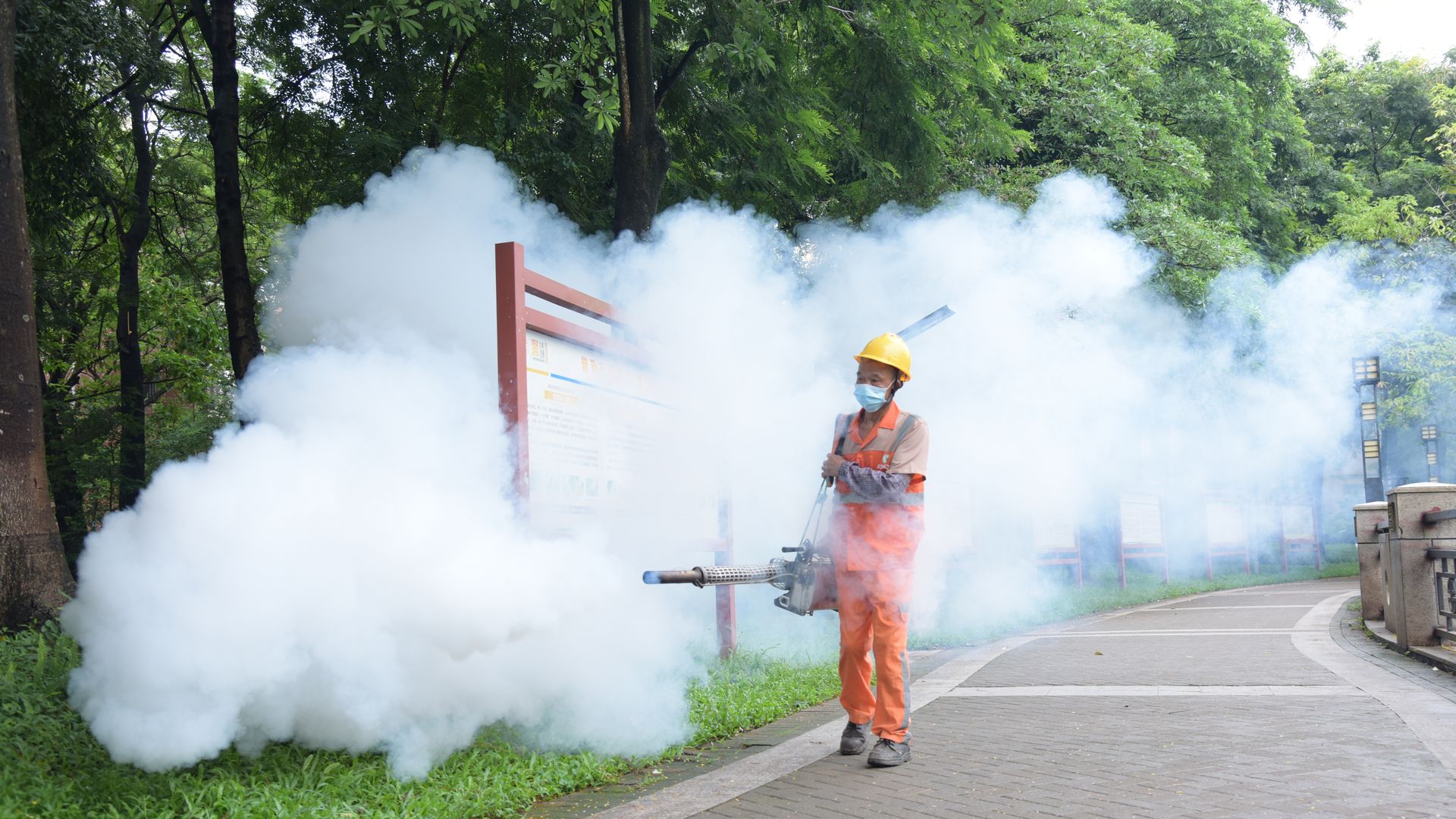
A sanitation worker sprays insecticide to prevent the spread of chikungunya in Dongguan in the Guangdong province of China on Sunday. Photo: VCG/VCG via Getty Images
Chikungunya virus outbreaks have prompted the CDC to issue travel alerts warning U.S. travelers of an "elevated risk" of exposure to the mosquito-borne illness in China and several other countries.
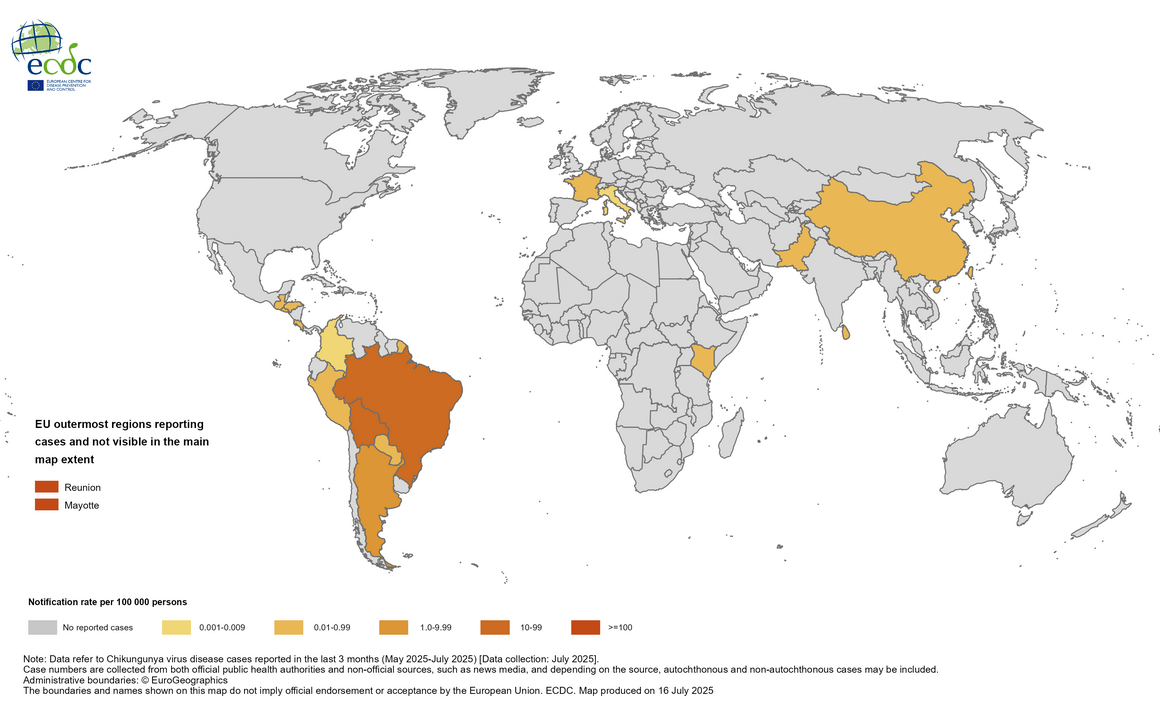
The big picture: Some 240,000 chikungunya cases have been reported in parts of Central and South America, Africa, the Indian Ocean region and Asia this year, including 90 deaths. Officials in Guangdong province, South China, have confirmed at least 7,000 illnesses since June.
What are the symptoms of chikungunya virus?
The painful viral disease that's not contagious is spread to people by infected female mosquitoes that can also transmit dengue and Zika viruses, according to the World Health Organization.
- "Severe symptoms and deaths from chikungunya are rare and usually occur in young babies or elderly people with other coexisting health problems," the WHO notes.
- The most common symptoms of chikungunya are fever and joint pain, per the Centers for Disease Control and Prevention.
- "Other symptoms can include headache, muscle pain, joint swelling and rash," the CDC says.
Which countries has the CDC issued travel alerts for?
The CDC has issued Level 2 "practice enhanced precautions" travel health notices over chikungunya outbreaks in:
- Bolivia, South America.
- Guangdong province, China.
- The Indian Ocean region countries and territories Madagascar, Mauritius, Mayotte, Réunion, Somalia and Sri Lanka.
Of note: The CDC warns of an elevated risk of exposure for U.S. travelers visiting Brazil, Colombia, India, Mexico, Nigeria, Pakistan, the Philippines and Thailand.
What's happening in China?
Most of the chikungunya illnesses have been reported in Foshan, a Guangdong province city of about 7.8 million people.
- The first case since 2019 was reported in the financial hub of Hong Kong on Monday.
- Officials have launched a "patriotic public health campaign" in response that the New York Times notes is triggering memories of crackdowns during the COVID pandemic.
Zoom in: Foshan crews have been spraying people with insect repellent before letting them into building entrances and home inspectors have ordered residents to discard stagnant water, per the NYT.
- Anyone who doesn't comply may be criminally charged for "obstructing the prevention of infectious diseases," and some Guicheng district households have had their power cut for not cooperating.
Meanwhile, drones have been launched to detect potential mosquito-breeding sites in sources of stagnant water.
- Thousands of mosquito-larvae eating fish and cannibal "elephant mosquitoes" that can consume smaller, chikungunya-spreading insects have also been deployed.
Is chikungunya common in the U.S.?
"Locally acquired chikungunya cases have not been reported from U.S. states or territories since 2019," per the CDC.
Yes, but: There were 199 travel-associated reports in the U.S. in 2024 and 46 this year, according to the health agency.
What precautions should U.S. travelers take?
The CDC advises travelers to affected regions to use insect repellent, wear long-sleeved shirts and pants and stay in places with air conditioning or that have screens on the windows and doors.
- "Vaccination is recommended for travelers who are visiting an area with a chikungunya outbreak," the CDC notes.
- "Some U.S. travelers (e.g., pregnant women) can use this information on chikungunya risk to help decide if they should avoid travel."
Go deeper: Insect-borne illnesses rise around the world
