Summer road trips in EVs have gotten a lot easier, fast

Add Axios as your preferred source to
see more of our stories on Google.
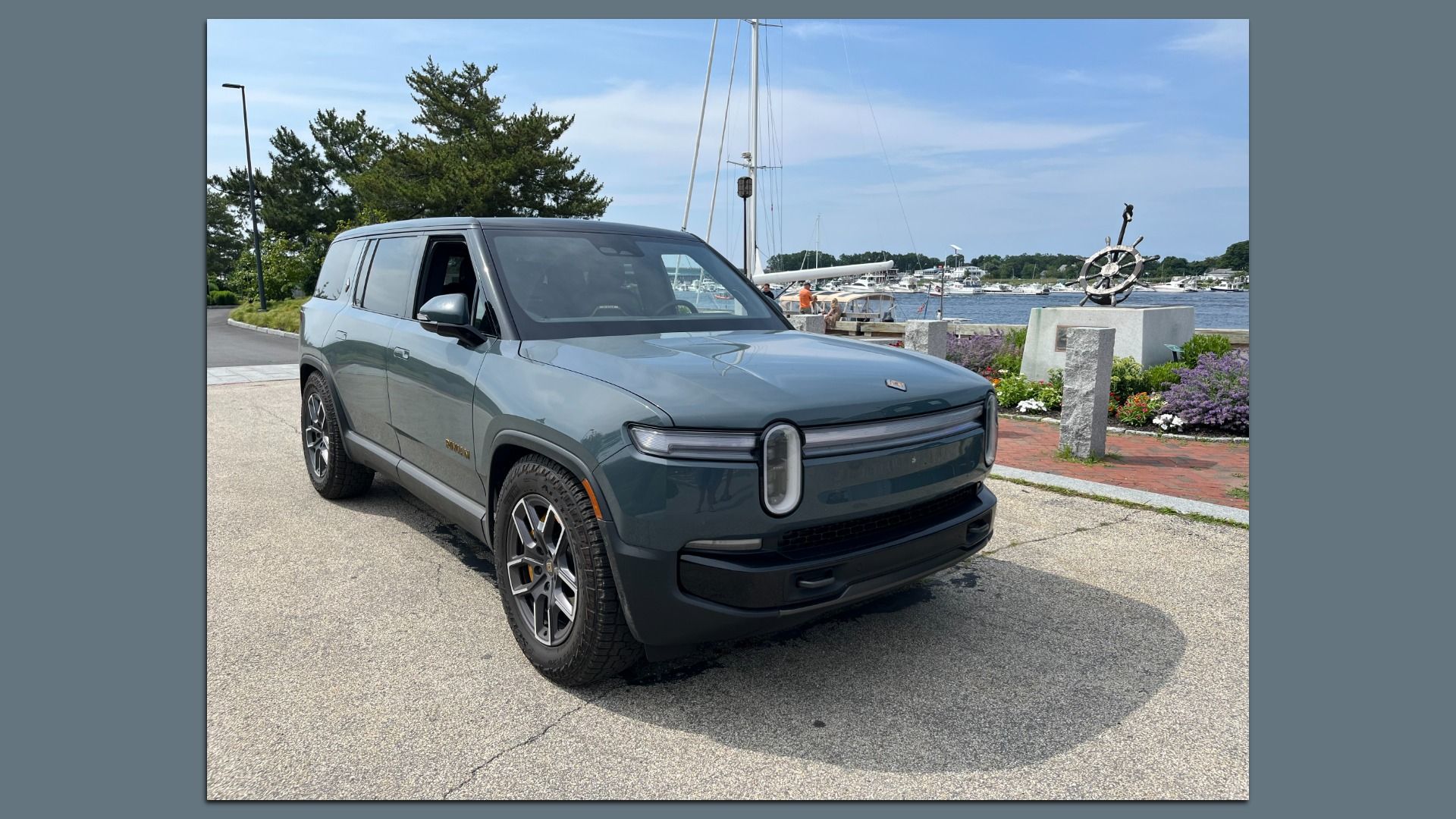
The historic seaport in Newburyport, Mass., provided a scenic lunch spot during our New England road trip in the Rivian R1S. Photo: Joann Muller/Axios
Every road trip is an adventure, but this summer I learned that a cross-country trek in an electric vehicle is a lot less daring than it seemed just a couple years ago.
- Many EVs now have a driving range of 300 miles or more — about the same as a gasoline car — and high-speed charging is a lot easier to find, too, now that Tesla Superchargers are open to other brands.
Why it matters: Solving range anxiety is an important hurdle for potential EV buyers.
- But sticker prices remain high, and with EV tax incentives going away, affordability will continue to be an issue.
Flashback: In February 2023, my husband and I drove 2,500 miles from Michigan to Florida and back in a Kia EV6 to see if America was ready for the era of electric transportation.
- We encountered some challenges along the way and learned some valuable lessons.
Fast forward: I wanted to see how things have changed since then, especially in terms of charging availability.
- So this summer we planned a 2,200-mile trip from Michigan to Maine and back in a Rivian R1S loaned from the automaker's press fleet.
First, the car: The R1S, a 7-passenger electric SUV, is Rivian's most popular model.
- We drove the Tri Max version — three electric motors and a huge 140 kWh battery pack — good for a head-snapping 850 horsepower and an EPA-estimated 371 miles of driving range.
- Yes, but: All-terrain wheels cut our driving range to 326 miles, even in "Conserve" mode.
- The Tri Max's base price is $105,900, but with upgrades, ours came to $114,850.
Hands-free technology is a giant bonus on a long road trip, and Rivian's enhanced highway assist system allowed us to take our hands off the wheel (while paying attention).
- But it often asked us to retake the wheel in areas where it lacked confidence or wasn't available, like near a construction zone or highway rest area.
Zoom in: Driving a Rivian requires a steep learning curve.
- There aren't any switches on the car's dash. Instead everything is controlled on a giant touchscreen (like Tesla) and with unlabeled thumbwheels on the steering wheel.
- If you want to adjust the seats, mirrors or steering column, for example, it's a two-step process.
💭 Thought bubble: Trying to operate a computer screen at 70 miles per hour is challenging; every bump in the road causes your finger to miss its target.
- The Rivian's driver-monitoring system periodically scolded me to keep my eyes on the road. I wanted to scream back: "Then don't put all the controls in hard-to-reach places!"
- At least the Rivian is equipped with Amazon's Alexa voice assistant to help handle some commands.
One other gripe: A road trip requires a good map, but the Mapbox-based navigation system in the Rivian R1S was awful (a common complaint among Rivian owners).
- It literally had us driving in circles sometimes, and randomly sent us in the opposite direction of the route we had selected.
- Frustrated, we used our phones' Apple Maps feature at times (Rivian doesn't support Apple Carplay or Android Auto).
- The good news: Rivian just announced that it's switching to Google Maps, while keeping helpful stuff like EV range estimates and charging stop selections.


Charging wasn't the stress-inducer it was two years ago.
- Tesla opened its Superchargers to other brands starting in 2023, qualifying for lucrative tax breaks in return.
- Initially, non-Teslas needed an adapter, but most brands are migrating to Tesla's more streamlined plug style.
By the numbers: Tesla has roughly 2,700 Supercharger stations in the U.S., with more than 32,000 charging ports, according to a U.S. Department of Energy database.
- Tesla's network alone represents more than half the fast-chargers in the U.S.
- About two-thirds of Tesla locations are currently open to other car brands.
What we found: We stopped to recharge 17 times over two weeks, typically for 20-30 minute sessions — long enough to use the bathroom or grab a snack.
- We weren't stressed about charging the battery all the way to 100% because we had plenty of range and knew we'd have other opportunities down the road.
Between the lines: We preferred Tesla Superchargers or Rivian Adventure Network locations because both offer streamlined "plug-and-charge" capability.
- When you plug the cable into the car, it automatically identifies your vehicle, verifies your account, and starts charging without swiping a credit card or using an app.
By the numbers: Charging away from home can be expensive (although some hotels let you plug in for free overnight).
- Residential electricity costs an average 17 cents per kilowatt-hour (kWh), according to the U.S. Energy Information Administration.
- Many public networks charge closer to 56 cents per kWh.
- We spent a total of $598 on charging.
The bottom line: Road trips should be fun, and ours was because we weren't preoccupied about where we'd charge next.
