Scoop: Treasury leads negotiation as "revenge tax" looms

Add Axios as your preferred source to
see more of our stories on Google.
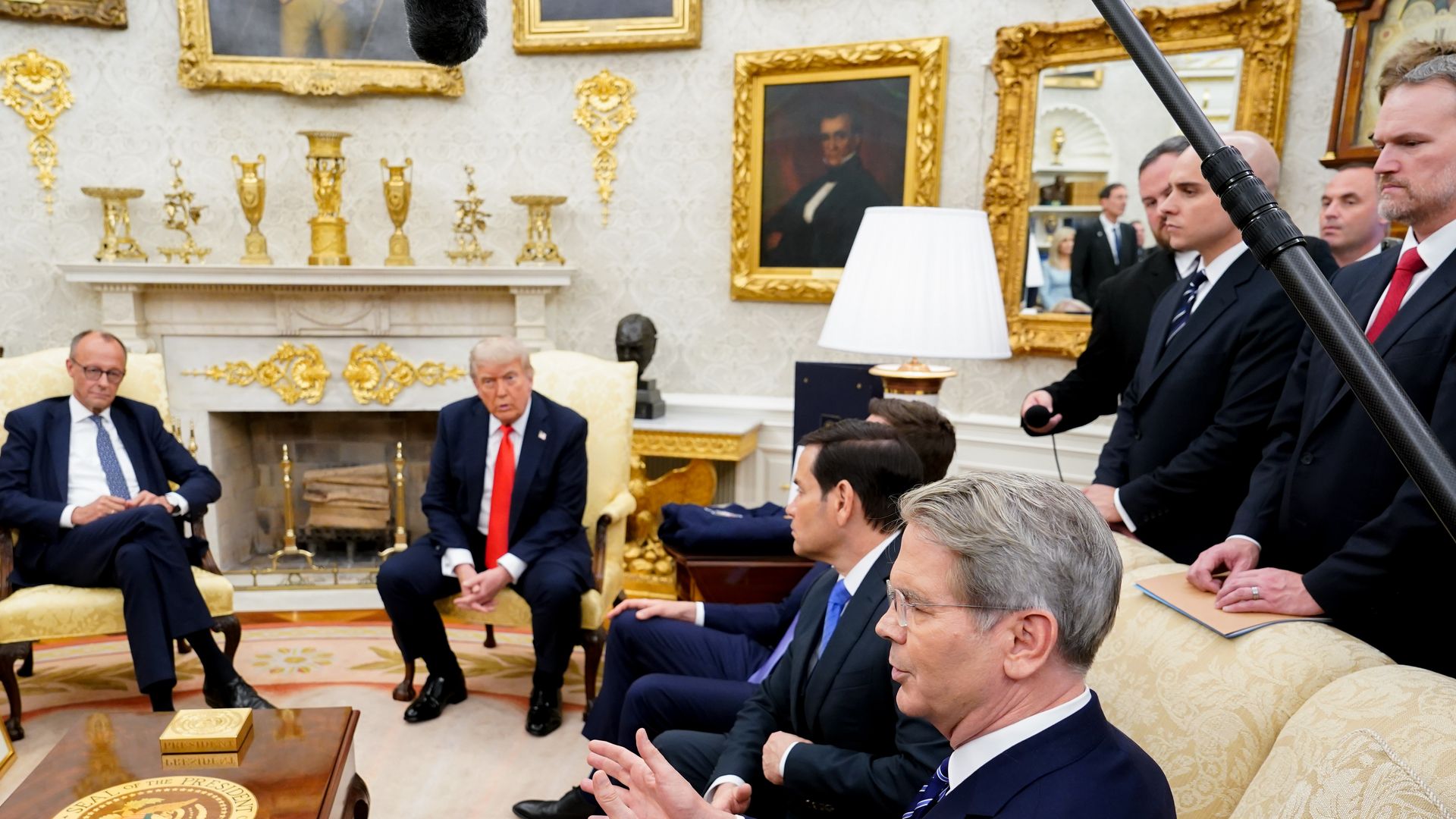
Treasury Secretary Scott Bessent speaks during a meeting with President Trump and German Chancellor Friedrich Merz. Photo: Chris Kleponis/CNP/Bloomberg via Getty Images
Top Treasury officials are privately explaining to GOP senators that Section 899 of the House-passed budget bill is already forcing foreign countries to the negotiating table, according to administration officials.
Why it matters: Critics are calling the provision a "revenge tax." But the Trump administration sees Section 899 as an important tool — like tariffs — to help negotiate better deals for American multinational corporations.
- While Trump officials are signaling to senators a willingness to make changes to the provision, they are also making the case for why it should stay in Trump's "one, big beautiful bill," officials said.
- Some Republican senators, including Sen. Thom Tillis (R-N.C.), have expressed reservations about the provision.
Zoom out: On his first day in office, Trump promised to undo the Biden administration's plan to impose a global minimum corporate tax. He signed an executive order that it "has no force or effect."
- Section 899 is an attempt to give the White House more power to negotiate with the Organization for Economic Co-operation and Development, a collection of 38 market-based economies, which has also been critical of Trump's trade policies.
- While the original outline of the global minimum tax rates was included in President Biden's Inflation Reduction Act, it ultimately required foreign countries to come to a common agreement on how to tax multinational corporations.
- Republicans howled at that process and argued that it usurped Congress' constitutional power to establish tax rates. They also had policy concerns with a global minimum tax.
Zoom in: Section 899 of the House-passed budget bill is designed to penalize countries that impose taxes on U.S. companies, including a global minimum tax of 15% as well as a digital services tax.
- It allows the U.S. to increase tax rates for foreign direct investment on countries it claims has unfair tax policies.
- Wall Street is worried that a potential tax on foreign investment could harm U.S. assets and the broader economy.
- But there's some indication that European countries are open to modifying their policies in order to mollify the Trump administration, Bloomberg reported.
The other side: A coalition of trade associations, led by the Global Business Alliance, wrote to Senate Majority Leader John Thune (R-S.D.) and Senate Finance Committee Chair Mike Crapo (R-Idaho) to call for the removal of the provision.
- "As the budget reconciliation process advances, we urge you to uphold the pro-growth principles embedded in the Tax Cuts and Jobs Act (TCJA) and avoid tax increases that would undermine American jobs, innovation, and long-term economic growth," the coalition wrote.
The bottom line: The Trump administration is essentially arguing to senators that Section 899 might never have to be used.
- House Ways and Means Chair Jason Smith (R-Mo.) essentially made this point last week when he told Axios' Neil Irwin that "hopefully it'll never take effect."
