What is the Hajj, Muslims' sacred pilgrimage?

Add Axios as your preferred source to
see more of our stories on Google.
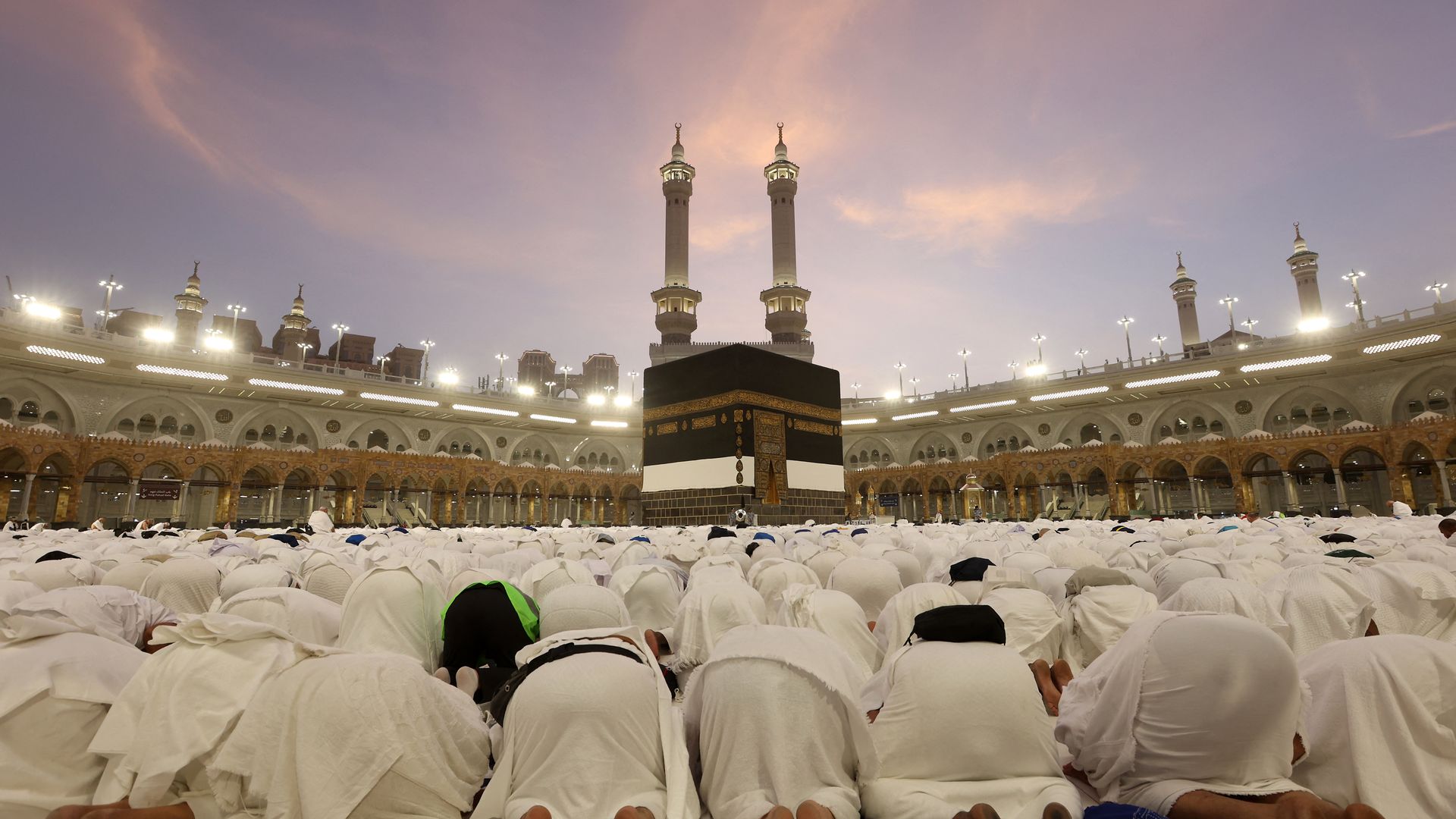
Muslim worshippers pray around the Kaaba, Islam's holiest shrine, in the holy city of Mecca on June 2 ahead of the annual Hajj pilgrimage. Photo: AFP via Getty Images
Muslims from around the world travel to participate in the Hajj each year, an annual sacred pilgrimage to the holy city of Mecca in Saudi Arabia.
The big picture: The deeply spiritual journey, which every able-bodied and financially capable Muslim is expected to undertake at least once, is one of the five pillars of Islam
- More than 1 million Muslims have already arrived in Saudi Arabia, posing a tremendous logistical challenge for the Saudi government in the face of changing climate risks.
Driving the news: Wednesday marks the official start of the Hajj.
- Last year, more than 1.6 million foreign pilgrims flocked to Saudi Arabia, and more than 1.83 million Muslims performed the Hajj.
What to know about the holy pilgrimage:
What is the Hajj?
The Hajj is a days-long process that fulfills one of the five core tenets of the Muslim faith.
- The others are the profession of faith, prayer, giving alms and fasting.
Zoom in: The Hajj occurs once a year during Dhul-Hijja, the final month in the Islamic lunar calendar.
- Before it begins, pilgrims must enter a sacred state known as ihram, which includes wearing specific clothing to convey equality as class markers are discarded.
- Other rituals include performing the tawaf, where pilgrims circle the holy Kaaba shrine — a cube-like structure at the center of the Masjid al-Haram — seven times in a counter-clockwise direction.
- Eid al-Adha, the Festival of Sacrifice, is celebrated during the Hajj and commemorates the prophet Ibrahim's willingness to sacrifice his son at God's command.
How does severe heat affect the Hajj?
More than 1,300 pilgrims died last year from an extreme heat wave during the pilgrimage.
- Saudi officials said 83% of those who died were not authorized to perform the Hajj and walked long distances in direct sunlight without adequate shelter.
- Pilgrims who receive permits can access heat protections, per The New York Times, but unregistered visitors are often exposed to the risks of severe heat.
Worthy of your time: The U.S. State Department advises those traveling to Mecca that summer temperatures can easily surpass 105 degrees Fahrenheit.
- Last year, temperatures exceeded 115 degrees Fahrenheit.
What safety measures are being taken?
Children under 12 are banned from this year's Hajj, per the Associated Press.
- The move is meant to protect children, who are exempt from the Hajj and other obligations, from the dangers posed by large crowds.
- In 2015, a stampede at the Hajj killed over 2,400 pilgrims.
The Saudi government invested in infrastructure improvements and crowd control systems around Islam's holiest sites, per the Times.
- Those include rubberized and cooled roads for this year's Hajj. Cooling systems, air-conditioned buses and other mitigation practices are also available.
- Additionally the government cracked down on pilgrims without official permits, with violators facing fines and bans from entering the kingdom, per the Times.
Catch up quick: During the COVID-19 pandemic, Saudi Arabia severely limited the pilgrimage.
- In 2022, the pilgrimage roared back to the largest crowd since the restrictions were implemented, though it was still smaller than it was pre-pandemic.
Go deeper: Saudi Arabia agrees to discuss direct flights from Israel for hajj
