Google loses online advertising monopoly case


Add Axios as your preferred source to
see more of our stories on Google.
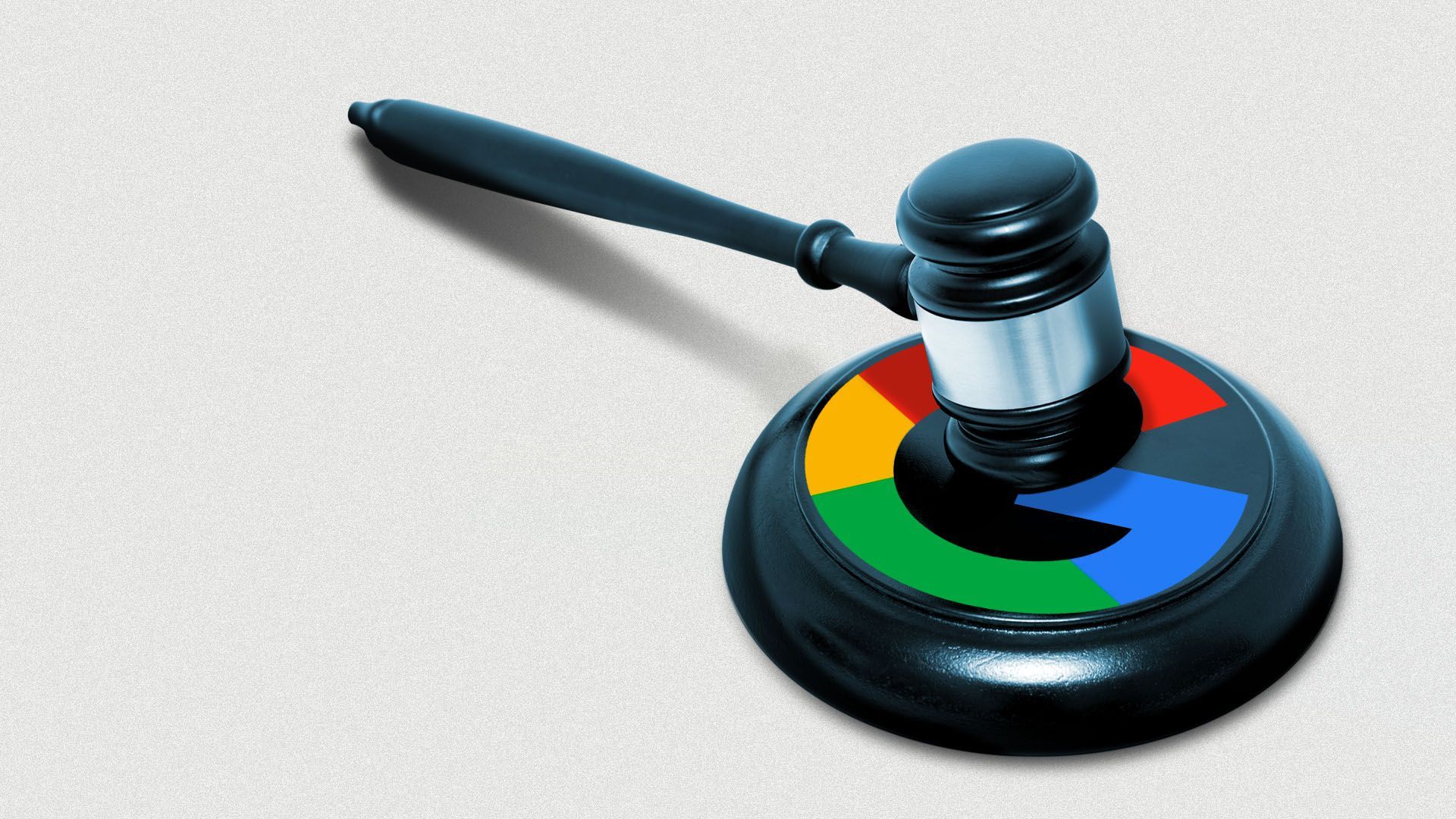
Illustration: Sarah Grillo/Axios
Google's dominance of the online advertising and ad-tech markets violates U.S. antitrust laws, a federal court ruled Thursday, in a decision that could scramble the massive digital ad universe.
Why it matters: It's the second major recent antitrust loss for Google, after a different court ruled last year that the giant has abused its dominance of the search market online.
How it works: The federal government and 17 states who brought the suit seek to force Google to sell off part of its "network" ad business, which sells ads on other publishers' inventory.
- That accounts for roughly 12% of Alphabet's overall business. Google argues spinning it out would actually hurt publishers, because it would force them to buy ads through more expensive rival networks.
Between the lines: Forcing Google to give up its ad tech arm would be punitive but wouldn't fundamentally change Google's business.
- The company still makes mountains of money selling ads alongside its own YouTube videos and search results.
- But a forced divestiture would almost certainly impact Google's top-line enough to force it to recalibrate its spending on new areas of investment, such as its AI and cloud businesses. Google largely relies on ad revenue to fuel its new bets.
Yes, but: The court drew a distinction between the markets for advertising exchanges and ad servers, where it found Google has an illegal monopoly, and the general market for display ads online, where it found Google does not.
What they're saying: "Google has violated Section 2 of the Sherman Act by willfully acquiring and maintaining monopoly power in the open-web display publisher ad server market and the open-web display ad exchange market, and has unlawfully tied its publisher ad server (DFP) and ad exchange (AdX) in violation of Sections 1 and 2 of the Sherman Act," Judge Leonie Brinkema of the U.S. District Court for the Eastern District of Virginia ruled in a 115-page opinion.
The other side: "We won half of this case and we will appeal the other half. The Court found that our advertiser tools and our acquisitions, such as DoubleClick, don't harm competition. We disagree with the Court's decision regarding our publisher tools. Publishers have many options and they choose Google because our ad tech tools are simple, affordable and effective." Lee-Anne Mulholland, Google's vice president for regulatory affairs, said in a statement.
What's next: The ruling means that the judge will move on to a phase in the trial that considers what sort of penalties or remedies to impose.
- The search case is now in that phase as well. There, the government is seeking to force Google to divest its Chrome search engine.
- It's also possible Google will be forced to give up its lucrative search partnership deals with device-makers like Apple as a result of that case.
Editor's note: This story has been corrected to indicate that the lawsuit seeks to force Google to sell off part of its "network" ad business (not all of it).
