Legal Defense Fund sues Department of Ed over DEI defunding move

Add Axios as your preferred source to
see more of our stories on Google.
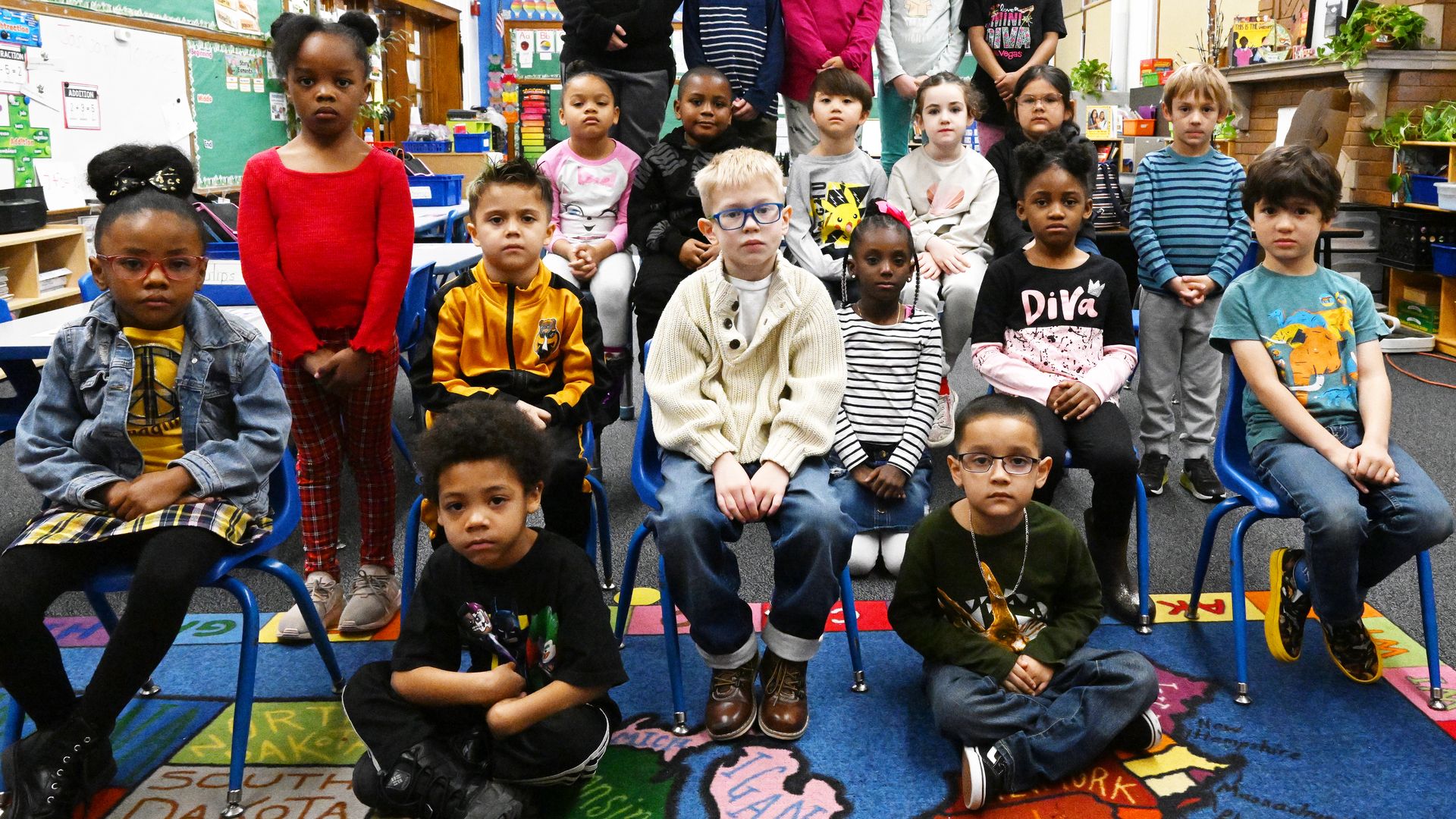
A kindergarten class at Stedman Elementary School poses for a portrait on January 11, 2023 in Denver, Colorado. Photo: RJ Sangosti/MediaNews Group/The Denver Post via Getty Images
A storied civil rights legal group that helped desegregate U.S. public schools seven decades ago is suing the U.S. Department of Education over its efforts to stop diversity, equity and inclusion initiatives in K-12 public schools.
Why it matters: The federal lawsuit by the Legal Defense Fund (LDF) on behalf of the NAACP is the latest challenge to the Trump administration's attempts to end DEI programs and limit discussions of racism in schools.
The big picture: The lawsuit comes at the Trump administration is using a broad reinterpretation of Civil Rights-era laws to focus on "anti-white racism" rather than discrimination against people of color.
- It also follows some recent embarrassing missteps by agencies erasing — then restoring — websites dedicated to Black historic figures like Jackie Robinson and Harriet Tubman amid a massive DEI purge.
- President Trump's executive order ending federal DEI initiatives has caused confusion and several legal challenges across multiple agencies.
Catch up quick: Earlier this month, the Department of Education sent letters to state K-12 agencies requiring them to comply with the Trump administration's anti-diversity policies to maintain their federal funding.
- State officials were given a certification form, due within 10 days, to vouch that their policies aligned with federal directives against DEI practices.
- In February, the Department of Education warned academic institutions in a "Dear Colleague" letter that it may cut federal funding for those with policies related to race or diversity.
Zoom in: The LDF said in a lawsuit filed Tuesday in U.S. District Court in Washington, D.C. that the moves will "chill lawful activities known to benefit Black students" and eliminate obstacles that unfairly hurt Black students.
- The lawsuit said the Department of Education's demands contained factual inaccuracies and misinterpretations of civil rights laws and threatened to terminate critical public education.
- The lawsuit also alleged that the department was intentionally discriminating against Black students through its efforts to defund federal grantees based on erroneous facts and interpretations of law.
- It names the U.S. Department of Education, U.S. Secretary of Education Linda McMahon and acting assistant secretary for civil rights Craig Trainor.
- The lawsuit seeks to stop the department from enforcing its threats to pull federal funding from schools that maintain their DEI programs and keep books on Black history.
A Department of Education spokesperson did not immediately respond to Axios about the lawsuit.
What they're saying: "These threats seek to undo decades of progress towards equality for all in public education," Katrina Feldkamp, assistant counsel at the Legal Defense Fund, said in a statement.
- "The current administration's attacks are a threat to longstanding efforts to ensure truthful, inclusive curricula and instruction."
Context: U.S. public schools are growing more separate and unequal even though the country is more racially and ethnically diverse than ever.
- Federal data examined by the UCLA Civil Rights Project and the Educational Opportunity Project at Stanford University tool reviewed by Axios found that in the years after Gen X left public schools, the districts began to resegregate and today have returned to 1960s segregation levels.
- The typical Black student in 1990 attended a school with a student population that was 34.7% white. By 2021, the average Black student went to a school that was only 24.5% white.
- In 1988, only around 7.4% of schools were intensely segregated, which means students of color represented more than 90% of their student bodies. By 2021, the percentage of intensely segregated schools skyrocketed to nearly 20%.
Between the lines: Educators and advocates have argued that diversity and racial equity programs help keep Black, Latino and Native American students engaged and assist with graduation rates.
