NPS restores Underground Railroad history after outcry

Add Axios as your preferred source to
see more of our stories on Google.
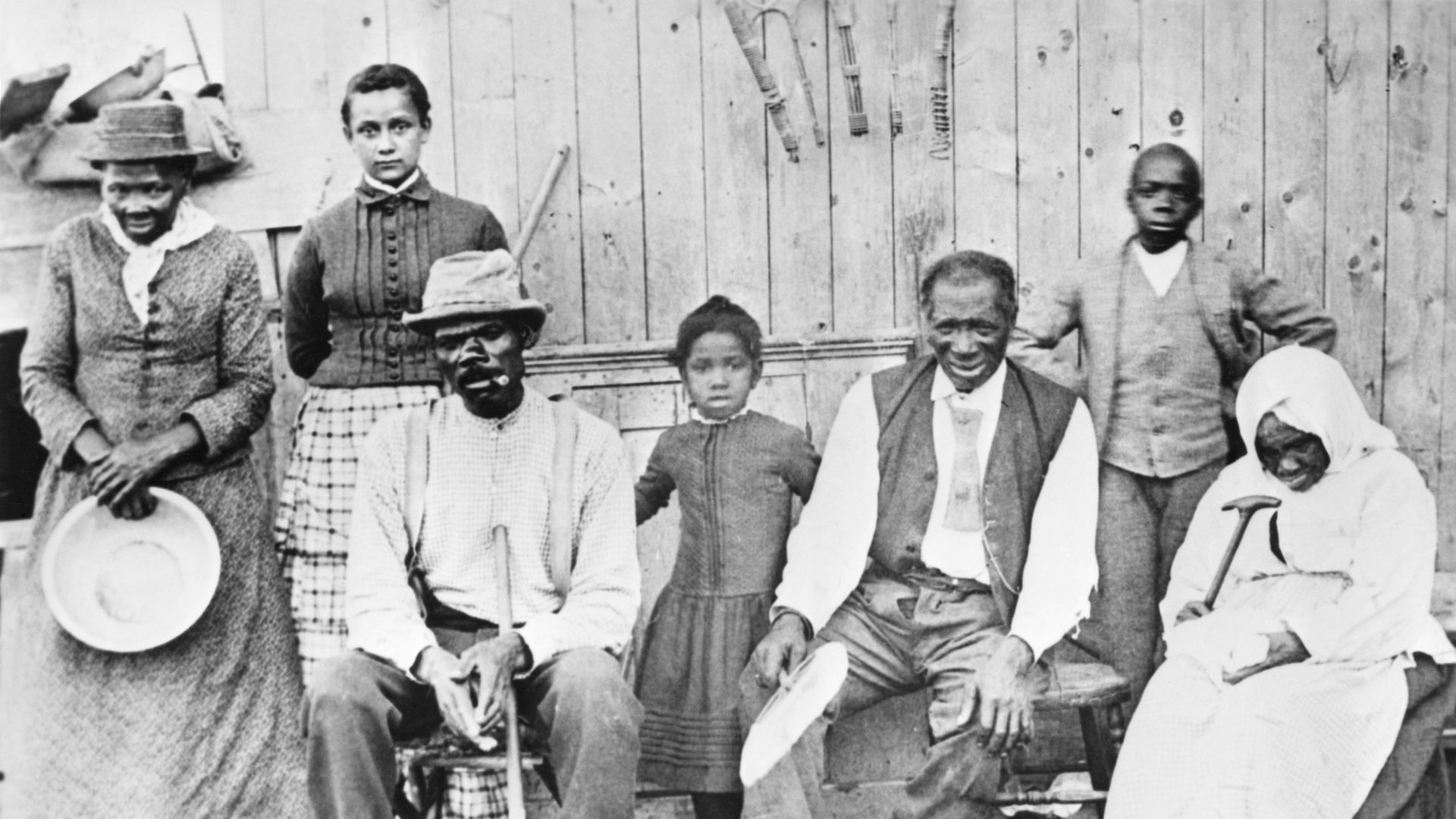
Portrait of American abolitionist Harriet Tubman as she poses with her family, friends and neighbors on her porch in Auburn, New York, in the mid to late-1880s. Photo: Bettmann/Getty Images
The National Park Service rewrote — then restored — the Underground Railroad story and reposted a deleted photo of abolitionist Harriet Tubman.
Why it matters: The initial rewriting of abolitionist sites and history, first reported by the Washington Post, comes amid a massive purge of articles about people of color on government websites following President Trump's executive order ending federal diversity, equity and inclusion initiatives.
The big picture: It also comes as the administration is reinterpreting Civil Rights-era laws and history to focus on "anti-white racism" rather than discrimination against people of color.
- It follows President Trump's order to review monuments toppled in the wake of George Floyd's murder, targeting what he calls a "concerted and widespread effort to rewrite our Nation's history."
- That executive order takes aim at what he called a "revisionist movement" that he says has infiltrated the Smithsonian Institution and other federal sites dedicated to America's history.
Zoom in: The National Park Service initially removed from a webpage an introductory quote from Tubman about being a conductor in the secret network and replaced it with postal stamps of white and Black people working together — sparking pushback from groups including the National Parks Conservation Association.
- It retold the Underground Railroad story as an episode of "Black/White cooperation," and removed a photo of abolitionist Harriet Tubman.
- The introduction also dropped references to enslavement and instead focused on white/Black allyship during the lead-up to the Civil War.
- "The Underground Railroad bridged the divides of race, religion, sectional differences, and nationality," the website was updated to say.
- "(It) joined the American ideals of liberty and freedom expressed in the Declaration of Independence and the Constitution to the extraordinary actions of ordinary men and women working in common purpose to free a people."
Yes, but: The National Park Service told Axios that the rewriting of the website was a mistake.
- "Changes to the Underground Railroad page on the National Park Service's website were made without approval from NPS leadership nor Department leadership," NPS spokesman Rachel Pawlitz told Axios late Monday.
- "The webpage was immediately restored to its original content."
- A NPS spokesperson earlier Monday defended the rewriting as "a couple (of) web edits" and said it was "completely false" that the rewriting invalidated the agency's commitment to tale a complex story.
Context: The Underground Railroad was a secret network of routes, safe houses and people who aided Black Americans who were enslaved in violation of the "American ideals of liberty and freedom."
- Though it consisted of a network for Black and white abolitionists, many had become disillusioned with American ideals and many Black Americans sought to escape to Canada and Mexico.
Zoom out: The initial rewriting of the Underground Railroad follows another initial website purge that drew outrage before it was restored, too.
- Last month, the U.S. Department of Defense removed — then restored — a webpage featuring baseball and civil rights pioneer Jackie Robinson, who served in the Army during World War II and segregation.
- It was part of a purge of articles about soldiers of color on government websites following President Trump's executive order ending federal DEI initiatives.
The department also removed articles about the famed Native American Code Talkers.
- A National Guard article on the celebrated 442nd Regimental Combat Team — made up almost entirely of Nisei, or second-generation Japanese-Americans and who liberated Nazi concentration camps — was removed.
Between the lines: Historians are uncovering new evidence about the Underground Railroad to Mexico — a loosely organized path allowing enslaved Black people in Texas, Louisiana, Oklahoma and Alabama to escape bondage by fleeing south.
- Other recent works, like Erica Armstrong Dunbar's 2017 book on Ona Judge, a woman who fled enslavement from President George Washington, have garnered national attention.
- "Sweet Taste of Liberty: A True Story of Slavery and Restitution in America," by W. Caleb McDaniel, a meditation on reparations based on the story of a woman who survived kidnapping and re-enslavement, won a Pulitzer in 2020.
Editor's note: This story has been updated with a response from the National Park Service and to reflect that the Underground Railroad history has been restored to the NPS site.
