Trump envoy Witkoff to lead high-stakes nuclear negotiations with Iran

Add Axios as your preferred source to
see more of our stories on Google.
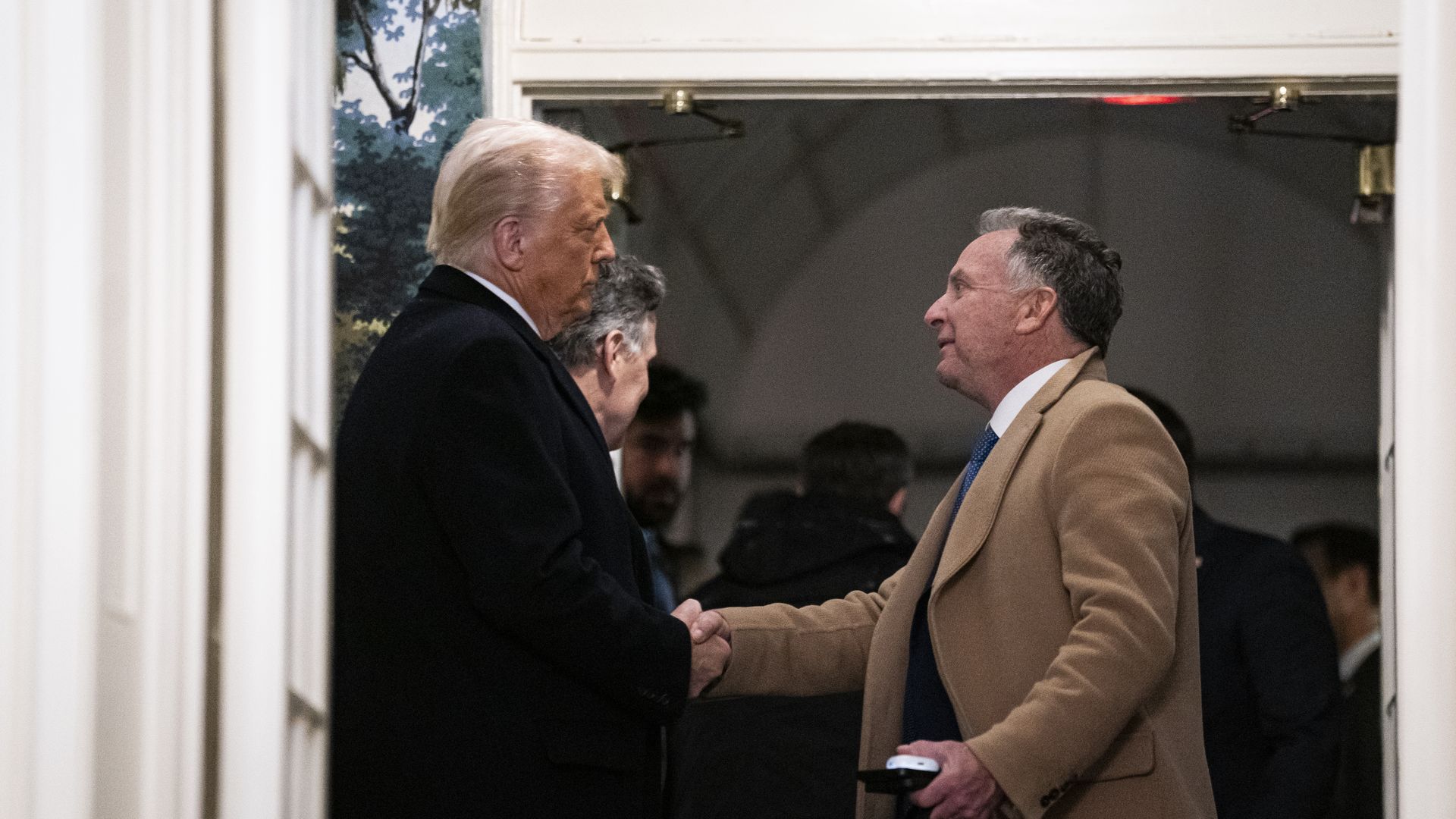
Trump and Steve Witkoff at the White House. Photo: Al Drago/Getty Images
President Trump's envoy Steve Witkoff will lead the U.S. delegation for nuclear talks with Iran on Saturday in Oman, two sources familiar with the plan tell Axios.
Why it matters: President Trump surprised the world Monday by announcing the high-level meeting between U.S. and Iranian officials. If diplomacy fails, the next stage is likely war.
Between the lines: So far, there have only been negotiations about the negotiations — which don't yet seem to be resolved.
- Iranian Foreign Minister Abbas Araghchi, whom Iranian press reports say will be Iran's chief negotiator, insisted the talks would be "indirect" — with Omani mediators passing messages between the sides.
- Trump insisted the talks would be "direct." Two U.S. officials told Axios that is indeed the plan.
Whatever the format, the stakes are clear.
- "If the talks aren't successful with Iran, I think Iran is going to be in great danger," Trump said, when asked by Axios if he was prepared to use military force to destroy Iran's nuclear program. "You know, it's not a complicated formula. Iran cannot have a nuclear weapon."
How it happened: Trump kicked off the nuclear diplomacy last month with a letter to Iranian Supreme Leader Ali Khamenei in which he gave Tehran two months to make a deal, without actually saying when the clock would start ticking.
- Khamenei had publicly dismissed the idea of direct talks with Trump — who withdrew from previous Iran deal in 2018 — but responded with a letter of his own in late March.
Behind the scenes: Omani mediators have exchanged messages between the sides since Khamenei transmitted his response.
- The exchange has mostly been "a negotiation about the format of the negotiations," as one U.S. official put it, with the U.S. prioritizing efficiency and the Iranians wanting slower indirect talks that would allow them to build trust and assess the U.S. endgame.
- Trump's preferred direct format "would mark a vital shift from talking past each other to talking with one another," says Ali Vaez, director of the Iran project at the International Crisis Group.
Between the lines: Bombs vs. diplomacy on Iran is a live debate within the Trump administration and the wider MAGA world.
- Trump threatened to strike Iran, but he aligns more with the dovish camp that favors a diplomatic solution. Witkoff and Vice President Vance also believe a deal with Iran is possible and preferable, according to a source familiar with their thinking.
- In an interview with Tucker Carlson — who himself has vehemently opposed the "suicidal" Iran warmongering from "neocons" in the administration — Witkoff said there was "a real possibility" of getting a "verification program" to ensure Iran isn't developing a nuclear weapon.
- But hawks like national security adviser Mike Waltz and Secretary of State Marco Rubio are much more supportive of military action and skeptical of the chances of a deal.
The intrigue: One prominent Iran hawk, Israeli Prime Minister Benjamin Netanyahu, was in the Oval Office when Trump announced the Iran talks.
- Israeli officials say Netanyahu was briefed ahead of time. Still, the situation was embarrassing for a prime minister who has strongly criticized past administrations for their Iran outreach.
