Trump fights order to return wrongfully deported Maryland man at Supreme Court

Add Axios as your preferred source to
see more of our stories on Google.
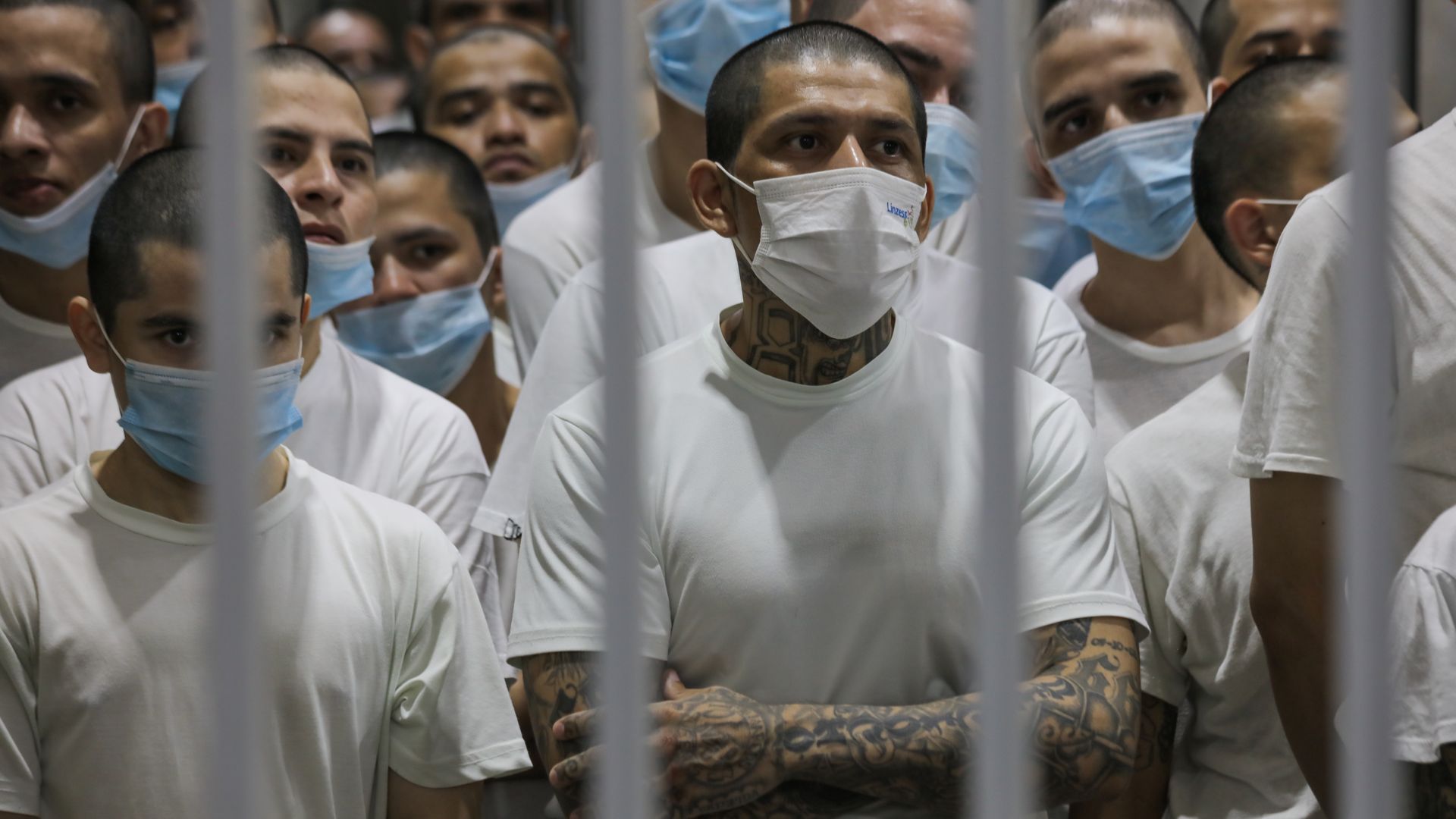
Men stand in a cell at the Terrorism Confinement Center (CECOT) in Tecoluca, in San Vicente, El Salvador on April 4. Photo: Alex Pena/Anadolu via Getty Images
The Trump administration asked the Supreme Court to halt a federal judge's Monday deadline to return a Salvadorian national who was mistakenly deported.
The big picture: U.S. District Judge Paula Xinis blasted the government over its "grievous error" in deporting Kilmar Armando Abrego Garcia, who was legally living in Maryland, to El Salvador, where he faces risk of harm that "shocks the conscience."
- Xinis first ordered on Friday that Abrego Garcia be returned to the U.S. by Monday night, teeing up yet another high-stakes battle between the executive and judicial branches.
Driving the news: The administration characterized her order as "unprecedented relief" in its application to the high court, repeating accusations that Abrego Garcia is a member of MS-13.
- But Abrego Garcia has not been convicted of gang-related crimes
- "Even amidst a deluge of unlawful injunctions, this order is remarkable," Solicitor General D. John Sauer wrote. The order, he contended, sets the U.S. "up for failure."
- He argued the country "cannot guarantee success in sensitive international negotiations in advance, least of all when a court imposes an absurdly compressed, mandatory deadline that vastly complicates the give-and-take of foreign-relations negotiations."
Context: The Fourth Circuit Court of Appeals refused to block Xinis' order on Monday.
- Jennifer Vasquez Sura, Abrego Garcia's wife, applauded the court's decision in a statement and urged Trump and El Salvador President Nayib Bukele "stop attempting any further delays."
- She continued, "They need to follow the court's order NOW. My children are waiting to be reunited with their father tonight."
Catch up quick: Abrego Garcia had "withholding from removal" status, meaning he was allowed to stay in the U.S. because of a likelihood of harm in El Salvador but was wrongly told last month by immigration agents that his status had changed, Axios' Russell Contreras reported.
- His wife, a U.S. citizen, identified him after seeing a news article that featured a picture of detainees entering the notorious Center for Terrorism Confinement (CECOT) prison in El Salvador.
- Justice Department attorneys conceded that he was removed to El Salvador because of an "administrative error."
Zoom in: "While the United States concedes that removal to El Salvador was an administrative error," the administration's application reads, "that does not license district courts to seize control over foreign relations, treat the Executive Branch as a subordinate diplomat, and demand that the United States let a member of a foreign terrorist organization into America tonight."
- Sauer wrote that the error was not removing Abrego Garcia from the U.S., but it was rather that he was removed to El Salvador.
- Sauer bemoaned the "litany" of injunctions and restraining orders from district courts that he said "demand immediate or near-immediate compliance, on absurdly short deadlines."
Friction point: Veteran DOJ attorney Erez Reuveni expressed candid frustration in court about receiving little information from officials regarding Abrego Garcia's arrest.
- Attorney General Pam Bondi confirmed Reuveni was placed on leave over the weekend.
Zoom out: The administration also asked the high court late last month to allow it to resume use of the Aliens Enemies Act to deport alleged Venezuelan gang members to El Salvador as it pushes to oust people from the country with little or no due process.
Go deeper: Report: Most migrants sent to mega-prison have no apparent criminal record
Editor's note: This story has been updated with comment from Abrego Garcia's wife.
