Report: Most migrants sent to mega-prison have no apparent criminal record

Add Axios as your preferred source to
see more of our stories on Google.
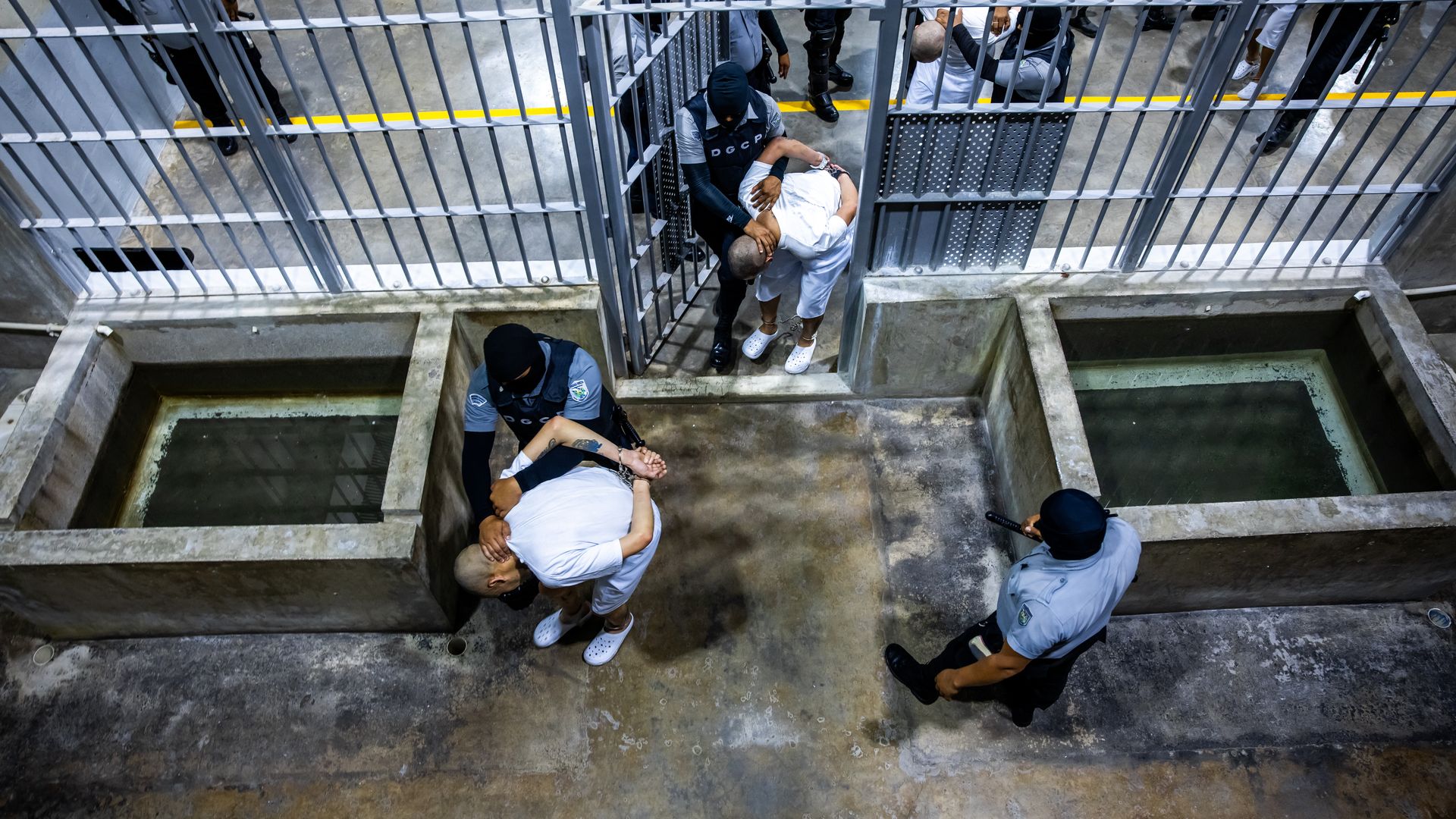
Accused gang members, who were deported to El Salvador by the U.S., in San Salvador, El Salvador on March 31, 2025. Photo: El Salvador Press Presidency Office/Anadolu via Getty Images
Three-fourths of the Venezuelan migrants flown from Texas to a notorious maximum security prison in El Salvador three weeks ago had no apparent criminal record, a CBS News 60 Minutes report out Sunday found.
Why it matters: The lack of evidence of a criminal record is consistent with many other immigrant removals under the Trump administration so far and poses serious questions over the deportations to El Salvador, as a judge ordered at least one man returned.
The big picture: The migrants were removed after President Trump invoked the Alien Enemies Act of 1798 last month to accelerate mass deportations of Venezuelan migrants suspected of being gang members.
- Civil liberties groups have attacked the move since the deportations came with little to no due process, arguing that the United States is not at war and, therefore, unjustified in its use of the 18th-century wartime law.
By the numbers: The CBS News 60 Minutes report found that 75% of 238 migrants sent to the Salvadoran mega-prison known as the Center for Terrorism Confinement (CECOT) had no traces of a criminal record.
- At least 22% of the men on the list have criminal records here in the United States or abroad, but the vast majority are for non-violent offenses like theft, shoplifting and trespassing, the 60 Minutes review found.
- Only a dozen are accused of murder, rape, assault and kidnapping.
- It is unclear whether a criminal record exists for about 3% of those deported.
- CBS News obtained the names of the migrants through internal government documents and reviewed their pasts.
Zoom in: Andry Hernandez Romero, a gay makeup artist who came to the United States last year in search of asylum, was among those deported, 60 Minutes found.
- Photos taken by Time magazine photographer Philip Holsinger show Hernandez Romero at CECOT.
- Holsinger said he heard a young man say, "I'm not a gang member. I'm gay. I'm a stylist." The young man cried for his mother as he was slapped and had his head shaved, Holsing said.
- Hernandez Romero's crown tattoos, which included the names of his parents, were also visible in the photos taken of him by Holsinger.
- Those tattoos — crowns — were the only evidence U.S. immigration officials presented in court to accuse him of being part of Venezuela's Tren de Aragua gang.
A Department of Homeland Security spokeswoman told 60 Minutes that many of those without criminal records "are actually terrorists, human rights abusers, gangsters, and more. They just don't have a rap sheet in the U.S."
- Border Czar Tom Homan said immigration agents spent hours conducting rigorous checks on each of the men to confirm they are members of Tren de Aragua.
Yes, but: A Salvadorian national living in Maryland legally was wrongly deported to El Salvador, the Department of Justice admitted in court papers filed last week.
- Juan Abrego Garcia was stopped on March 12 by immigration agents who wrongly told him that his status had changed.
- He was questioned about gang affiliation and transferred to a Texas detention center before being taken to El Salvador.
- U.S. District Judge Paula Xinis ordered the U.S. to bring back Abrego Garcia from the Salvadoran prison by midnight Monday.
The bottom line: The 60 Minutes report confirms what many families of deported migrants have claimed: that the U.S. wrongly deported their loved ones to CECOT and misinterpreted tattoos.
- More court challenges are likely to come as the Trump administration sees an overall drop in immigrant removals despite high-profile deportations.
Go deeper: Judge blasts government over mistakenly deporting Maryland man
