Senate votes to move on Trump's "one, big beautiful bill"

Add Axios as your preferred source to
see more of our stories on Google.
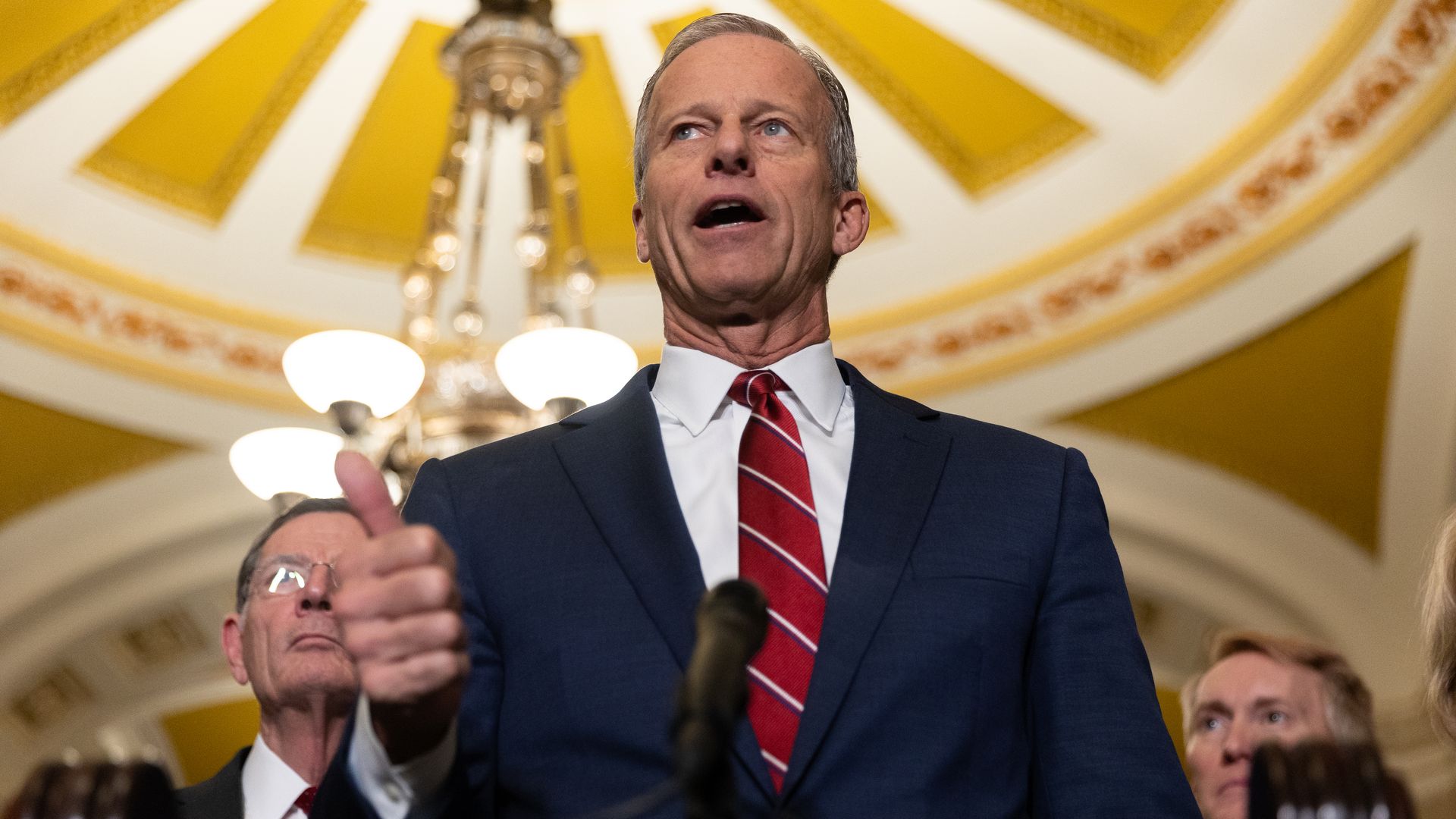
Senate Majority Leader John Thune. Photo: Nathan Posner/Anadolu via Getty Images
The Senate overcame a procedural hurdle Thursday on the newest budget resolution, which would raise the debt ceiling, extend the Trump tax cuts and slash spending.
Why it matters: The 52-48 procedural vote signals Majority Leader John Thune (R-S.D.) has the support needed to pass the resolution by the weekend — moving one step closer to accomplishing President Trump's "one, big beautiful bill."
- The budget reconciliation process allows the Senate to bypass the filibuster for budget-related measures.
Zoom in: Democratic senators unanimously voted against the resolution.
- They were joined by Rand Paul of Kentucky.
The intrigue: The vote was delayed some on Thursday over lingering concerns from several GOP senators over the use of the current policy baseline accounting maneuver, potential Medicaid cuts and other issues
- Leadership huddled with senators to hash out their concerns right before finally holding the vote.
What's next: Senators of both parties will be able to force amendment votes through a vote-a-rama, which is expected to begin Friday.
- It can be a lengthy, all-night process. Final passage of the resolution is expected as late as Saturday. After which, the resolution will be in House Speaker Mike Johnson's (R-La.) hands.
- If it passes the House, then the hard part of passing Republican leaders' marquee legislation begins. Expect long, painstaking arguments in the next few months over spending cuts, tax policy changes and border security.
Zoom in: The resolution would raise the debt ceiling by up to $5 trillion.
- It would make the 2017 tax cuts permanent, and provide an additional $1.5 trillion dollars for other tax priorities, such as "no tax on tips."
- It would provide $175 billion for the border and $150 for defense.
- It instructs committees to find a minimum of $4 billion in savings, though the actual spending cuts are likely to be astronomically larger. And there is already growing concern from Democrats and some Republicans over likely cuts to Medicaid.
