Senate unveils new blueprint for mega-MAGA package

Add Axios as your preferred source to
see more of our stories on Google.
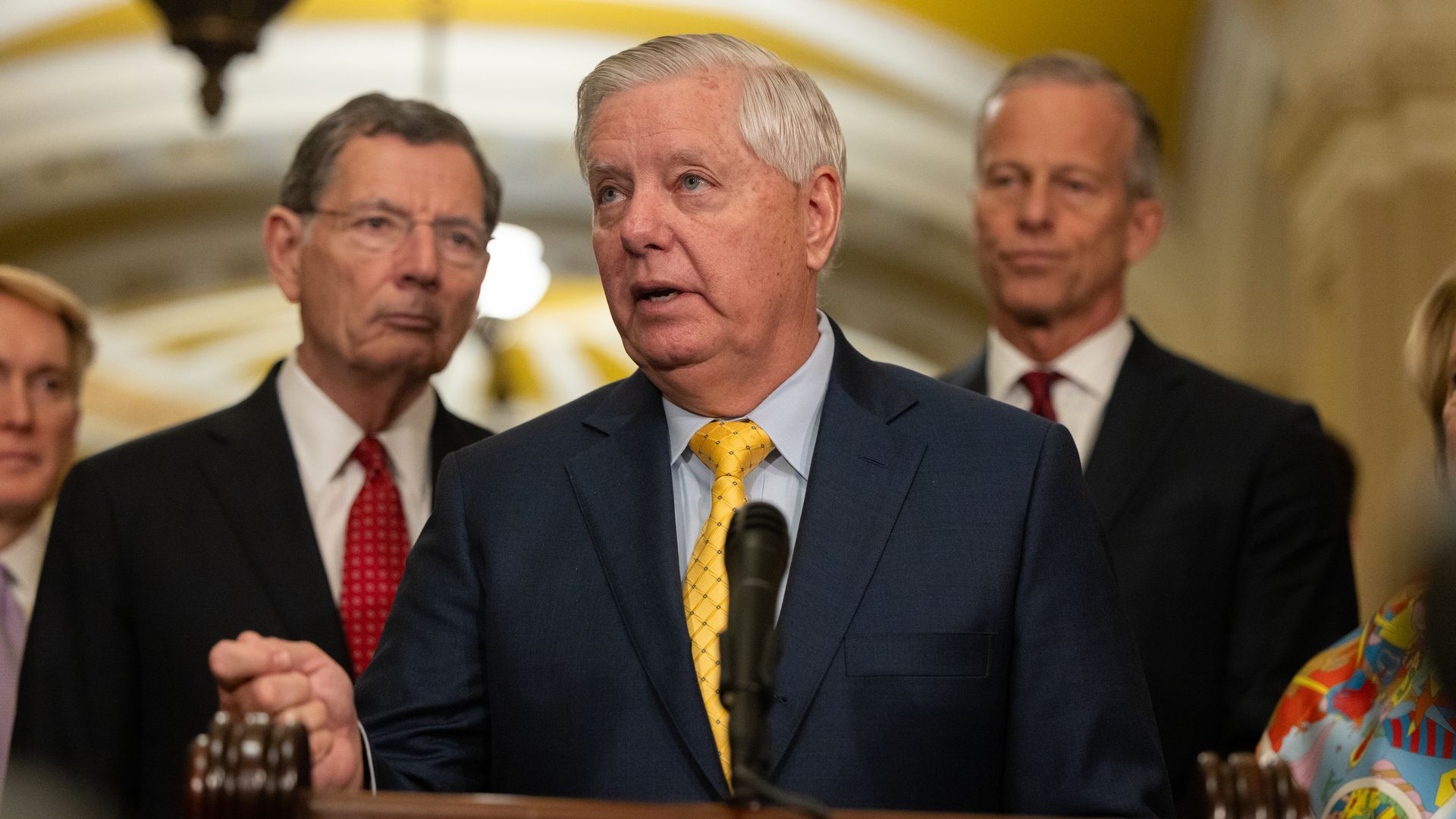
Sen. Lindsey Graham speaks at a press conference. Photo: Nathan Posner/Anadolu via Getty Images
Senate Budget Chairman Lindsey Graham (R-S.C.) unveiled a new budget resolution Wednesday that outlines a sweeping package to raise the debt ceiling and tackle President Trump's tax, border, defense and energy priorities.
Why it matters: Hill leaders hope the third time is a charm. Graham's compromise package blends separate versions passed by the House and Senate earlier this year.
- Senate leadership hopes to move fast, with a vote this week and vote-a-rama that could stretch into the weekend.
- Majority Leader John Thune (R-S.D.) said in a statement that the Senate parliamentarian had reviewed the resolution and "deemed it appropriate for consideration under the Budget Act."
Zoom in: The resolution would raise the debt ceiling by as much as $5 trillion, though there are differences in the instructions given to the House and Senate committees.
- It would also make Trump's 2017 tax cuts permanent using a current policy baseline — an accounting maneuver that makes the cost $0.
- Republicans insisted this week that Graham can single-handedly decide to use a current policy baseline, without input from the Senate parliamentarian.
The resolution provides the Finance Committee with an extra $1.5 trillion for other Trump tax priorities, such as no tax on tips.
- It earmarks roughly $175 billion for the border and $150 billion in defense spending, as was included in the first Senate package.
What to watch: The resolution also charges four committees to find a minimum of $1 billion in savings each — though all are expected to find significantly more cuts than that.
- The new spending is also expected to be offset by increased revenue from energy policy changes.
- House and Senate conservatives have been demanding serious spending cuts — in the trillions of dollars — as part of any reconciliation package.
- The House package called for at least $1.5 trillion in savings, but because of different rules in the Senate, they are setting the minimum low.
Go deeper: Read the full budget resolution, here.
Editor's note; This story has been updated with additional reporting.
