Trump backs national security adviser after Houthi group chat scandal

Add Axios as your preferred source to
see more of our stories on Google.
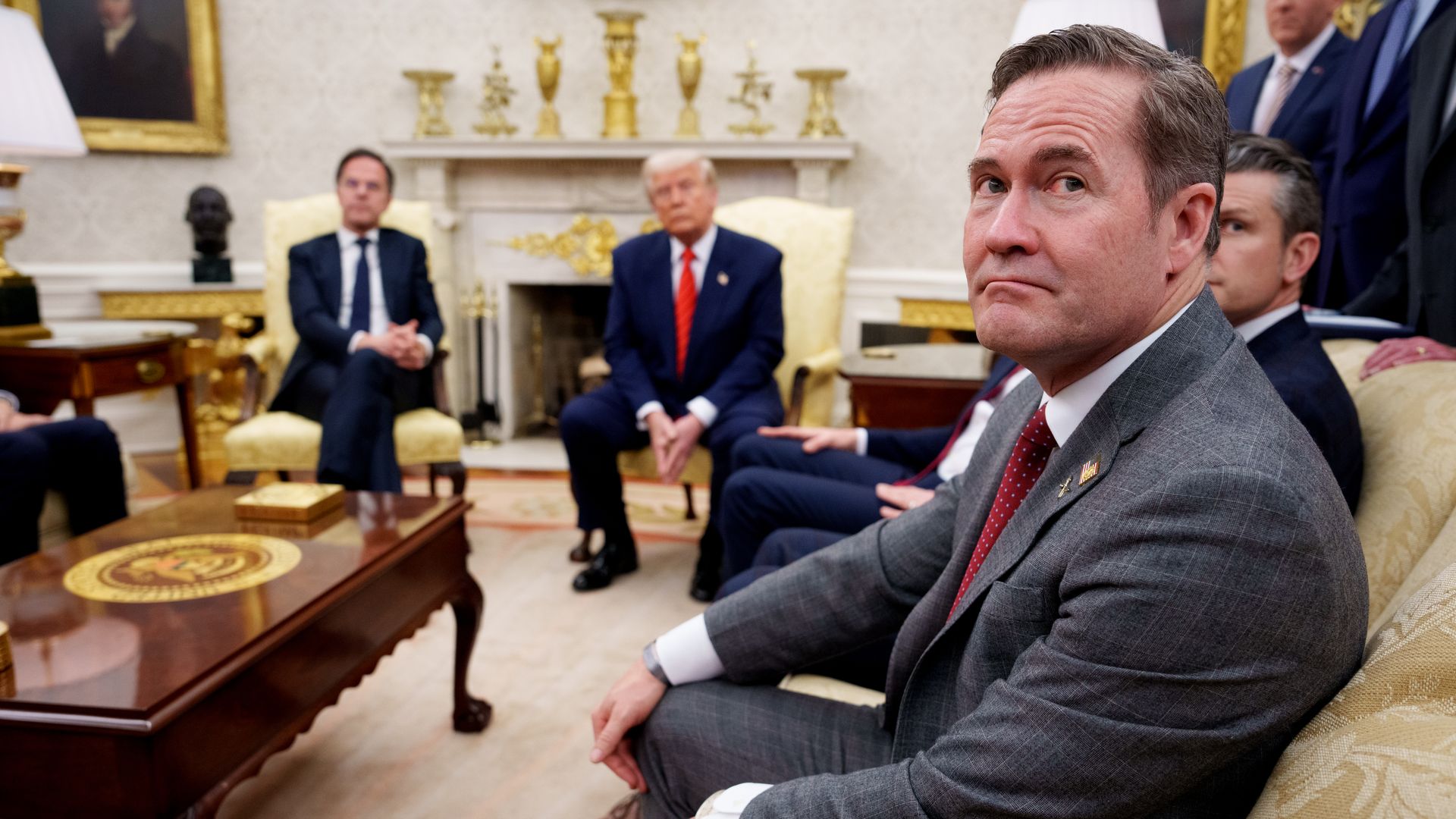
National security adviser Mike Waltz during an Oval office meeting between Trump and NATO Secretary-General Mark Rutte. Photo: Andrew Harnik/Getty Images
President Trump downplayed on Tuesday the scandal over the discussion of plans to strike Yemen by the most senior officials in the administration on an unclassified commercial chat app.
Why it matters: Trump made clear he does not plan to fire his national security adviser, Mike Waltz, who established the Signal group and inadvertently added Atlantic magazine editor-in-chief Jeffrey Goldberg.
What they are saying: "Michael Waltz has learned a lesson, and he's a good man," Trump told NBC's Garrett Haake.
- Trump claimed one of Waltz's aides added Goldberg's number to the chat.
- "It was the only glitch in two months, and it turned out not to be a serious one," he said.
State of play: Both Defense Secretary Pete Hegseth and Press Secretary Karoline Leavitt have downplayed the incident and denied "war plans" were discussed — a claim that is hard to square with the messages Goldberg described or published in full.
- "No 'war plans' were discussed. No classified material was sent to the thread," White House press secretary Karoline Leavitt wrote on X, seeming to deny aspects of Goldberg's story.
- "The Houthi strikes were successful and effective. Terrorists were killed and that's what matters most to President Trump," she added.
- That's the same line Hegseth took on Monday, when he attacked Goldberg's credibility and denied he had shared attack plans in the chat. Director of national intelligence Tulsi Gabbard also claimed during a Senate hearing on Tuesday that no classified information was shared in the chat.
Between the lines: The administration is acknowledging the basic legitimacy of Goldberg's story while trying to shield senior officials and pivot to attacking the messenger.
The other side: In a series of interviews on Monday, Goldberg stressed that, contrary to Hegseth's claims, classified war plans were shared in the chat but he didn't print them because he didn't want to endanger U.S. troops.
- "He was texting attack plans," Goldberg told CNN, referring to Hegseth.
- "When targets were going to be targeted. How they were going to be targeted. Who was at the targets. When the next sequence of attacks were happening. I didn't publish this…because it felt like it was too confidential," Goldberg said.
- Goldberg wrote that he initially thought the chat might be an elaborate fake, until the attacks in Yemen took place on the exact schedule laid out by Hegseth in the chat. At that point he exited the group.
The latest: Trump said at a White House meeting on Tuesday that he'd been told by his advisers that no classified information was shared in the group chat, and reiterated his defense of Waltz.
- Trump said his administration would "look at" the use of Signal in the government and military. "We have to learn from every experience," Trump said, adding that Signal will likely not be used going forward.
- Trump and Waltz, who was also in the meeting, both attacked the Atlantic and Goldberg. Waltz claimed he never met Goldberg or communicated with him and stressed the National Security Council was looking into how he got included in the chat group.
- Goldberg has said he met Waltz on at least two occasions but that they had not been in touch recently prior to being added to the group chat.
What's next: Leavitt said on Tuesday that the White House is "looking into how Goldberg's number was inadvertently added to the thread."
- She said the White House Counsel's Office has "provided guidance on a number of different platforms for President Trump's top officials to communicate as safely and efficiently as possible."
- She did not say that the White House lawyers had specifically approved Signal as a platform to share top secret information — guidance that would diverge significantly from past practices.
What to watch: Goldberg has not said whether he will refute the White House denials by publishing the screenshots he had withheld out of concern for national security.
Go deeper: America's biggest cyber threat is inside the government
