SEC crypto roundtable begins work of regulatory overhaul

Add Axios as your preferred source to
see more of our stories on Google.
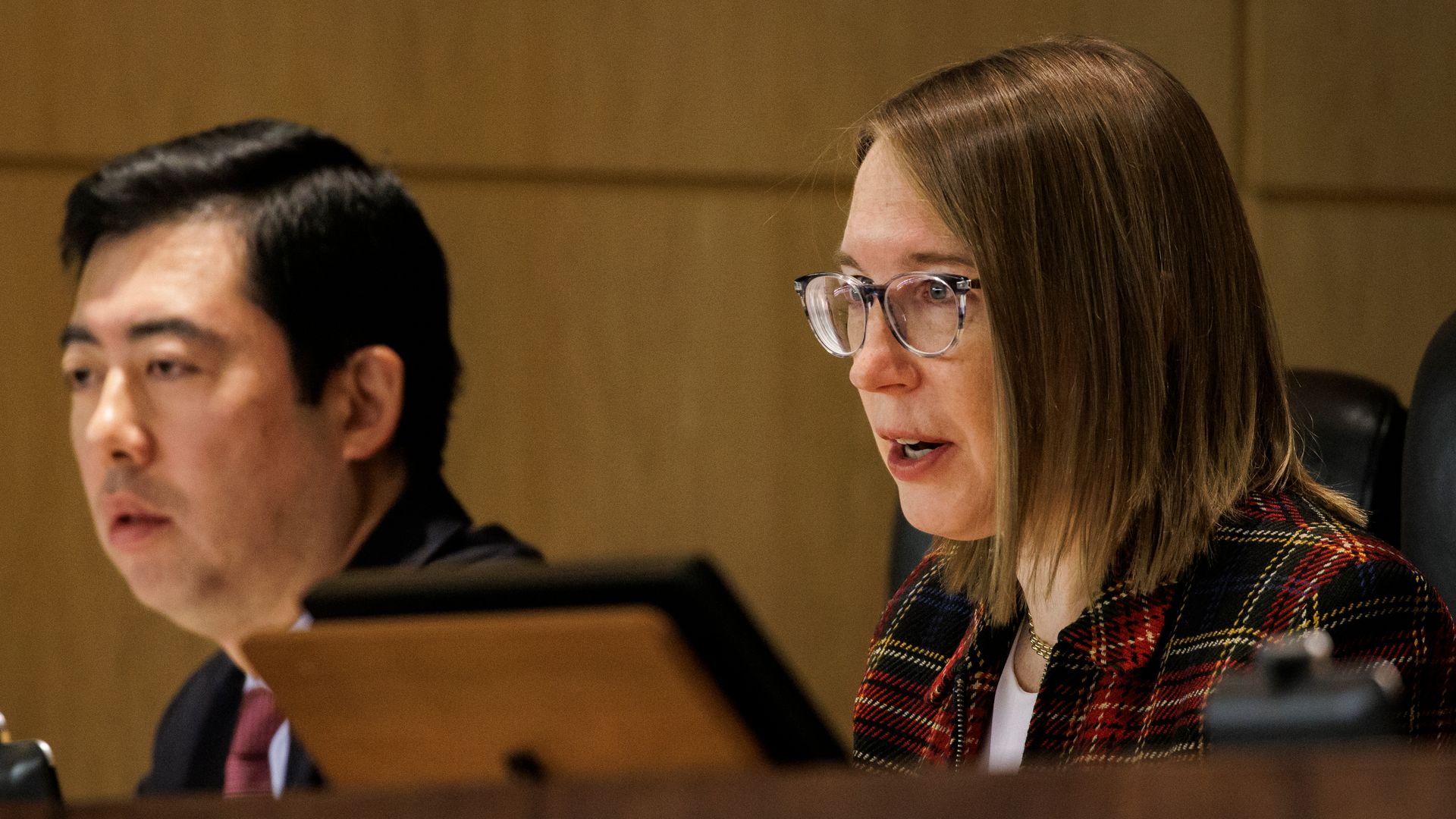
SEC acting chair Uyeda (left) and commissioner Hester Peirce, chair of the agency's crypto task force.
Signs emerged at the kickoff of the SEC's crypto rulemaking process Friday that even the crypto skeptical have begun to accept the idea of a tailored regulatory regime.
Why it matters: The U.S. securities regulator has resisted calls for years to craft rules fit to purpose for the crypto industry. That is now changing.
What they're saying: Even if everyone agreed that all digital assets are securities (and they do not), that still leaves a lot of downstream questions, noted Collins Belton, managing partner, at Brookwood P.C., during the Securities and Exchange Commission's first public roundtable hosted by the agency's crypto task force.
- One of the crypto skeptics on the panel, Lee Reiners of Duke University, seemed to agree — at least in part. For example, he noted that digital assets need disclosure guidelines that make sense.
- "I don't think it's controversial to suggest that the information an investor in a crypto asset would want is just fundamentally different than the information an investor in, you know, Apple stock would want," Reiners granted.
Yes, but: Friday's discussion also surfaced the challenges the SEC will face in crafting rules to govern thousands of assets with various distinguishing characteristics.
- The first hurdle is ironing out the major question of which digital assets the agency should require to get registered in the first place.
The big picture: The big question before the panel was whether or not the SEC's jurisdiction is the transaction (the moment a thing changes hands) or the thing itself.
- "The very top of the funnel is, do we have a securities transaction, or do we have an exempt security?" Belton said.
- This has meant the initial sales of new tokens have been conducted in private (the transaction), without structured disclosures, and then those tokens (the thing) have been traded later on secondary markets, explained Lewis Cohen, an attorney at CahillNXT.
Thousands of tokens
Even if the question is the simple one of whether digital assets are securities or not, that still glosses over the diversity of the market, said Miles Jennings, general counsel of investing firm A16Z Crypto.
- Bitcoin is the one digital asset that no one thinks of as a security. No one controls it. It is completely decentralized. No company can decisively drive its value up or down, Jennings pointed out.
- Meanwhile the failed crypto exchange FTX made its own digital asset, FTT, which went very close to zero when FTX failed. Investors knew its value depended entirely on that company.
- These two assets are not the same at all.
The other side: "So how do you determine when these dimensions are sufficiently decentralized enough to ensure profits don't come from the efforts of others?" Reiners asked.
- "I just think again, that is a completely futile task for any agency to try to attempt."
- Instead, they should leave it to the courts, he argued.
What we're watching: This is likely to be a lengthy process, but eventually the task force will float a proposal to the full commission.
- If that gets through, then everyone in the public will get a chance to comment.
- Meanwhile, Congress has been taking on these same questions.
