What to know about autopen, which Trump claims nullifies Biden pardons

Add Axios as your preferred source to
see more of our stories on Google.
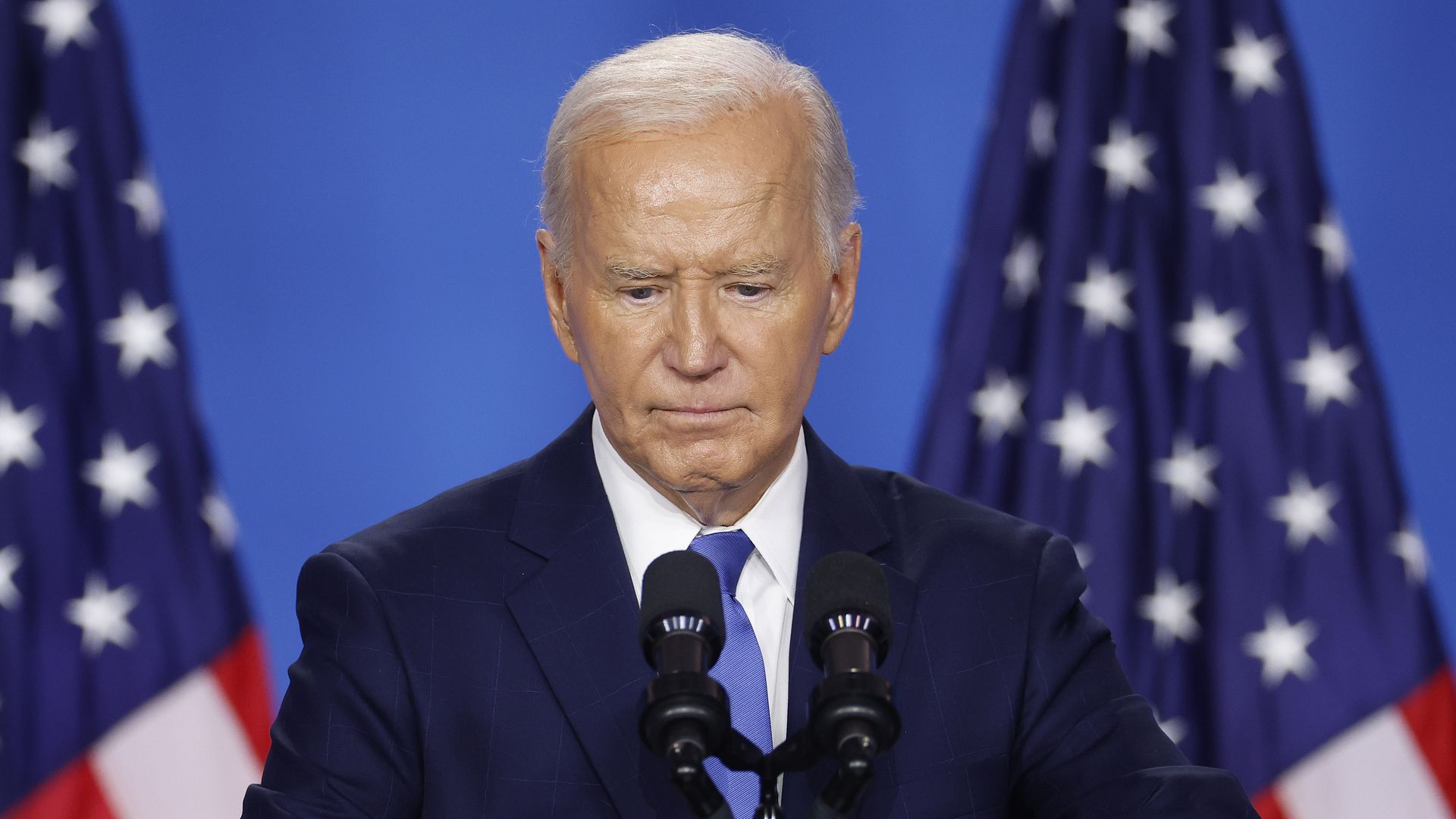
President Trump claimed that former President Biden's preemptive pardons to members of the House Jan 6. select committee are void. Photo: Kevin Dietsch/Getty Images
President Trump claimed on Monday that former President Biden's pardons "done by autopen" are "VOID."
Why it matters: Other presidents have used an autopen to grant pardons, and experts have expressed doubt that courts would allow a president to revoke clemency granted by their predecessors.
- It's the latest example of Trump ignoring the legal limits of the president's power.
Catch up quick: Biden issued historic preemptive pardons to members of the House Jan. 6 select committee, which investigated Trump's role in the attack on the Capitol.
- Trump has repeatedly threatened committee members with investigation or jail.
- Trump said in a late-night Truth Social post that Biden's pardons are "hereby declared VOID, VACANT, AND OF NO FURTHER FORCE OR EFFECT" and that the "necessary Pardoning Documents were not explained to, or approved by, Biden."
- The committee members should "fully understand that they are subject to investigation at the highest level," Trump wrote.
- He claimed without evidence that the members of the committee, which include former Rep. Liz Cheney (R-Wyo.), were "probably responsible for the Documents that were signed on their behalf" without Biden's knowledge.
What is an autopen?
- An autopen is a device used to make automatic or remote signatures, and has been used by celebrities and other public figures for decades — notable examples include Jon Bon Jovi and Bob Dylan.
- Former President Obama faced scrutiny in 2011 for authorizing an aide to use an autopen on his behalf to extend the Patriot Act, a first for a president.
Are autopen signatures valid?
- A 2005 memorandum opinion from Justice Department's Office of Legal Counsel during President George W. Bush's administration said that the president may sign a bill by directing a subordinate to "affix the President's signature to it."
- "We emphasize that we are not suggesting that the President may delegate the decision to approve and sign a bill, only that, having made this decision, he may direct a subordinate to affix the President's signature to the bill," the opinion stated.
- Jeffrey Crouch, an American University professor and expert in federal executive clemency, noted that "other presidents have used autopen to grant pardons."
Did Biden use an autopen?
- Biden has used an autopen before, NBC News reported, but Trump's Monday assertions that the pardons were signed without Biden's participation lack evidence.
- Trump's assertion mirrors an argument made in an X post from The Oversight Project, a branch of The Heritage Foundation, the think tank behind Project 2025, which claimed that the pardons Biden made on January 19 were signed with an autopen.
Is Trump likely to win a legal challenge against suing an autopen?
- Kimberly Wehle, a University of Baltimore law professor who has written extensively about the pardon power, said Trump would likely lose a legal challenge on his argument, though allowing that it's "conceivable" that the Supreme Court could treat Biden's preemptive pardons differently than traditional clemency.
Editor's note: This story has been updated to remove the reference to photographic proof that Biden signed several of the documents in question. Axios is unable to confirm this information, which was attributed to Newsweek, and the Heritage Foundation has denied such photos exist.
