Trump administration to start registering some Canadian visitors

Add Axios as your preferred source to
see more of our stories on Google.
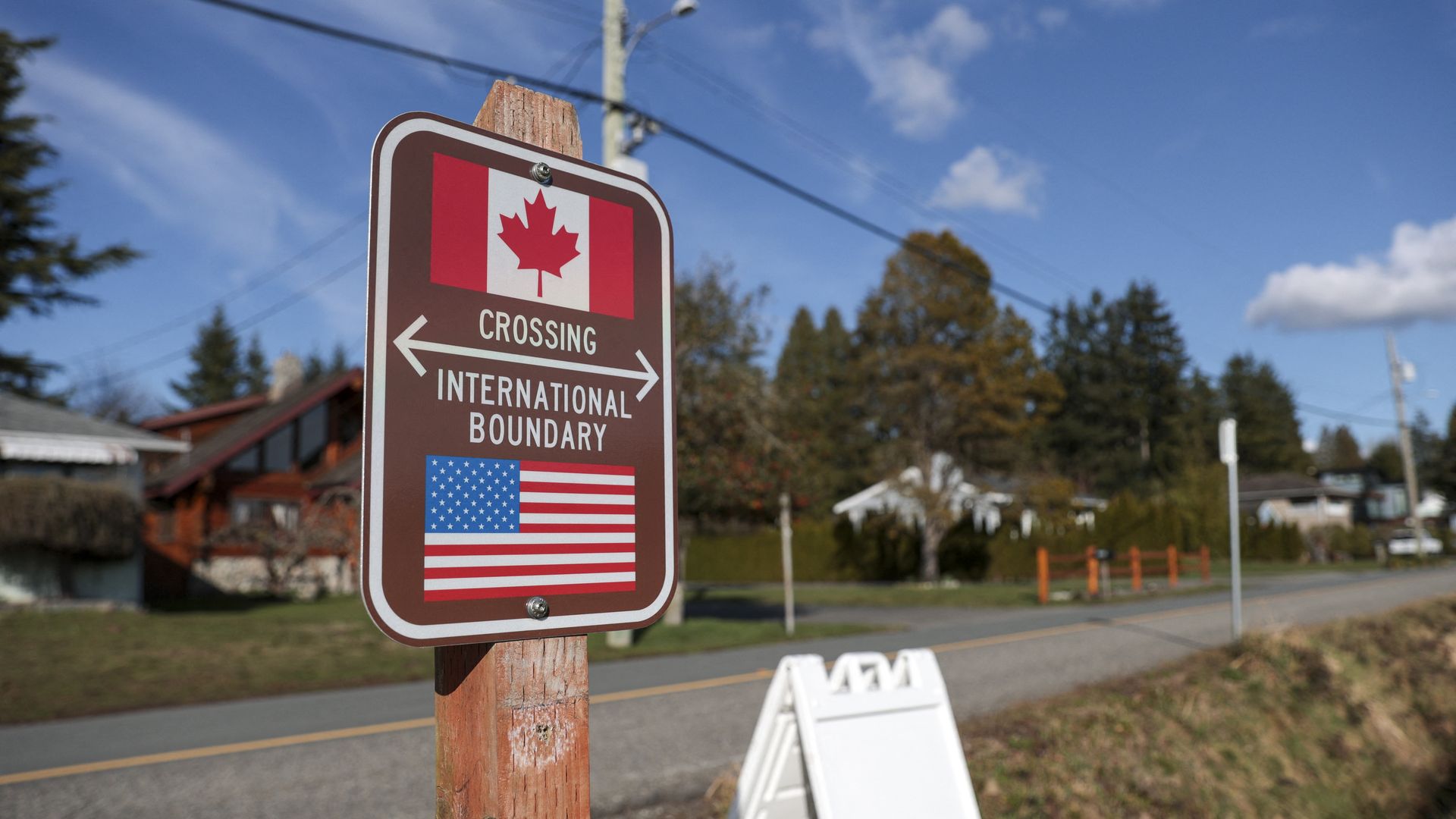
A sign marks the international border between the U.S. and Canada at Peace Arch Historical State Park in Blaine, Washington, on March 5. Photo: Jason Redmond/AFP via Getty Images
Canadians staying in the U.S. for longer than 30 days — a norm for many snowbirds who spend their winters south of the border — will have to register with U.S. immigration authorities.
Why it matters: It marks yet another escalation in the friction between the U.S. and its northern neighbors, as President Trump pushes an on-again, off-again trade war with Canada and taunts the U.S. ally with annexation.
- The new interim rule expands enforcement of existing law that requires foreign nationals 14 or older not already registered with the U.S. government to register if they plan to stay in the country for 30 days or longer.
- But the rule has not been consistently applied to Canadians, according to the New York Times.
Driving the news: The new rule published in the Federal Register Wednesday and set to take effect April 11 implements part of a day-one executive order in which Trump called for previously unregistered foreign nationals to comply with the law.
- "Failure to comply," the order read, should be "treated as a civil and criminal enforcement priority."
- Subsequent guidance from U.S. Citizenship and Immigration Services stated that noncompliance would result in criminal and civil penalties, "up to and including misdemeanor prosecution and the payment of fines."
Under current regulations, many Canadian visitors entering the U.S. for "business or pleasure" are not issued necessary documentation, the rule's text noted.
- The rule also amends current Department of Homeland Security regulations to designate a new "general registration form."
What they're saying: The Canadian Snowbird Association, an advocacy organization for Canadian travelers, said in a statement earlier this month it was working with congressional representatives to "amend this registration requirement" and exempt Canadian travelers.
Zoom out: While the new rule is grounded in existing law, it comes amid a backdrop of boiling tensions with Canada.
- The tit-for-tat tariff battle first launched by Trump early last month has dropped a bomb on the U.S.-Canada relationship, which was amicable just months ago.
- On Tuesday, Trump announced new retaliatory tariffs on Canada — but then reversed his decision after Ontario agreed not to tax electricity exports to the U.S.
- Mark Carney, Canada's next prime minister and former central bank head, picked up the Trump-bashing baton from outgoing Prime Minister Justin Trudeau, writing in a statement Tuesday that the president's tariffs were an "attack on Canadian workers, families, and businesses."
Go deeper: Trump admin launches new app with "self-deport" feature
This story was corrected to reflect that some visiting Canadians must register (but not be required to submit fingerprints as well).
