Trump promises more arrests after pro-Palestinian activist detained by ICE


Add Axios as your preferred source to
see more of our stories on Google.
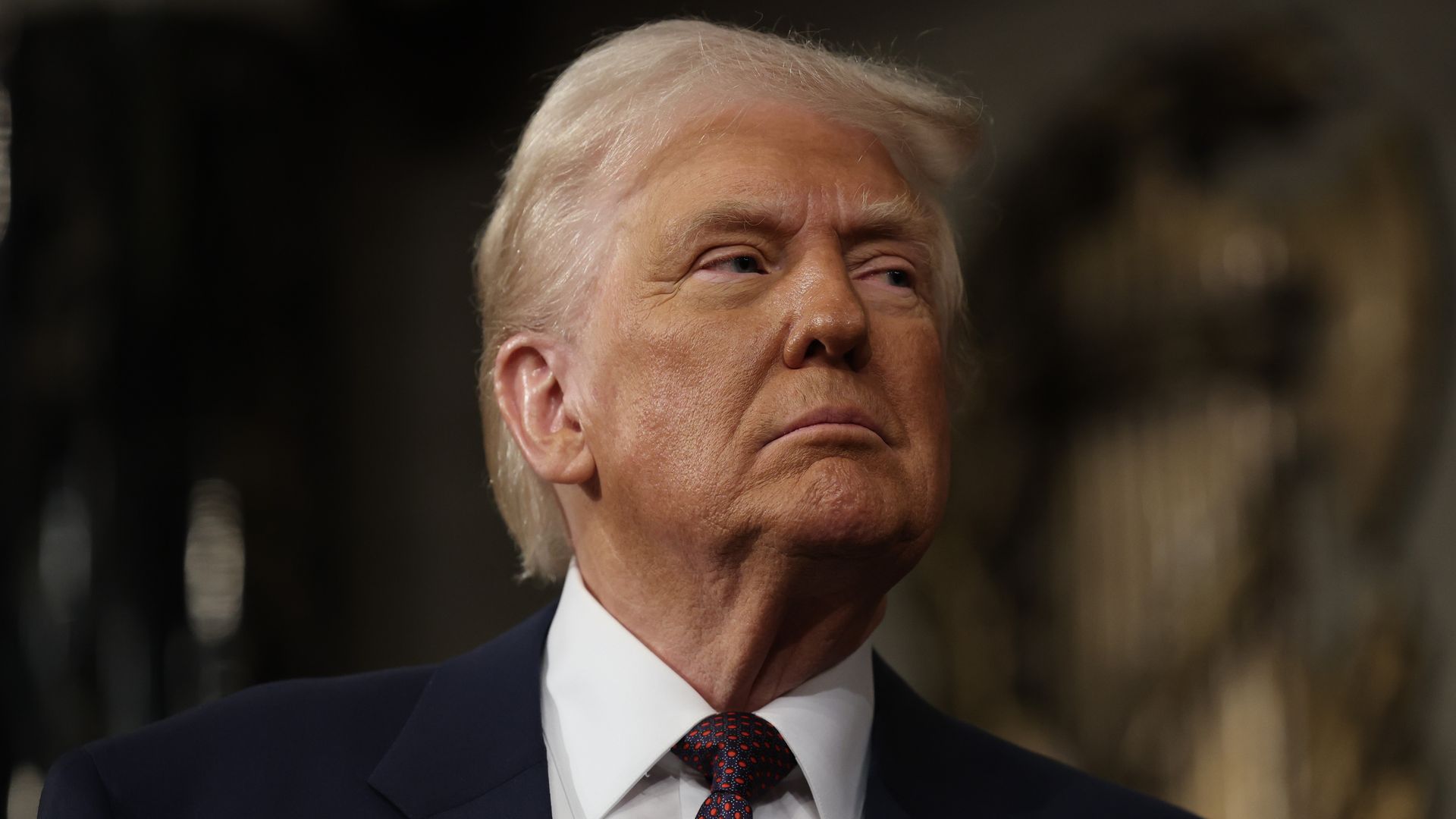
President Trump at the U.S. Capitol on March 4. Photo: Win McNamee/Getty Images
President Trump praised the arrest of pro-Palestinian activist and Columbia University alumnus Mahmoud Khalil on Monday, saying it's the first of "many to come."
Why it matters: The Trump administration appears willing to curb, or potentially outlaw, protest movements it disapproves of.
Driving the news: Trump wrote on Truth Social that Khalil is "a Radical Foreign Pro-Hamas Student" and promised to "find, apprehend, and deport these terrorist sympathizers from our country — never to return again."
- Khalil attended Columbia University on a student visa and was one of the most visible student activists during the Pro-Palestinian encampment at the school last spring. He gave multiple interviews on the protest and engaged in negotiations with university leaders regarding protesters' demands.
- Before his arrest, he told the AP that Columbia accused him of misconduct weeks before his December graduation, and that most of them involved social media posts he had "nothing to do with."
What we're watching: U.S. District Judge Jesse M. Furman blocked any attempt by the Trump administration to deport Khalil until the court says otherwise.
- A conference between the judge and all parties is scheduled for Wednesday in Manhattan federal court.
Between the lines: ICE agents told Khalil prior to his Saturday arrest that his student visa had been revoked. But he is a legal permanent resident and not in the U.S. on a student visa, attorney Amy Greer said in a statement.
- Khalil's whereabouts had been a mystery following his arrest, with his wife being told he was sent to a facility in Elizabeth, New Jersey. When she attempted to visit him, there was no record of Khalil being processed, Greer said.
- ICE records show Khalil is currently being held at the Jena/LaSalle Detention Facility, also known as the Central Louisiana Ice Processing Center (CLIPC), in Jena, Louisiana. Greer said arrangements had been made for local attorneys to visit him in the state on Monday and Tuesday.
What they're saying: "We know there are more students at Columbia and other Universities across the Country who have engaged in pro-terrorist, anti-Semitic, anti-American activity, and the Trump Administration will not tolerate it," the president wrote, saying many involved "are not students" but "paid agitators."
- "If you support terrorism, including the slaughtering of innocent men, women, and children, your presence is contrary to our national and foreign policy interests, and you are not welcome here," Trump added.
- DHS spokesperson Tricia McLaughlin told Axios in a statement that Kahlil "led activities aligned to Hamas, a designated terrorist organization," and that his arrest was conducted in support of the president's executive orders "prohibiting anti-Semitism."
The other side: "The disturbing arrest of Mahmoud Khalil for exercising his right to free speech marks a dramatic escalation in the Trump administration's abuse of immigration enforcement and disregard for the law," said Kica Matos, president of the National Immigration Law Center.
- Matos also called for Khalil's immediate release.
- Greer said transferring her client to Louisiana "is a blatantly improper but familiar tactic designed to frustrate the New York federal court's jurisdiction, and isolate Mahmoud far from his lawyers, his home, and his local community of support — although now his growing support group extends internationally."
Zoom out: Khalil's arrest comes as the Trump administration moves to revoke student visas for foreign nationals it deems to be "Hamas sympathizers" — a process that will involve AI-assisted reviews student visa holders' social media accounts.
- Trump has also threatened to halt federal funding for schools and universities that allow "illegal protests."
Secretary of State Marco Rubio posted on X last week that the U.S. has "zero tolerance for foreign visitors who support terrorists."
- He added that "violators of U.S. law — including international students — face visa denial or revocation, and deportation."
- U.S. law allows the Secretary of State to deport someone if they are deemed to have "potentially serious adverse foreign policy consequences for the United States."
Context: There are currently around 13 million green card holders, or lawful permanent residents, in the U.S., according to the Office of Homeland Security Statistics.
- Green card holders are immigrants who have been granted lawful permanent residence are not yet U.S. citizens.
How it works: A foreign national can get a green card through a job offer from a U.S. employer, family sponsorship from a U.S. citizen or lawful permanent resident, a year after being granted refugee or asylum status or through the annual Diversity Green Card Lottery.
- A green card can be revoked for fraud, violating immigration laws, criminal activity or failure to maintain permanent residence.
More from Axios:
- Trump yanks $400 million from Columbia over allegations of antisemitism
- ICE fears prompt foreign workers and students to keep visas close
Editor's note: This story has been updated with an order from Judge Furman and further comment from attorney Amy Greer.
