Israel halts aid shipments to Gaza after ceasefire expires

Add Axios as your preferred source to
see more of our stories on Google.
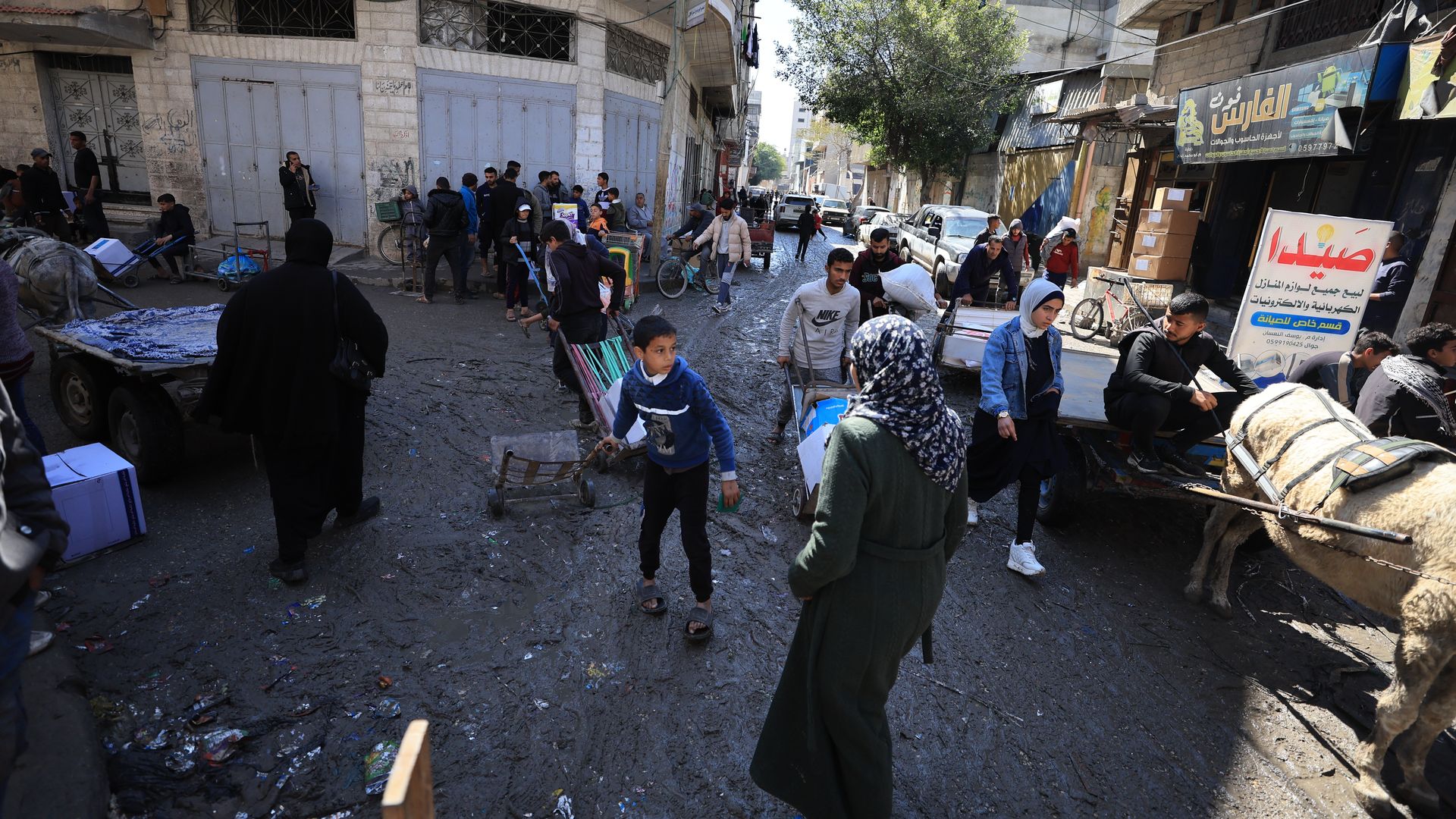
Palestinians get long queues in front of aid distribution centers to receive aid following Israel halted the entry of humanitarian aid into the Gaza Strip after the end of the first phase of the ceasefire and prisoner swap agreement in Gaza City, Gaza on March 2, 2025. (Photo by Dawoud Abo Alkas/Anadolu via Getty Images)
Israel announced on Sunday it is halting all humanitarian aid and fuel deliveries to Gaza and closing the border crossings between Israel and the enclave.
Why it matters: Israel took the step a day after the ceasefire agreement with Hamas ended.
- An Israeli official told reporters that the food and other supplies that entered Gaza in the last 42 days would be enough for four to six months and the fuel would last several weeks.
- Israeli Prime Minister Benjamin Netanyahu said on Sunday he made the move because Hamas rejected a U.S. proposal to extend the ceasefire in exchange for the release of more hostages.
- He stressed the step was taken "in full coordination with President Trump and his people."
- "Israel will not allow a ceasefire without a release of our hostages. If Hamas persists in its refusal, there will be additional consequences," Netanyahu said.
Flashback: According to the original hostage and ceasefire deal, the ceasefire continues after day 42 if the parties are still negotiating the second phase of the deal.
Yes, but: While Hamas was ready to negotiate the second phase, Israel never seriously engaged.
Driving the news: On Saturday night, the Netanyahu's office said Israel agreed to a new U.S. proposal to extend the first phase of the ceasefire in exchange for the release of about half of the remaining hostages — both living and dead — and claimed Hamas has refused to accept it.
- Hamas is still holding 59 hostages. Netanyahu said Sunday that Israel believes as many as two dozen are still alive, including one American.
The U.S. proposal presented by the White House's Middle East envoy Steve Witkoff included extending the temporary ceasefire for an additional 50 days, Israeli Foreign Minister Gideon Saar told Axios.
- On the first day of the extended ceasefire, half of the living hostages and half of the dead hostages would be released, Netanyahu's office said.
- The U.S. proposal stipulates that negotiations will be held on a permanent ceasefire during the extended time.
- If an agreement is reached on a permanent ceasefire, the remaining living and dead hostages would be released, the Prime Minister's office said.
The other side: Hamas said in a statement on Sunday that Netanyahu's endorsement of the U.S. proposal is "an attempt to avoid implementing the hostage and ceasefire deal and negotiate the second phase."
- Hamas said the Israeli decision to halt aid delivery is "blackmail and a war crime" and a violation of what has been previously agreed.
- Hamas said Netanyahu is responsible for undermining the agreement and the implications his decisions have for the hostages.
- "The only way to release the hostages is implementing the agreement and starting negotiations over the second phase of the deal," Hamas said.
The other side: "Israel has negotiated in good faith since the beginning of this administration to ensure the release of hostages held captive by Hamas terrorists. We will support their decision on next steps given Hamas has indicated it's no longer interested in a negotiated ceasefire," National Security Council spokesman Brian Hughes told Axios.
State of play: Egyptian Foreign Minister Badr Abdelatty said on Sunday his country is making efforts to resolve the crisis and extend the ceasefire.
- He criticized the Israeli decision and said that "using aid as a weapon of collective punishment and starvation in Gaza can't be accepted or permitted."
- The IDF conducted several drone strikes in Gaza on Sunday. According to Hamas-controlled Gaza Health Ministry, at least four Palestinians were killed.
Editor's note: This story has been updated with a response from the NSC.
