Hamas releases six hostages as part of Gaza ceasefire deal

Add Axios as your preferred source to
see more of our stories on Google.
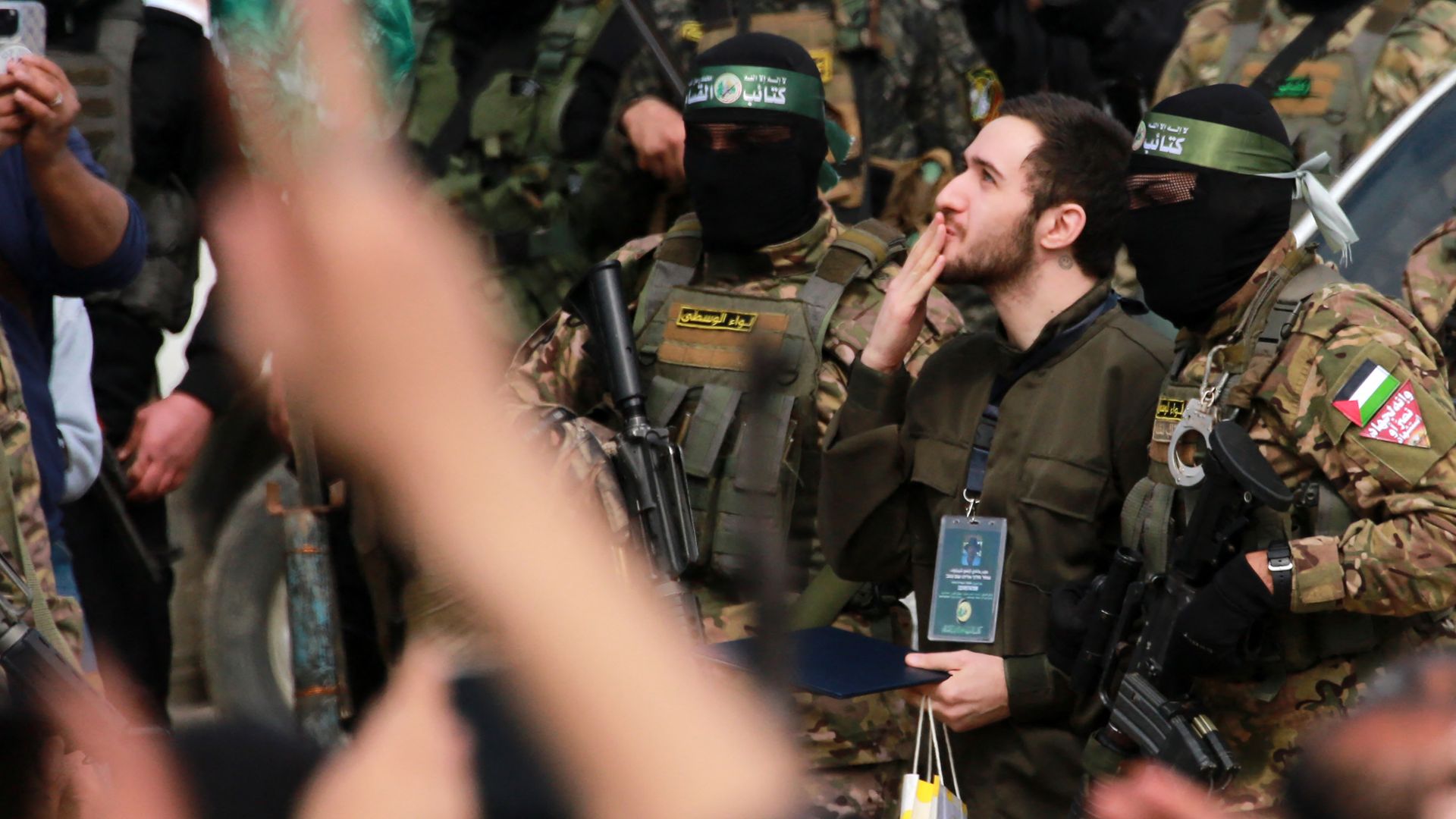
Israeli hostage Omer Shem Tov, flanked by Hamas fighters, gestures to cheering crowds after being released on Saturday. Photo: Bashar Taleb/AFP via Getty Images
Six Israeli hostages were released by Hamas on Saturday as part of the Gaza ceasefire deal.
The big picture: All living hostages who were part of the first phase of the ceasefire deal have now been released.
- The bodies of four dead hostages are expected to be returned to Israel on Thursday to conclude the release of all 33 hostages part of the deal's first phase.
Driving the news: Four of the hostages who were released on Saturday were kidnapped on October 7 and held in captivity for 505 days: Tal Shoham, Omer Wenkert, Eliya Cohen amd Omer Shem-Tov.
- Two of the released hostages have been held by Hamas for more than a decade: Avera Mengistu and Hisham al-Sayed.
Israel was expected to release more than 600 Palestinian prisoners and detainees in return. But Israeli Prime Minister Benjamin Netanyahu decided after a meeting with several senior ministers to delay their release in retaliation to what he said were violations by Hamas.
- The main violation was that Hamas delivered a body that turned out not to be that of an Israeli hostage on Thursday. Hamas turned over the body of Israeli Shiri Bibas 24 hours later.
"In light of Hamas's repeated violations, including the ceremonies that humiliate our hostages and the cynical exploitation of our hostages for propaganda purposes, it has been decided to delay the release of terrorists that was planned for yesterday until the release of the next hostages has been assured, and without the humiliating ceremonies,” Netanyahu's office said on Saturday.
- Netanyahu made the decision against the recommendation of Israeli security services leaders who warned that a delay in the release of the Palestinian prisoners could lead Hamas to not return the remaining four bodies of hostages as planned on Thursday.

What's next: The 42-day ceasefire of the first phase of the Gaza deal will end next Saturday. According to the agreement, the ceasefire will continue as long as negotiations over the second phase of the deal are taking place.
- White House Middle East envoy Steve Witkoff held talks earlier this week with Israeli minister Ron Dermer, who is leading the negotiations on the second phase from the Israeli side, and with Qatari Prime Ministory Mohammed bin Abdulrahman al-Thani, who is the key mediator with Hamas.
- But there are no signs yet that the parties are close to an agreement on the second phase of the deal or to extend the current phase.
Zoom in: Hamas said on Saturday it is ready to release all remaining hostages together if an agreement is reached on the second phase of the deal.
- Hamas said in a statement it demands such an agreement leads to the end of the war, full Israeli withdrawal from Gaza and the release of all remaining Palestinian prisoners from Israeli jails.
- Israel, on the other hand, demands that any such agreement will lead to the end of Hamas' control of Gaza and the departure of its leaders to exile.
- "It is hard to square that circle," Witkoff said at a conference in Miami on Thursday.
- President Trump suggested on Friday that Israeli Prime Minister Benjamin Netanyahu has no qualms about resuming the war in Gaza at the end of the first phase in a week,
What they're saying: Witkoff stressed he hopes the good will from phase one of the Gaza hostage and ceasefire deal "will go into phase two".
- He added that phase two is more difficult, "but if we work hard there is a chance for success".
- "We are making a lot of progress in the conversations and hopefully it would lead to good results," he added.
Editor's note: This article has been corrected to note that Israel did not release the 600+ Palestinian prisoners and detainees on Saturday. The story was also updated with more details on Prime Minister Netanyahu's decision.
