What to know about Trump's executive order on IVF

Add Axios as your preferred source to
see more of our stories on Google.
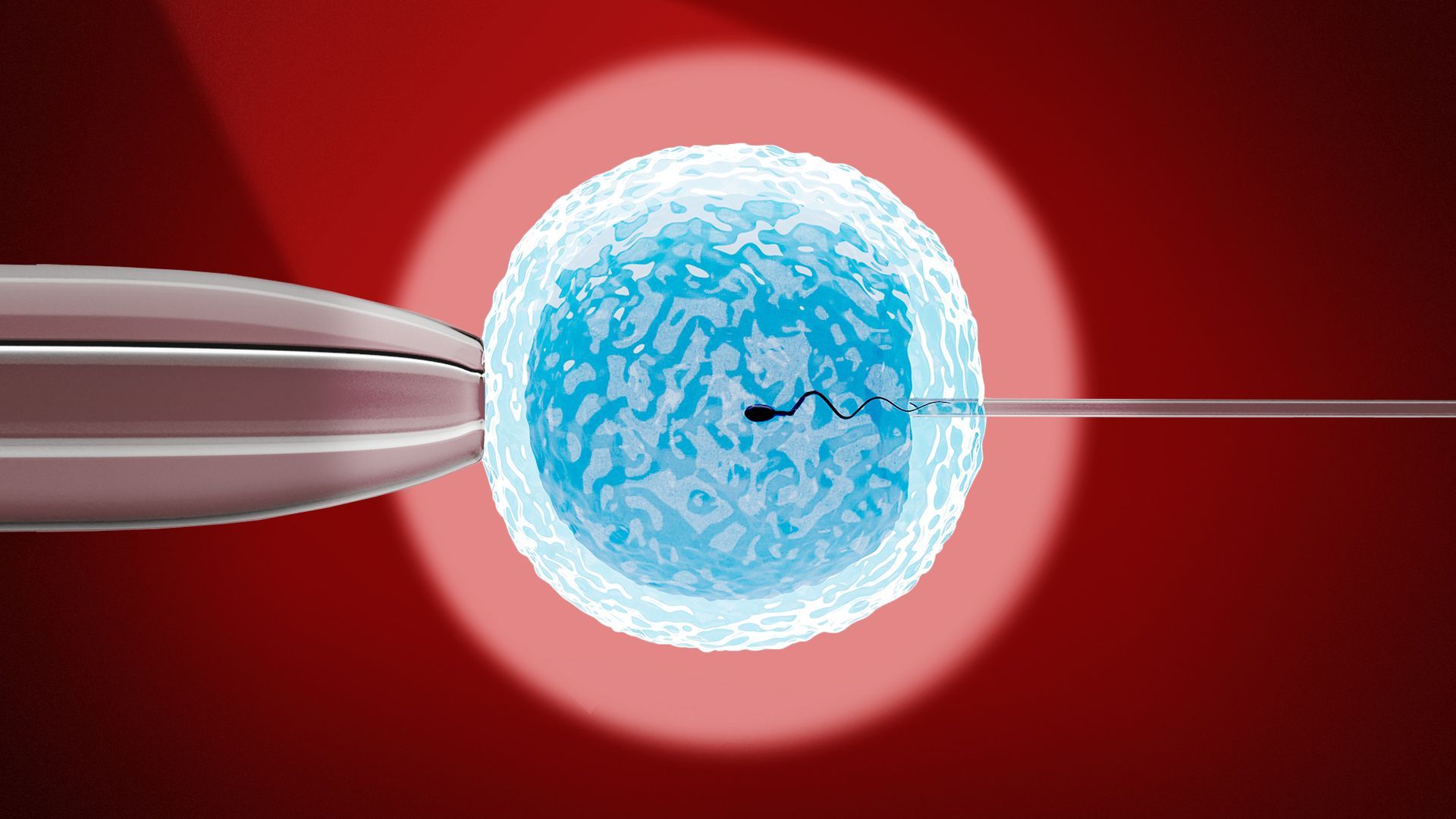
Illustration: Annelise Capossela/Axios
President Trump's executive order designed to expand access to in vitro fertilization doesn't change U.S. law or policy and only begins to deliver on a campaign promise to make the treatment free or significantly cheaper.
Why it matters: The order shows the issue is still on the president's radar. It also could reopen a debate within his party over how expanding access to IVF squares with some anti-abortion advocates' beliefs.
- Trump on Tuesday ordered his domestic policy assistant to make recommendations by mid-May to reduce out-of-pocket and health plan costs for IVF treatment.
- Trump has "long advocated for more babies and expanding American families," a White House fact sheet on the order notes, while adding the U.S. fertility rate hit a historic low.
- The announcement somewhat renews a GOP-led focus on declining birth rates in the U.S., though it's far from clear that more IVF would solve that problem.
State of play: The order doesn't address Trump's campaign promise to mandate that the government or insurance companies cover the cost of IVF for "all Americans that need it." But making the government pay for IVF would be costly.
- Congress would have to fund a new division of the federal government to oversee the program, per the NYT.
- Senate Republicans twice last year blocked efforts to enshrine federal protections for IVF.
Context: The Republican-controlled Alabama Supreme Court almost a year ago ruled frozen embryos are children under state law. The decision created chaos for clinics and hopeful parents across the state as health care providers feared they'd be held liable over typical parts of the treatment, like discarding surplus embryos.
- Trump reacted to the ruling on the campaign trail, calling himself the "father of IVF" when asked about reproductive care and fertility treatments.
- Meanwhile, Trump flip flopped his stance on abortion during the campaign, taking credit for the overturning of Roe v. Wade while claiming he wouldn't sign a national ban.
Zoom out: Conservative lawmakers have pushed to address the declining U.S. birth rate, declaring it a somewhat existential problem for civilization.
- Little evidence shows that politics or public policy could meaningfully reverse the trend, Axios' Emily Peck previously reported.
- Trump's close ally Elon Musk has previously called the falling birth rate "the biggest danger civilization faces."
But historically Trump and his Republican allies have failed to articulate how they'd make child care more affordable.
- Polling has shown accessing child care influences younger Americans' decisions on having children.
By the numbers: A single IVF cycle can cost up to $30,000. With an age-dependent success rate between 38% and 49%, most people need two to three rounds to have a child.
Go deeper: Trump rekindles IVF debate
