"Don't miss out" replaces "doom is nigh" at Paris' AI summit

Add Axios as your preferred source to
see more of our stories on Google.
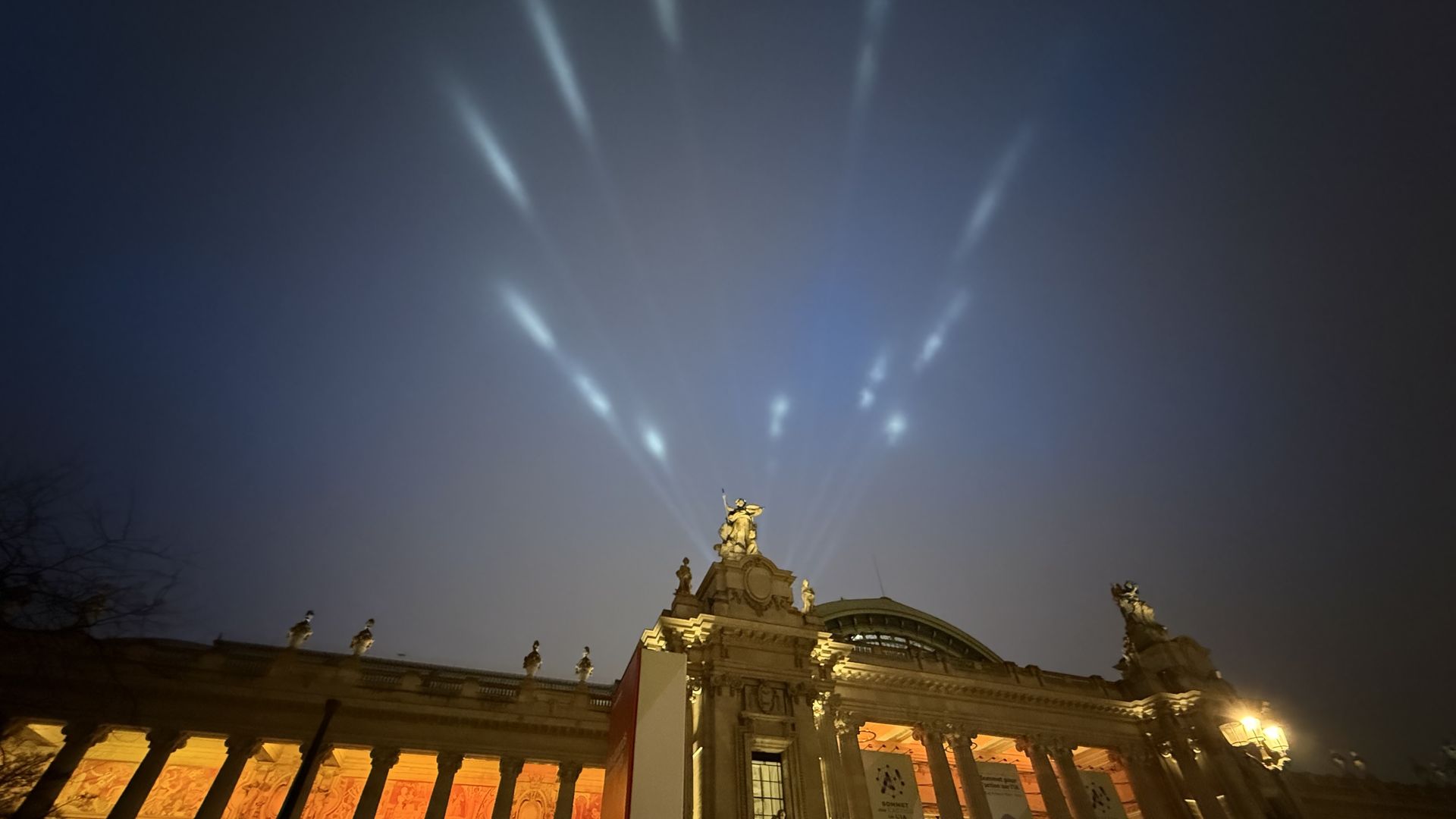
The Grand Palais. Photo: Ina Fried/Axios
With artificial intelligence, the opportunities are now way greater than the threats: That was the consistent message inside the majestic Grand Palais in Paris over the last three days.
The big picture: This AI Action Summit aimed to tackle AI's dangers — from job losses to climate impacts — but unlike two predecessor events, it largely celebrated AI's tantalizing potential benefits.
- A range of tech leaders, including Google CEO Sundar Pichai and Mistral CEO Arthur Mensch, used their speeches to push the acceleration mantra.
- "The biggest risk could be missing out," Pichai said on Monday. "Every generation worries that the new technology will change the lives of the next generation for the worse. Yet, it's almost always the opposite."
- "We need Europeans, and we need the world, to actually adopt the technology faster," Mensch told Axios' Ina Fried on stage, shortly after Pichai's talk.
While it's not surprising that industry executives would focus on AI's opportunities, the optimism also dominated the talk from political leaders.
- French President Emmanuel Macron closed out the first day of the summit touting the wide availability of nuclear and clean energy in France, making it ideal for AI infrastructure.
- "Plug, baby, plug," he said — his twist on President Trump's "Drill, baby, drill."
What they're saying: In private meetings, government leaders were more focused on how to get massive data centers built in their country than discussing safety concerns, OpenAI executives said.
- "It seems like very different energy," CEO Sam Altman told Axios, comparing the summit to prior AI safety events held in the U.K.'s Bletchley Park and Seoul.
- "People are really excited about this and are like, 'OK, maybe we can figure out how to make this technology safe.'"
The progress-centered focus was especially evident on the final day of the summit on Tuesday at a "business day" held at the Station F incubator, where thousands of entrepreneurs and techies took part in an event that bore more resemblance to TechCrunch Disrupt than prior AI safety events.
- Even the failure of the U.S. and the U.K. to sign on to the summit's official communique — a document itself criticized for lacking specifics and enforceability — did little to dim enthusiasm.
- Nor did a speech by Vice President JD Vance that lashed out at excessive regulation and focused on the U.S. keeping its lead in AI.
Yes, but: There were cautionary voices inside the Grand Palais, including labor leaders expressing concerns about the impact of AI on workers.
- "We know from history that an inclusive AI transition is possible but far from guaranteed," UNI Global Union general secretary Christy Hoffman said in remarks she prepared in advance of a talk on Monday.
- "According to even modest projections, many millions are likely to be displaced by AI over the next five years. And we can't sweep those people under the rug or watch them fall through the cracks."
Between the lines: For some summit participants, it was an encouraging sign that AI's risks and challenges were on the agenda at all here.
- Partnership on AI CEO Rebecca Finlay told Axios that she was confident important discussions about safety and responsibility were taking place, even if the event's official actions don't provide tangible progress.
- "The right conversations are happening because the right people are here from around the world to drive forward those conversations and they must take place between industry, between civil society, between academia and yes, between policymakers," Finlay said in an interview on the sidelines of the summit.
The other side: "Science shows that AI poses major risks in a time horizon that requires world leaders to take them much more seriously. The summit missed this opportunity," professor and AI pioneer Yoshua Bengio said on X.
- "Greater focus and urgency is needed on several topics given the pace at which the technology is progressing," Anthropic CEO Dario Amodei said in a statement. "The need for democracies to keep the lead, the risks of AI, and the economic transitions that are fast approaching — these should all be central features of the next summit."
