Trump's birthright citizenship order frozen by judge

Add Axios as your preferred source to
see more of our stories on Google.
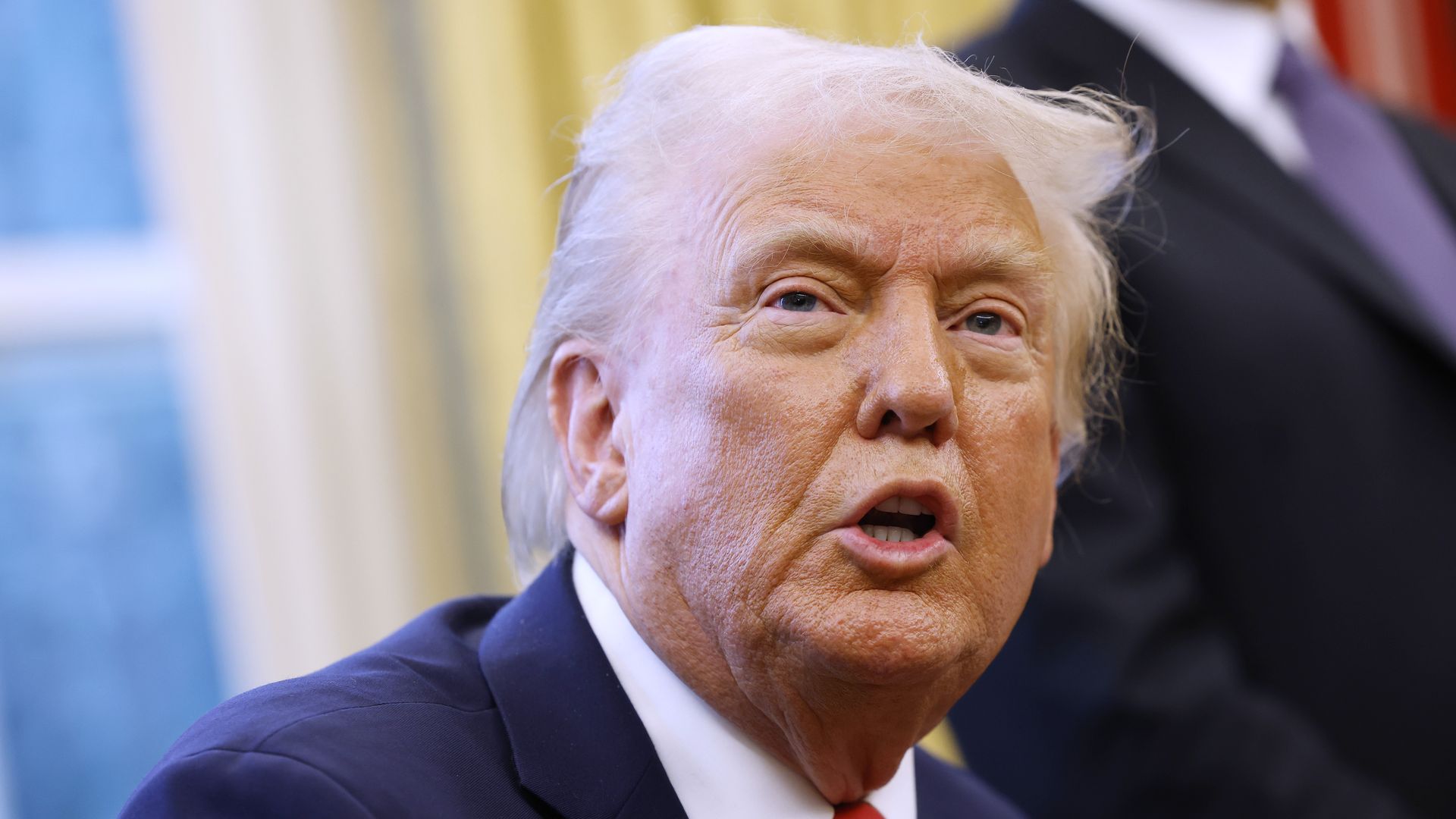
President Trump speaks to reporters in the Oval Office of the White House on February 3, 2025, in Washington, DC. Photo: Anna Moneymaker/Getty Images
A federal judge in Maryland issued a nationwide block of President Trump's executive order to nix birthright citizenship Wednesday.
Why it matters: The preliminary injunction means the president's effort to curb the constitutionally protected right to birthright citizenship cannot go into effect this month as planned unless a higher court rules on the case or it is resolved.
- U.S. District Judge Deborah L. Boardman, who was nominated to the bench by former President Biden, said that Supreme Court precedent safeguards birthright citizenship, per the Washington Post.
- "In fact, no court has endorsed the president's interpretation, and this court will not be the first," she said, according to ABC News.
Driving the news: Boardman's injunction came after a federal judge in Seattle similarly concluded Trump's effort was "blatantly unconstitutional."
- Every state with a Democratic attorney general has sued to block Trump's order undermining birthright citizenship, arguing it is a clear violation of the Constitution and Supreme Court precedent.
- The Maryland lawsuit was filed by two nonprofit civil rights groups and five pregnant women who say their babies would lose citizenship under the order.
Context: Boardman's injunction goes further than the temporary restraining order previously put in place by U.S. District Judge John C. Coughenour.
- Coughenour, the Seattle-based federal judge, sided with four states when he blocked Trump's day-one executive order for 14 days.
- That restraining order was set to expire this week.
- Meanwhile, Wednesday's decision froze the White House's action indefinitely, as the injunction will remain in place through adjudication, per the Washington Post.
Catch up quick: The president's order would end birthright citizenship for children of undocumented immigrants and those in the country legally but temporarily, like foreign students, workers or tourists.
- Trump's team has hinged their defense on the argument that children of undocumented immigrants are not "subject to" American jurisdiction as written in the 14th Amendment.
- The amendment reads, "All persons born or naturalized in the United States, and subject to the jurisdiction thereof, are citizens of the United States and of the State wherein they reside."
- But legal experts say an 1898 Supreme Court decision invalidates the White House's argument.
The other side: Eighteen Republican attorneys general backing Trump's order signed on to an amicus brief filed in Washington state that echoed the White House's contention.
- Wednesday's ruling sets the stage for Trump to appeal to a higher court.
Editor's note: This is a breaking news story and will be updated with more information.
