Scoop: How Trump's "black box" limits outside influences

Add Axios as your preferred source to
see more of our stories on Google.
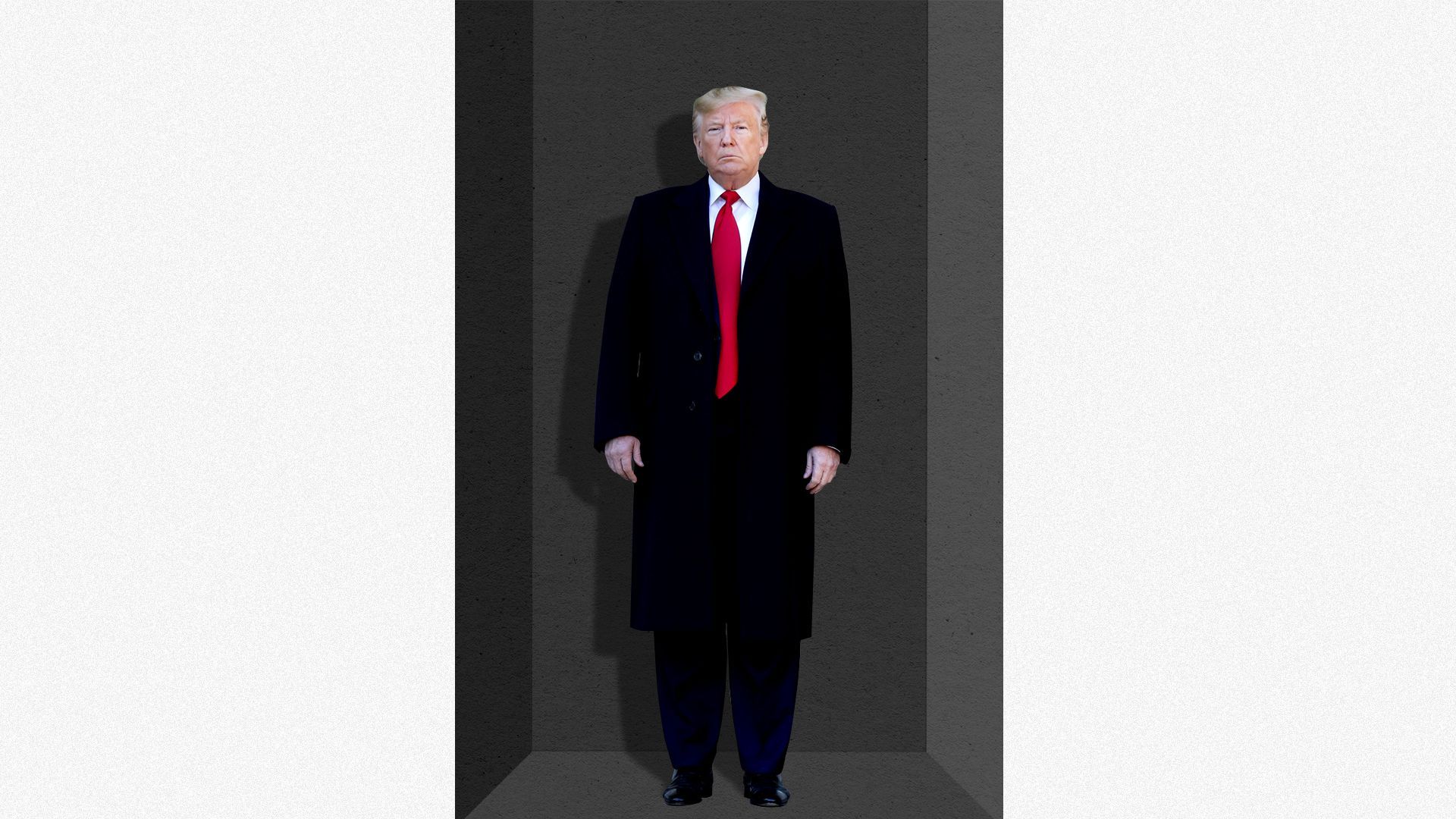
Photo illustration: Aïda Amer/Axios. Photo: Alex Wong/Getty Images
President Trump is surprising — even frustrating — some longtime friends in his second administration's early days with fewer leaks, a lack of exploitable rivalries, and tighter restrictions on access to him.
Why it matters: No modern president has done more — across more areas of American policy, culture and life — than Trump in the past six days. This new operating style and system enabled a strategy of flooding the nation with so many huge moves that it's hard for critics to attack specific ones.
- Trump jammed through confirmation of Defense Secretary Pete Hegseth, fired at least a dozen inspectors general, proposed killing FEMA, and scolded LA officials. That was Friday! Saturday, he said he wants to "clean out" Gaza, bullied Greenland and Canada, and went all-in on no tax on tips.
Behind the scenes: Trump's inner circle is hellbent on running a more functional White House than his chaotic first term — partly to act quickly on his most controversial plans before critics can attack.
- It's stunning to veterans of Trump's first West Wing. But at least in Week 1, the new government has mirrored the discipline of his 2024 campaign operation — another sharp contrast with his previous teams.
"It's a total black box," a lobbyist close to the administration told Axios. "Nothing is leaking except what they want."
- There's a "strong silo system" that has kept advocates and special interests from forum-shopping and end-running administration officials, the lobbyist added.
The biggest change of all, Axios has learned, is that White House Chief of Staff Susie Wiles and other aides have clamped down on the ability of random friends and reporters to call Trump directly.
- Until now, if you had his phone number and called, Trump would answer and talk to you — and maybe even act on whatever you suggested.
- Now, Trump wants to focus more on work and has less time for bull sessions so he's less prone to answer his phone.
Zoom out: Another huge difference between the two Trump administrations' first weeks is how this one started — with a deluge of deeply researched executive orders and actions targeting immigration, DEI and more, overwhelming the administrative state.
- "There are more questions about how all this is going to work, and right now, there just aren't enough bodies to answer them," said a Washington consultant who worked in the first Trump administration.
Zoom in: Sergio Gor, Trump's director of presidential personnel, told Fox News from the White House on Thursday that the administration has filled about 1,300 of 4,000 positions.
Trump's first administration was often a free-for-all, driven by rivalries between Chief of Staff Reince Priebus, adviser Steve Bannon and Trump's son-in-law, Jared Kushner.
- This time, Trump and Wiles — along with deputy chiefs of staff Taylor Budowich, James Blair and Stephen Miller, the architect of Trump's controversial crackdown on immigration — wanted a unified team.
- As Wiles made clear to Axios, there's no room for lone wolves this time.
When Trump was elected in 2017, he was new to politics, and essentially a foreign agent in the GOP.
- That led Trump to make relatively conventional choices for his Cabinet and top staff — many of whom he wound up hating. This time, it's all Trump loyalists.
"Back then, he was trying to consolidate power in the Republican Party," said Marc Short, chief of staff to then-Vice President Mike Pence. "Today, Trump is the party."
