Immigrants rush to prepare for Trump deportation raids


Add Axios as your preferred source to
see more of our stories on Google.
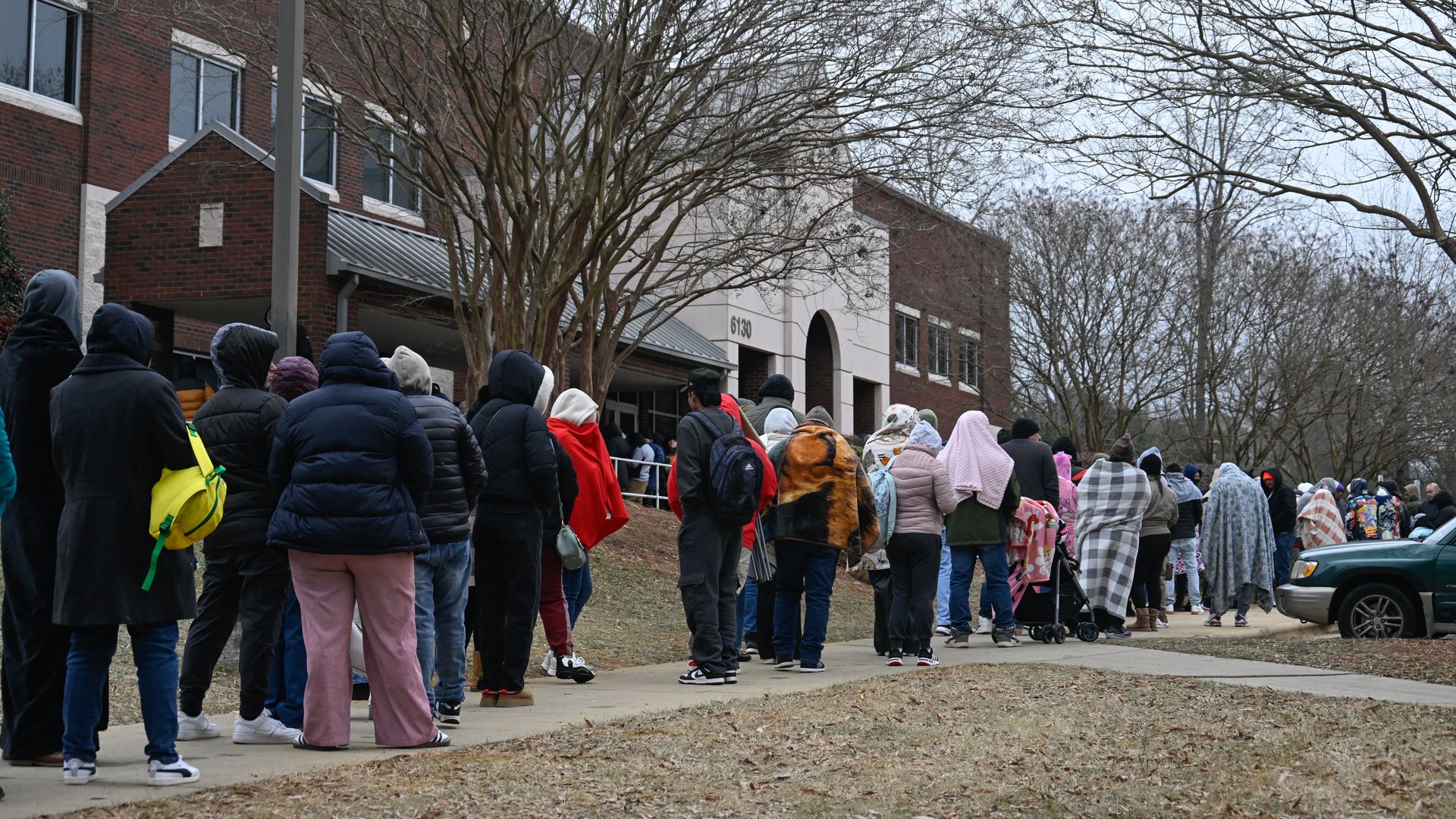
Hundreds of immigrants wait in long lines at the ICE office in Charlotte, N.C., Tuesday, a day after President Trump took office and began a plan he says will deport millions of undocumented people from the U.S. Photo: Peter Zay/Anadolu via Getty Images
Immigrants and advocacy groups nationwide are scrambling to prepare for the waves of raids President Trump has promised under his plan to deport millions of people unauthorized to stay in the U.S.
Why it matters: Confusion and persistent rumors about how the raids will be carried out — and what will happen to those detained by immigration agents — are leading some anxious immigrants to refuse to go to work or send their children to schools, the groups say.
- Trump's executive orders that began laying the groundwork for his mass deportations reversed several longstanding policies. Immigration officials now can raid churches, schools and hospitals to arrest undocumented immigrants.
State of play: Lawrence Benito, executive director of the Illinois Coalition for Immigrant and Refugee Rights, said his group received 400 calls to its hot line on Monday alone, compared to 800 calls in January before Trump's inauguration.
- The New Mexico-based immigrant rights advocacy group Somos Un Pueblo Unido said it's launching a "Know Your Rights" campaign around the state to help immigrants.
- Other groups are handing out cards to immigrants that advise them to not allow federal agents into their homes without a warrant. Some groups are preparing an army of lawyers to jump into immigration cases.
The intrigue: Denver's public schools are among several districts bracing for possible immigration raids on students. They've directed principals to lock down campuses if federal immigration agents come knocking.
- Some Chicago restaurants are keeping I-9 documents and other worker verification paperwork ready in case of visits by U.S. Immigration and Customs Enforcement (ICE) agents, Eater reports.
- Chicago's police department said in a statement it "will not assist or intervene in civil immigration enforcement," but "as always, we will continue to enforce the law if a crime occurs."
- Police in several other cities are following similar policies.
Trump officials have designated Chicago and other Democrat-run cities as targets of the deportation plan.
- "Unfortunately, part of the goal of this administration is to try to use fear tactics [so] that people go into hiding and maybe people would be deterred and actually leave the country," Greg Chen of the American Immigration Lawyers Association told reporters Tuesday.
Zoom in: Trump advisers initially indicated that ICE would first focus on noncitizens convicted of crimes.
- But the overall plan to crack down on illegal immigration remains unclear — and scattered reports of ICE agents raiding big-city restaurants have many immigrant communities, and business owners, on edge.
Between the lines: Trump has said he favors using the military to help round up immigrants — a move that civil liberties advocates warn would be unlawful.
- The advocates have begun a series of lawsuits fighting Trump's plans, specifically against his order to end birthright citizenship.
- Officials in 22 states have gone to court to challenge Trump's push to end birthright citizenship — a right guaranteed by the 14th Amendment to the U.S. Constitution. An estimated 300,000 babies are born to undocumented parents in the U.S. each year.
Legal specialists say Trump's executive orders on immigration suggest that the president's team is better prepared for challenges to its crackdown on immigration than Trump's first administration was.
- They say several of the orders are written in a way that could insulate the administration from certain legal tactics challenging Trump's plans.
- Some orders, for example, call for a study of an issue and reports to be completed before new actions are taken. The slower approach could build a stronger legal basis for future court decisions.
- "What we're seeing with a second Trump administration is already a recognition of some of the experience of the first Trump administration," Doris Meissner of the Migration Policy Institute told reporters.
- "You can see just by the number of actions that have been prepared and signed within 24 hours how much work and effort behind the scenes has been placed on these executive orders."
The other side: Harrison Fields, White House principal deputy press secretary, tells Axios that those trying to keep undocumented immigrants in the U.S. are swimming "against the tide."
- "Radical leftists can ... reject the overwhelming will of the people, or they can get on board and work with President Trump to advance his wildly popular agenda," Fields said.
- "These lawsuits are nothing more than an extension of the left's resistance — and the Trump administration is ready to face them in court."
