Trump's immigration crackdown met with defiance from local police

Add Axios as your preferred source to
see more of our stories on Google.
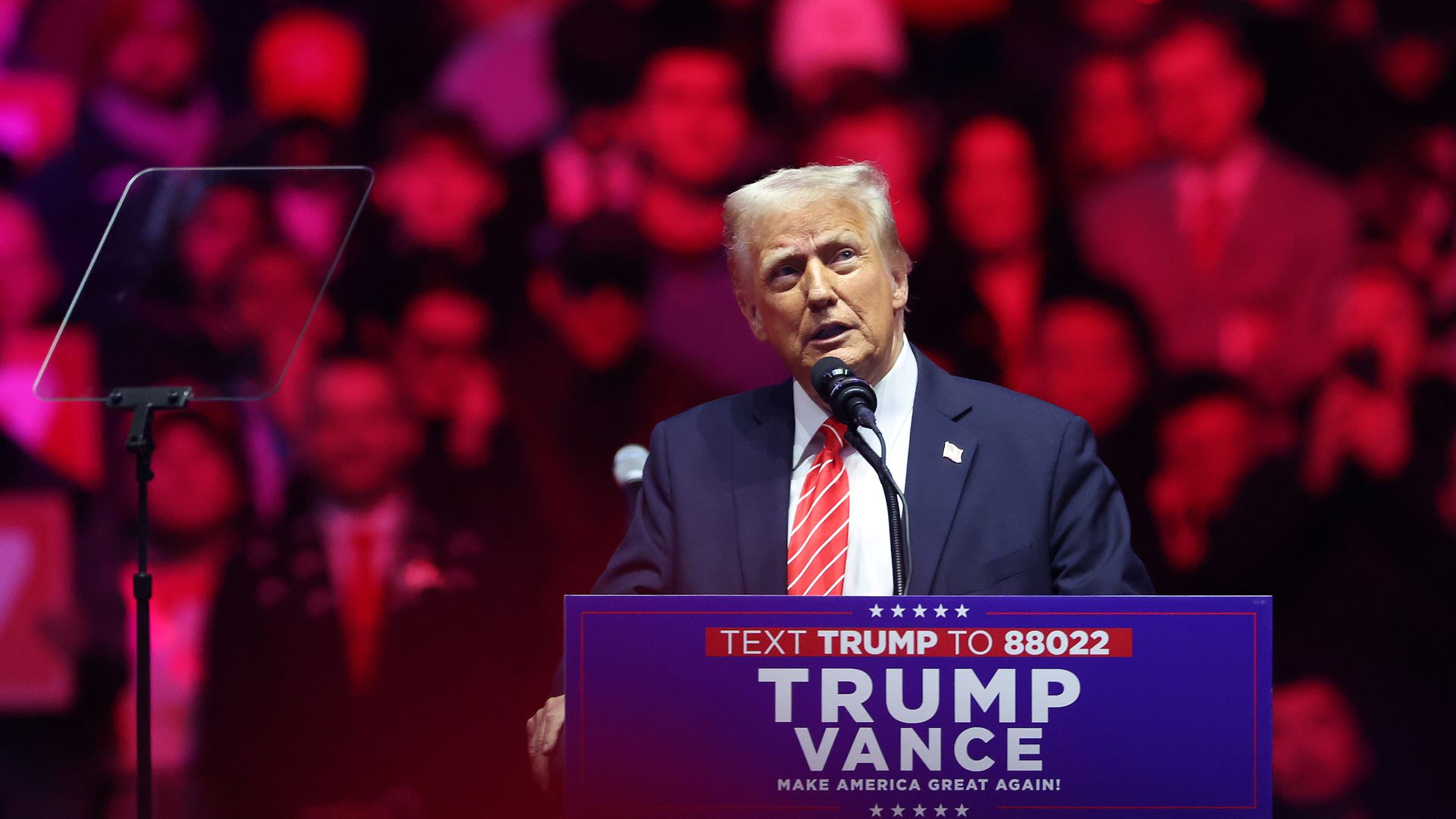
Donald Trump speaks at a victory rally in Washington, D.C., on Jan. 19. Photo: Scott Olson/Getty Images
Police departments across the country are pushing back against President Trump's hardline immigration policies, saying they won't take part in the administration's deportation raids.
Why it matters: Just days into the new administration, Trump's campaign pledge to oversee mass deportations of immigrants is taking shape, with U.S. Immigration and Customs Enforcement (ICE) raids expected.
Driving the news: Trump has already declared a national emergency at the border and rolled back longstanding protections that restrict immigration enforcement in sensitive locations, like churches and schools.
- Trump's "border czar" Tom Homan told CNN Tuesday that ICE was carrying out "targeted enforcement operations."
The big picture: Multiple police departments around the country have said they don't intend to assist with immigration enforcement in cases where no crime has been reported.
- The Las Vegas Metropolitan Police Department said in a statement Tuesday that its officers "will not stop and question, detain, arrest, or place an immigration hold" on people based on undocumented status.
- The Chicago Police Department likewise said it would not "assist or intervene in civil immigration enforcement."
- Omaha Police Chief Todd Schmaderer said Monday that the Omaha Police Department has "no plans to participate in any raids" and that its officers "do not and will not stop individuals to check their legal status."
- In California, the Stockton Police Department also said it won't assist ICE in enforcing federal immigration laws. "We are dedicated to serving all members of our community, including our undocumented immigrant population," the statement read.
Reality check: Local police don't have authority to enforce federal immigration laws unless they have specific agreements with ICE — and many have long declined to do so.
- Chicago, for example, does not allow for local police to be used for immigration enforcement (but they can assist in apprehending those wanted for a particular crime when presented with a federal criminal warrant.)
Between the lines: However, federal authorities often need the cooperation of state and local law enforcement agencies for any mass deportation, Axios' Russell Contreras writes.
- Local and state police can obtain warrants and provide the staffing for carefully planned raids.
- If state and local agencies refuse to work with ICE, it will drive up costs in some areas, making immigration arrests more difficult and time-consuming.
- ICE will also likely need to add tens of thousands of new agents. As of October 2024, ICE had over 20,000 employees in 400 offices.
Zoom out: Meanwhile, the Trump administration threatened to investigate and prosecute local efforts to impede its policies.
- In a memo to federal prosecutors obtained by the Washington Post, acting Deputy Attorney General Emil Bove wrote that "federal law prohibits state and local actors from resisting, obstructing and otherwise failing to comply with lawful immigration-related commands and requests."
- Prosecutors should investigate "any such misconduct for potential prosecution," Bove added.
- Go deeper: Scoop: ICE returns to calling immigrants "aliens"
Editor's note: This story was updated with a link to Bove's memo.
