Why these two health care execs feel optimistic about the incoming Trump administration

Add Axios as your preferred source to
see more of our stories on Google.
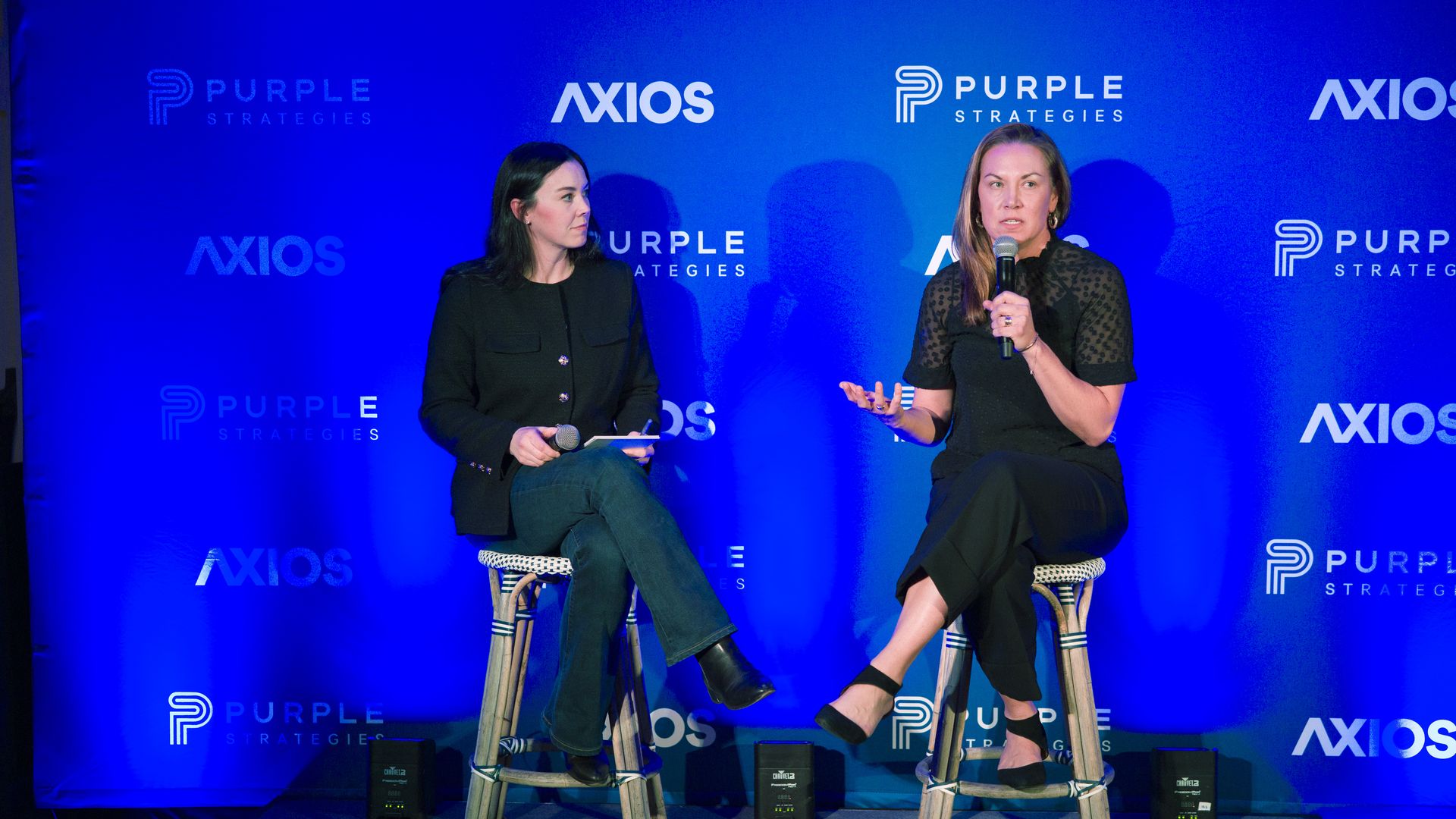
Axios' Eleanor Hawkins, left, speaking with Hims & Hers chief corporate affairs officer Khobi Brooklyn in San Francisco. Photo: Chris Constantine on behalf of Axios
A pair of health care leaders at Monday's Axios event in San Francisco expressed optimism about the incoming Trump administration.
Why it matters: A new Washington means new communication opportunities and risks for those in the health care and pharmaceutical space.
State of play: Hims & Hers chief corporate affairs officer Khobi Brooklyn said the opportunity-to-risk ratio is about 1:1.
- "We need to be engaging with policymakers as much as we need to be engaging with customers," Brooklyn said. "We want to engage with the administration as they come in and let them know that we're here. We're a voice. We want a seat at the table."
PhRMA CEO and president Stephen Ubl, who led the trade organization during Trump's first administration said it's important "to not be distracted and to continue to focus on your core priorities."
- "We've all probably learned to block out the noise. There's going to be a lot of day-to-day ups and downs, and we're going to try to remain focused on the core issues that we care about," he said.
- Plus, he sees other issues like tax policies and immigration taking precedence in the early days of the administration.
Of note, Hims & Hers and PhRMA have contributed to Trump's inaugural committee, as reported by Axios' Tina Reed.
The big picture: The health care industry has seen a decline in reputation since the COVID-19 pandemic.
- Americans' satisfaction with almost every major part of the health care system has dropped since 2010, according to a recent Gallup analysis, and the U.S. health care system ranks as one of the most inefficient among high-income countries, according to a Commonwealth Fund report.
This has led to more misinformation, distrust and public skepticism of the health care industry.
- "People are concerned about ingredient safety, vaccine safety, the food supply. And it's going to be something that isn't going to go away and something that the health care industry is going to have to address because it's not fringe and RFK Jr. and MAHA-ers have broad support," said Purple Strategies managing partner and chief operating officer Kristen Morgante.
What they're saying: "If we don't tell our story, somebody else will," Ubl told the audience.
- "The media environment has been evolving. It's balkanized. You get your information from various different sources, and there are more ways than ever to communicate and get information, which is great. But we have to make sure that we're using our unique ways to address this new environment that we're working in."
Between the lines: Under the new administration, one area that might create communication challenges and risk for Hims & Hers is hormone-based therapies.
- "As we move into the next year, we are looking at new [treatment] categories that carry stigma, but that can be really impactful in people's lives — menopause is a great example of that," said Brooklyn.
- "There's a lot of work for us to do, both with the administration and with our customers, to talk about what treatments look like, what can be impactful and what is safe," she added.
What we're watching: The experts Axios had on stage all seemed optimistic about the Trump administration's appetite for innovation and disruption.
More on Axios: How RFK Jr.'s MAHA movement could shake up public health
