What student loan borrowers should know before Biden's term ends

Add Axios as your preferred source to
see more of our stories on Google.
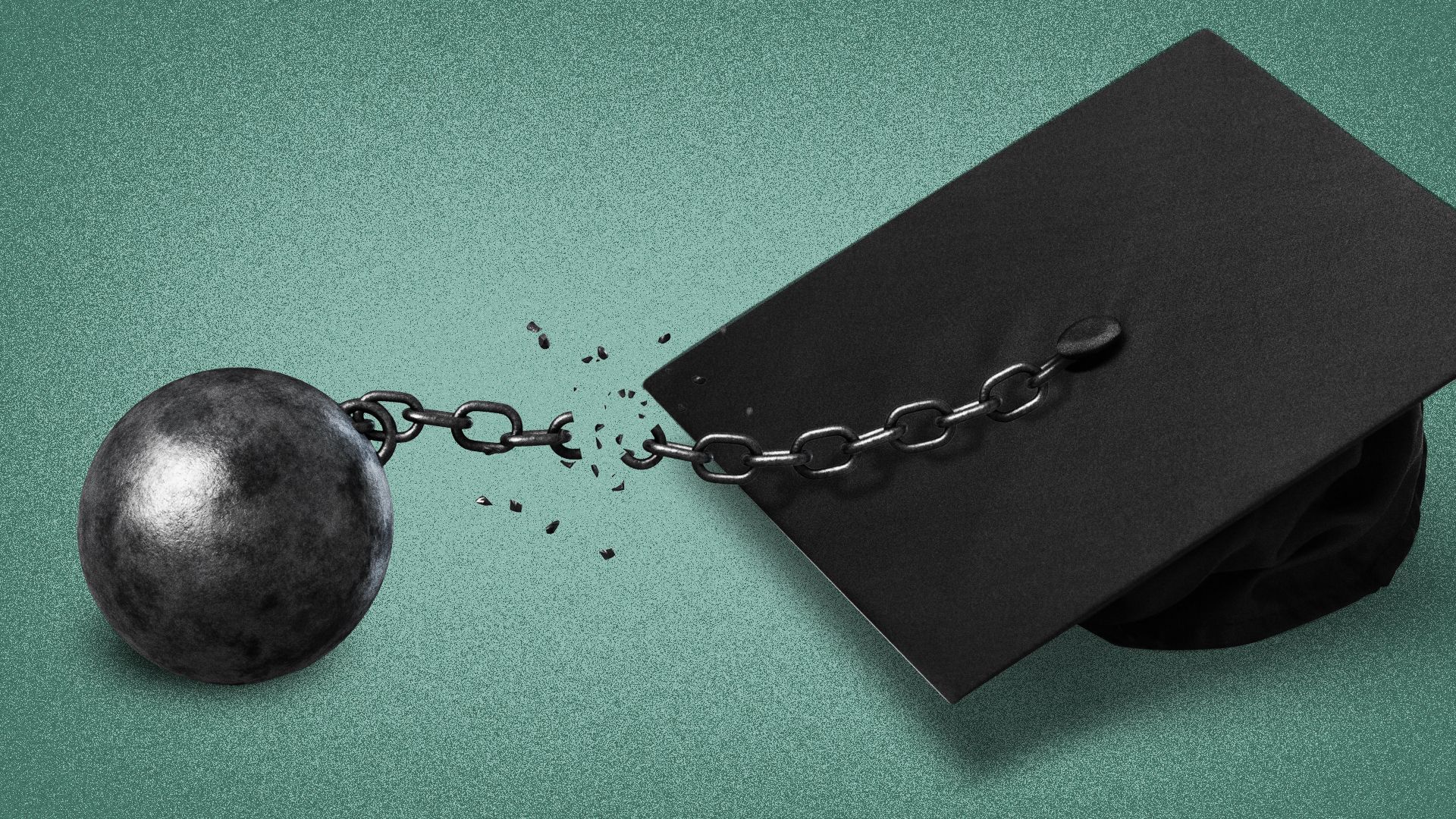
Illustration: Maura Losch/Axios
The Biden administration is withdrawing its latest plans for student loan forgiveness as uncertainty looms over the status of debt relief under President-elect Trump.
Why it matters: The withdrawn initiatives would have provided debt relief for more than 30 million borrowers. They marked President Biden's last chance to deliver on his campaign promise of student loan forgiveness before leaving office.
- The incoming Trump administration is not expected to prioritize student loan relief.
Driving the news: The Department of Education withdrew the two plans as of Dec. 20, it said in a notice posted in the Federal Register.
- One of the plans remained held up in a legal battle, while the other would not be finalized until after Biden's term ends.
- "With the time remaining in this administration, the Department is focused on several priorities including court-ordered settlements and helping borrowers manage the final elements of the return to repayment," the notice states.
Between the lines: "The Biden administration dropping these proposed plans feels like a big loss, but the immediate relief these plans promised was still a long way off," NerdWallet lending expert Kate Wood told Axios.
- "The proposals being withdrawn shouldn't have an immediate effect on borrowers, though it's certainly a big disappointment for those who believe they would have qualified for forgiveness under these plans," she added.
The big picture: The Biden administration doled out nearly $180 billion in student debt relief to 4.9 million people through various actions, despite the Supreme Court blocking his sweeping debt cancellation plan last year.
- Many of Biden's plans for loan forgiveness were hampered by Republican-backed legal challenges.
How can student loan borrowers prepare for the next administration?
Borrowers don't need to take immediate action over the transfer of power.
Yes, but: Some federal loan borrowers may want to explore changing repayment plans, Wood said.
Zoom in: The Department of Education in December reopened two income-driven repayment plans to give borrowers more options to keep their payments low.
- Pay As You Earn (PAYE) and Income-Contingent Repayment (ICR) offer credit toward Public Service Loan Forgiveness (PSLF) and income-driven repayment (IDR) for eligible borrowers enrolled in SAVE.
- That means the plans can eventually lead to debt forgiveness after 20 or 25 years.
- The PAYE and ICR applications are available at StudentAid.gov/idr.
Be smart: "Borrowers who are stuck in the limbo of SAVE forbearance may want to check out these other IDR plans to see whether they could work," Wood said.
- Because these plans have different qualifications and use different payment formulas, monthly payments could change.
- "But for some borrowers, higher monthly payments may be a worthwhile price to pay for restarting their forgiveness clock," Wood said.
What student loan borrowers can do
- Prepare for the end of SAVE: The program, which is currently blocked amid a legal battle, will likely be nixed by the next administration. Look into other income-driven repayment plans and budget for increased payments.
- Budget for higher payments: Those already enrolled in other IDR plans may also see an increase in monthly payments, whether because of income recertification or for filing taxes jointly with a spouse.
- Ensure you're on track for forbearance, if eligible: Those working toward PSLF can track their information at StudentAid.gov and ensure their payments are being counted accurately.
- Take your loans out of default/start making payments: With the end of the one-year on-ramp period this fall, borrowers who are late on payments or do not make them can be reported to credit bureaus, which can negatively impact their credit scores.
More from Axios:
