Where the government shutdown fiasco stands and what it means for you


Add Axios as your preferred source to
see more of our stories on Google.
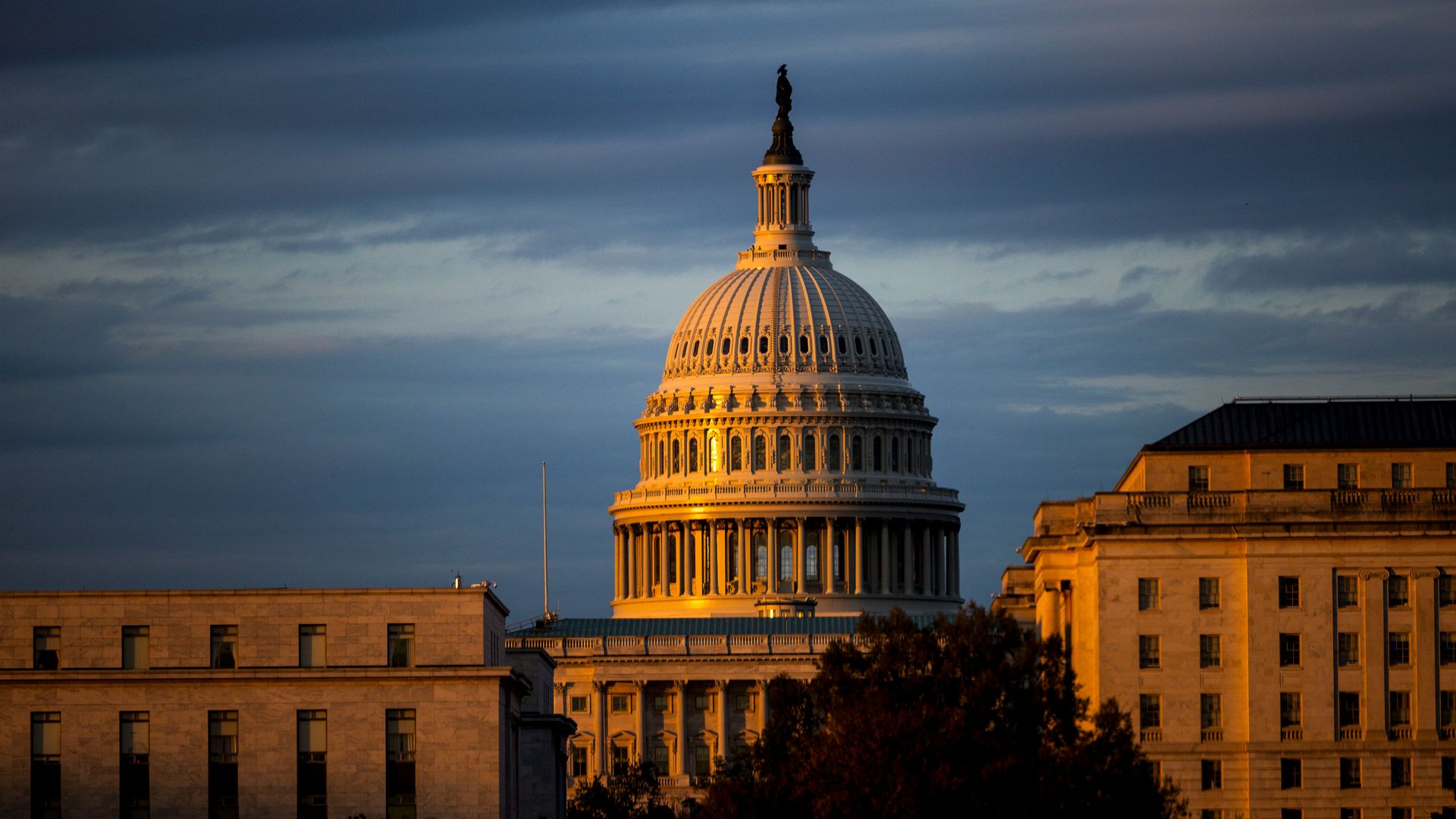
The US Capitol on Nov. 25. Photo: Tierney L. Cross/Bloomberg via Getty Images
Congress stopped the clock ticking toward a government shutdown early Saturday after the Senate followed the GOP-controlled House's lead in passing a stopgap measure that runs through March.
The latest: The resolution came after a Trump-backed plan to suspend the debt ceiling failed in the House Thursday and was nixed from the funding plan.
What he's saying: Despite President-elect Trump's Friday comment on Truth Social that "If there's going to be a shutdown of government, let it begin now, under the Biden administration," Speaker Mike Johnson (R-La.), told reporters after the vote he was in "constant contact" with Trump.
- "He knew exactly what we were doing," Johnson said.
State of play: An earlier version of the stopgap measure lost 38 Republican votes and gained two Democratic ones before legislators pushed a revised bill through both chambers.
- The approved resolution will fund the government until March, provide about $100 billion for disaster aid and extend the farm bill for a year, but legislators nixed elements of the earlier plan that would have suspended the debt ceiling until January 2027.
- House Minority Leader Hakeem Jeffries (D-N.Y.) called it a "laughable proposal."
What was in the first bill?
Congressional leaders unveiled legislation Tuesday to keep the government funded until March, setting up a showdown — with Johnson in the central pressure cooker.
- It included around $100 billion in disaster relief, an extension of the farm bill and restrictions on investments in China. The 1,547-page bill includes wants from both Democrats' and Republicans' wish lists.
- But some measures raised eyebrows: Notably, a pay raise for members of Congress (their first since 2009), caught the attention of Musk and others bashing the bill.
- The mid-March extension date tees up another funding fight toward the end of Trump's first 100 days in office.
What's next, and what does it mean?
Lawmakers were able to push a deal through just after a midnight Saturday deadline, and Biden signed the resolution later Saturday.
- The legislative save means stopping a shutdown just as lawmakers were meant to go on holiday recess.
For thousands of non-essential federal employees, a shutdown would have meant they stopped working.
- During the last government shutdown (the longest on record) from December 2018 to January 2019, 420,000 federal employees were required to work without pay while another 350,000 were furloughed from their jobs without pay, according to the American Federation of Government Employees, a federal employee union.
- "Excepted" employees are those who keep working. Their responsibilities may include services like "emergency work involving the safety of human life or the protection of property," according to the U.S. Office of Personnel Management.
Federal employees would have been eligible for retroactive pay once funding was appropriated, per the OPM, and those who were furloughed could also have received unemployment benefits.
What government programs are impacted?
None now that the shutdown was avoided, but if legislators had failed, a number of government programs could have been impacted.
Social Security: Social Security and Medicare checks are still sent out during a shutdown, but some operations could have been impacted.
- A contingency plan shared in September said that benefit verifications and the issuance of replacement Medicare cards would have been among discontinued activities.
Supplemental Nutrition Assistance Program (SNAP): Food benefits via SNAP are mandatory. But a shutdown could have impacted the ability to renew benefit card licenses.
- Depending on the length of a shutdown, the timing of benefit issuances could have also been impacted.
Veteran benefits: Veteran benefits would continue to be processed and delivered, but some resources, like cemetery grounds maintenance, could have been restricted.
Passport issuance: The issuance of passports, along with visa and consular services, is expected to continue but could have been slowed depending on the length of a closure.
Education and student loans: Pell Grants and Federal Direct Student Loans would continue during a shutdown, per the Department of Education. But the longer a shutdown dragged on, the greater the chance of disruptions for borrowers.
- Most grantmaking activities, the department said in a contingency plan last year, would have been paused.
- Last time the government shuttered, students faced inter-agency issues when trying to access student aid, CNN reported, such as Internal Revenue Service closures that prevented them from accessing necessary tax documents ahead of the spring semester.
National parks and Smithsonian museums: Services at national parks and the Smithsonian museums in D.C. would close during a shutdown.
Go deeper: What a government shutdown could have meant for holiday air travel
Editor's note: This story was updated with new developments.
