Jemele Hill on redefining media, tackling sports and politics, and expanding her impact

Add Axios as your preferred source to
see more of our stories on Google.
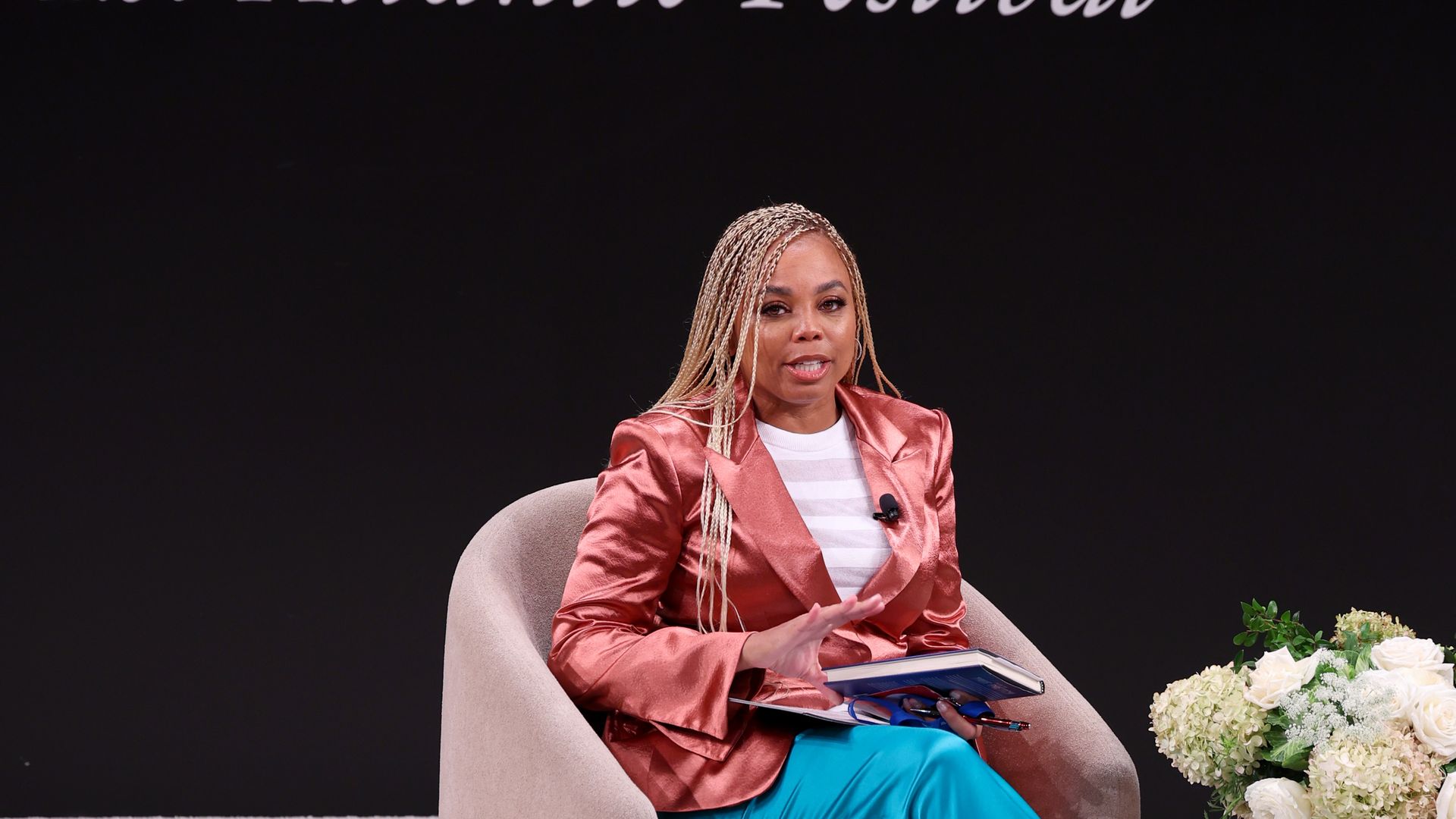
Jemele Hill speaks on stage during the "Gretchen Whitmer on True Gretch" panel for The Atlantic Festival 2024 on September 20, 2024 in Washington, DC. (Photo by Tasos Katopodis/Getty Images for The Atlantic)
At her core, Jemele Hill is an innovator and creative force, evolving from a journalist with a sports focus to a multimedia entrepreneur.
The big picture: Her latest projects — including "Above the Fold" for TNT Sports and Spolitics on iHeart — transcend content, becoming conversations that challenge traditional narratives and spotlight culture, identity and race.
- Whether dissecting the intersection of sports and politics or amplifying untold stories, Hill approaches her work with a focus on truth, empowerment, and her Detroit roots.
Below is an excerpt from Axios' conversation with Hill, edited for clarity.
How do you see Detroit now, compared to when you were growing up?
"Detroit feels different now—it feels like the comeback is sustainable. Growing up, there were always stops and starts, and it felt like the city couldn't find the light at the end of the tunnel.
- But now, you see changes: tech, entrepreneurship, even a Gucci store downtown! It's encouraging, but I worry about gentrification. Detroit's soul is in its people, and I hope that isn't lost as it evolves."
Your career spans newspapers, TV, podcasts, and producing. What drives you to take on so much?
"The media landscape doesn't let you focus on just one thing anymore. You have to be a utility player.
- Podcasting, for example, has become a primary way people get news and intellectual stimulation. I started podcasting at ESPN before it was as big as it is now. Television still has power, but people consume far more on their phones. It's about staying ahead and broadening my audience."
Looking back on leaving ESPN, did you know what shape your career would take?
"Honestly, I had no idea. I knew I wanted to return to writing, which I did with The Atlantic, and I started narrating Shut Up and Dribble. That showed me that storytelling is storytelling, whether it's a 1,000-word article or a docuseries.
- I also had to transition from journalist to entrepreneur, which wasn't something I initially wanted. But now, I'm running the business of Jemele Hill, and while it's exhilarating, it comes with challenges—like being responsible for others' livelihoods. Still, I wouldn't trade this career phase for anything."
You've been vocal about sports, politics, and culture. What motivates you to engage in these conversations?
"It's impossible to separate sports from politics. Whether it's Colin Kaepernick's protest or taxpayer-funded stadiums, these are political issues.
- Title IX is a perfect example—the Department of Education enforces it, and it is the most impactful legislation for female athletes ever created. So when political discussions about dismantling the Department arise, Title IX is at risk.
- Sports isn't just about the game; it's tied to broader social systems that shape equity and funding.
Some find it controversial, saying athletes should "just shut up and dribble."
"That's funny because the title (for the documentary) came from Laura Ingraham's infamous comment, so shout out to her for that.
- The documentary highlights how sports and politics have always been intertwined. It's not about whether they always have to coexist but whether people agree with the politics. Narrating it made me realize how critical it is to explore these issues honestly and nuancedly."
You're an executive producer on the Colin Kaepernick documentary directed by Spike Lee. What can you share about that project?
"It's been an incredible experience to work on this documentary. Colin's story is about much more than football; it's about his journey as an activist and his impact on conversations around race and justice in this country.
- Spike Lee brings his unique vision and storytelling to this project, which makes it even more compelling. For me, it's about telling Colin's story in a way that captures his complexity and the broader significance of his actions. It's an opportunity to dive deep into the layers of his life and what he represents—not just as an athlete, but as a cultural figure."
What about Simone Biles' Netflix documentary (Simone Biles Rising)?
"While it celebrates Simone's athletic greatness, it's also about athletes and mental health—a conversation that's grown significantly in the last five years.
- Highlighting that is critical because it's such a key part of her story. The documentary dives into these broader challenges, making it much more meaningful."
What's next for you?
"I'm working on a children's book about inspiring women, drawing from my memoir (Uphill: A Memoir).
- Writing for kids is a challenge—you must write optimistically and in a way a five-year-old can understand. It's refreshing to step into that space, and I'm excited for it to come out in 2025."
