A December government shutdown looms: Where negotiations stand

Add Axios as your preferred source to
see more of our stories on Google.
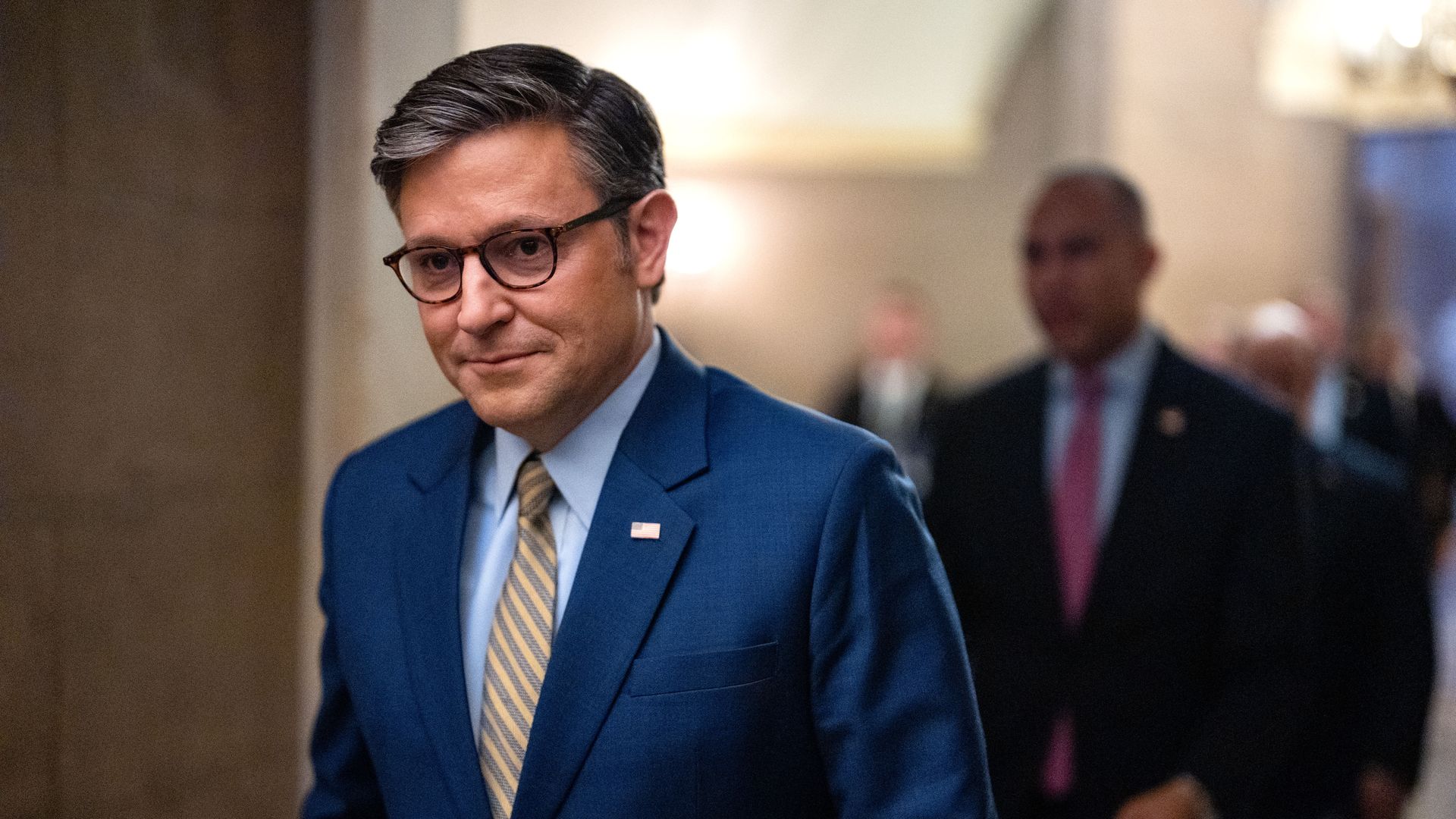
Speaker Mike Johnson (R-La.) arrives on Capitol Hill on Dec. 10, 2024. Photo: Kent Nishimura/Getty Images
All that stands between Congress and its holiday recess is the rapidly approaching deadline to keep the federal government operating into the new year when Republicans will reign in both chambers.
Why it matters: While lawmakers in both parties expect the government to stay open past the Dec. 20 deadline, passing spending measures to keep the government's lights on in the past have been bruising exercises for House Speaker Mike Johnson (R-La.)
- Lawmakers are considering a continuing resolution that would fund the government into March, according to several reports, but they've yet to strike a deal.
State of play: With just over a week until the deadline, a CR seems to be the only way to keep the government open.
- Pushing the deadline to March would start the 119th Congress with another looming shutdown soon after it is sworn in while Republicans are eager to spend the first 100 days pushing through President-elect Trump's priorities.
- Republicans' incoming House majority is tiny, and they won't have the numbers to sidestep a filibuster in the Senate, giving Democrats some leverage in the process.
Flashback: The current time crunch is the result of lawmakers in September punting the shutdown deadline after Republicans balked at a longer funding bill.
- That battle was tumultuous for Johnson who faced then-candidate Trump's demand that Republicans attach a measure requiring proof of U.S. citizenship to register to vote despite Democratic opposition.
- Johnson ultimately dropped the voting provision and sought Democrats' help to get the continuing resolution across the line — sparking ire from his caucus' right flank.
What are lawmakers saying?
Johnson will likely have to lean on Democrats once again to get a stopgap bill to President Biden's desk.
- Johnson said Thursday that negotiators are "very close" to finishing work on the CR, the Hill reported. He added the text will "probably" be released Sunday.
- Democrats are expected to accept a proposed CR even though party leaders preferred a full-year funding bill, the Washington Post reported.
Disaster aid funding has emerged as a key factor in discussions, multiple outlets have reported.
- House Appropriations Chair Tom Cole (R-Okla.) told the Hill that while he thinks there should be "robust" disaster funding, there is "extra money for programs that are not disaster related" in Biden's nearly $100 billion request for hurricane relief.
- The House Freedom Caucus, a coalition of GOP firebrands, said in a statement earlier this month that it opposes an "unpaid disaster supplemental," saying Congress should strike down the request.
- "The House should consider only what is absolutely necessary," the statement read, urging lawmakers to "wait for President Trump to take office to better manage disaster relief."
What would a shutdown mean?
If the government does shut down, non-essential federal employees would stop working. However, employees whose jobs are deemed critical are expected to keep working.
- Their responsibilities may include services like "emergency work involving the safety of human life or the protection of property," per the U.S. Office of Personnel Management.
- During the last government shutdown, which spanned 34 days from December 2018 to January 2019, 420,000 federal employees were required to work without pay, while 350,000 were furloughed, per the American Federation of Government Employees.
- Government employees are eligible for retroactive pay once funding is appropriated, per the OPM. Those who were furloughed could also receive unemployment benefits.
How would air travel be affected?
A number of government programs could be impacted by a possible shutdown during what is expected to be a record-setting holiday travel season.
- While commercial flights would continue as normal, air traffic controllers and TSA officers would have to work without pay, which could trigger staffing issues during the holiday season travel boom.
- Services at national parks are suspended during a shutdown, and the Smithsonian museums in D.C. close their doors.
Go deeper: What to know about a potential government shutdown
