Netanyahu takes the stand amid Middle East chaos

Add Axios as your preferred source to
see more of our stories on Google.
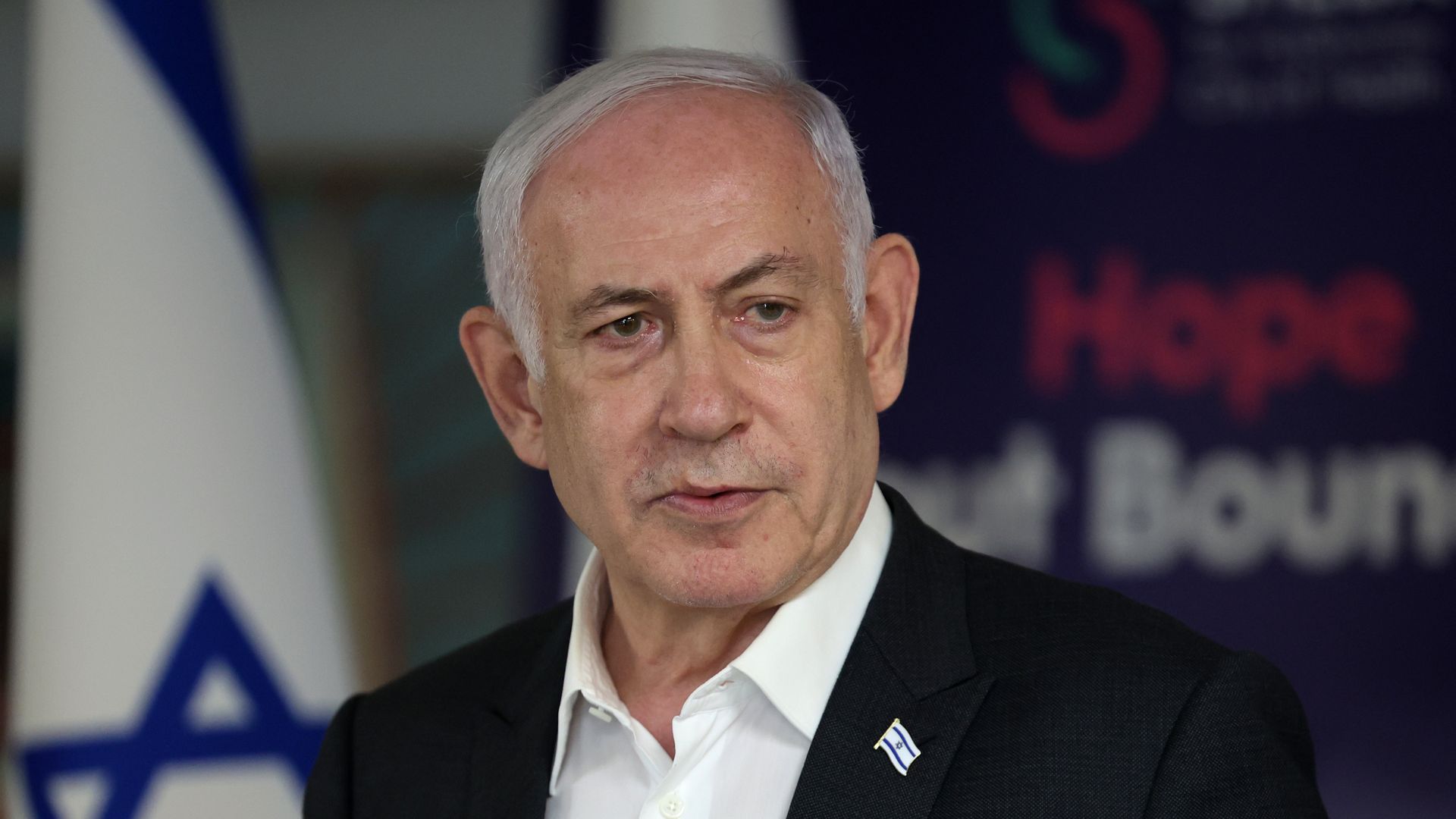
Israeli Prime Minister Benjamin Netanyahu speaks during a press conference on June 8, 2024 in Ramat Gan, Israel. Photo: Jack Guez -Pool/Getty Images
The start of Israeli Prime Minister Benjamin Netanyahu's long-awaited testimony in his corruption trial on Tuesday brings more uncertainty to the chaos and conflict in the Middle East.
Why it matters: Netanyahu's testimony, which he repeatedly tried to postpone and is expected to go on for months, will be a pivotal moment in the prime minister's fight for political survival and for his personal freedom.
- It comes as he fights a war in Gaza, moves his forces into Syria as the Assad regime collapses and faces an international arrest warrant for war crimes.
Catch up quick: Netanyahu was indicted for bribery, fraud and breach of trust in November of 2019. He has pleaded not guilty to all of the charges.
- In case 4000, Netanyahu was charged with bribery for allegedly giving hundreds of millions of dollars in regulatory benefits to an Israeli telecommunications tycoon in return for favorable media coverage.
- In case 2000, he was indicted for fraud and breach of trust over an alleged deal with a newspaper publisher in another effort to secure favorable coverage.
- In case 1000, which involves Netanyahu allegedly taking $200,000 worth of cigars, champagne and jewelry from businessmen in return for promoting their interests, he was indicted for fraud and breach of trust.
Driving the news: The trial that began six months later has moved slowly, mostly because Netanyahu's lawyers stretched out witness interrogations and deployed delay tactics.
- In recent weeks, they claimed that if the prime minister testified for hours in a public building he could be targeted by a drone strike launched by the Houthis or by Iran.
- The judges in response made the rare move of relocating the trial from Jerusalem to a secure court room at the Tel Aviv District Court.
- Then, Netanyahu's lawyers claimed he won't be able to appear in court three times a week for six hours each time because he needs to be focused on the war in Gaza and other security matters. The judges agreed to make slight changes.
- Netanyahu's ally Knesset speaker Amir Ohana also tried to use his legal authority to delay the testimony but it was rejected by the judges.
Behind the scenes: In recent days, Netanyahu tried to use the collapse of the Assad regime in Syria as a reason to postpone his testimony.
- During a security cabinet meeting on Saturday, several ministers demanded the attorney general order the prosecutors to agree to postponing Netanyahu's testimony.
- The attorney general pushed back and warned the ministers of using political pressure to hamper the legal procedures.
- The security cabinet ministers then signed a joint letter to the judges asking them to postpone the testimony for reasons of national security. Their request was rejected.
What they're saying: On Monday evening, 12 hours before his testimony was set to begin, Netanyahu held a press conference for the first time in more than three months.
- He hurled accusations at the attorney general, the prosecutors and the police investigators. He claimed the trial was the result of a politically motivated "witch hunt" and will end with no convictions. And he attacked reporters for "publishing lies and fake news."
- Netanyahu denied he tried to delay his testimony and claimed he has been "waiting for eight years" since the investigations against him started to tell his side of the story.
- "I don't want to talk? Tomorrow I am talking," he said.
Between the lines: Netanyahu claimed for years, including in court, that he could run the country and be a defendant at the same time, and that it didn't pose any conflict of interest.
- But since he became prime minister again in late 2022, he's pushed for a judicial overhaul that could help his case, attacked the legal system, tried to pass bills that would diminish the state prosecution and attempted to delay his own testimony.
In recent months as Israel fought wars on several fronts, Netanyahu and his coalition took incremental steps to weaken Israel's democratic institutions.
- Several ministers in Netanyahu's coalition have publicly called on him to fire the attorney general.
- His coalition is trying to get a bill passed to expand immunity for lawmakers, which would make it much harder to indict politicians. The lawmaker pushing for the bill is himself under police investigation for exposing the identity of a Shin Bet secret agent.
The coalition is also pushing a law that gives immunity to members of the intelligence community who bypass the chain of command and send information directly to the prime minister.
- The bill was introduced after Netanyahu's spokesperson was arrested for allegedly stealing top secret intelligence and leaking it to the foreign press.
Netanyahu's and his allies are also pushing bills to shut down Israel's public broadcaster Kan and give the government control over TV ratings.
- Another bill would ban the formation of a national commission of inquiry into Israeli security failures around the Oct. 7 Hamas attacks. A recent Channel 12 poll found 85% of Israelis want an investigation.
But the most consequential bill would make it easier to disqualify Arab-Israelis from running in the elections.
- It would likely drastically decrease voter turnout in the Arab community and make it impossible for Netanyahu's rivals to win an election.
