ICC issues arrest warrants for Israel's Netanyahu, Gallant

Add Axios as your preferred source to
see more of our stories on Google.
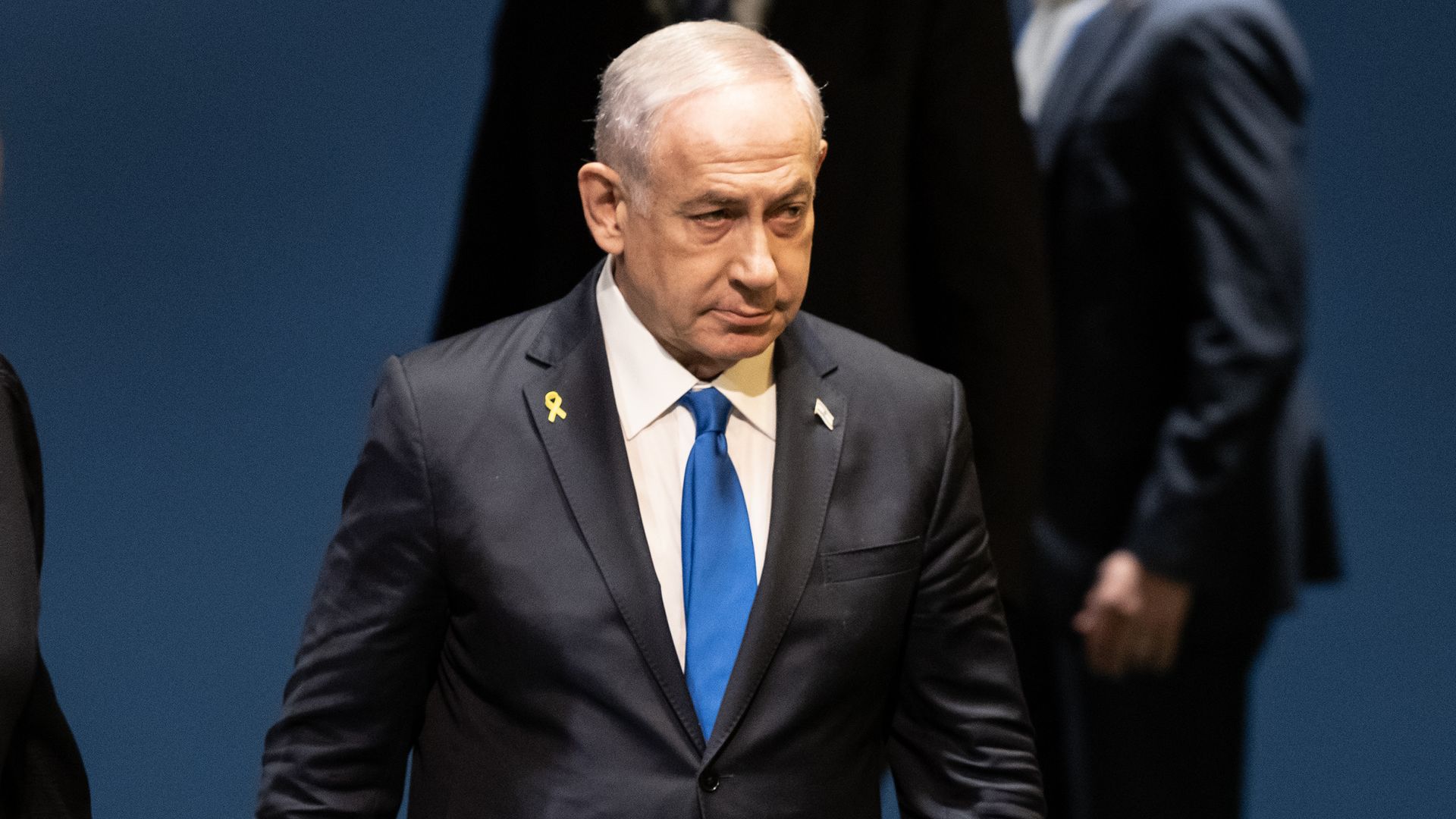
Israeli Prime Minister Benjamin Netanyahu. Photo: Lev Radin/Pacific Press/LightRocket via Getty Images
A pre-trial chamber of the International Criminal Court (ICC) on Thursday issued arrest warrants for Israeli Prime Minister Benjamin Netanyahu and former Minister of Defense Yoav Gallant for alleged war crimes and crimes against humanity during the war in Gaza.
Why it matters: The dramatic move will further isolate Israel internationally and increase pressure on Netanyahu to end the war in Gaza. President Biden in a Thursday evening statement called the ICC's actions "outrageous."
- It is the first time the ICC has issued arrest warrants against a major U.S. ally, as well as the first time it has issued warrants for the leader of a democratic country.
- Netanyahu and Gallant will be under the risk of arrest if they travel to one of the 125 countries that are party to the Rome Statute that established the international body, among them many of Israel's western allies. The U.S. is not among that group and doesn't recognize the court's jurisdiction.
- However, the development poses a major challenge for the Biden administration in its last two months in office and will be a key issue for President-elect Trump's incoming administration.
Driving the news: The judges said in their ruling that they rejected Israel's appeals claiming the ICC doesn't have jurisdiction over the situation in Gaza or over Israeli nationals. They also rejected Israel's demands to halt the proceedings. Israel does not have to recognize the court's jurisdiction in order for the court to issue arrest warrants, the ruling stated.
- The judges said the warrants are classified as 'secret,' in order to protect witnesses and prevent sabotaging the investigation.
- But the judges said they decided to release some information "since conduct similar to that addressed in the warrant of arrest appears to be ongoing."
- They said they found reasonable grounds to believe Netanyahu and Gallant each bear criminal responsibility for the war crime of starvation as a method of warfare, and the crimes against humanity of murder, persecution, and other inhumane acts.
What they're saying: "Israel utterly rejects the false and absurd charges of the International Criminal Court, a biased and discriminatory political body," the Israeli Prime Minister's Office said in a statement on Thursday.
- "The decision to issue an arrest warrant against the Prime Minister was made by a corrupt chief prosecutor who is trying to save himself from sexual harassment accusations and biased judges who are motivated by antisemitic hatred of Israel."
- The ICC's governing body is launching an external investigation into alleged misconduct by ICC Prosecutor Karim Khan, who has denied the allegations.
The Biden administration rejected the ICC decision to issue arrest warrants for Netanyahu and Gallant.
- Biden said in a statement "whatever the ICC might imply, there is no equivalence — none — between Israel and Hamas," adding: "We will always stand with Israel against threats to its security."
- A White House spokesperson told Axios the Biden administration is "discussing next steps" in coordination with partners, including Israel.
- "We remain deeply concerned by the Prosecutor's rush to seek arrest warrants and the troubling process errors that led to this decision. The United States has been clear that the ICC does not have jurisdiction over this matter," the spokesperson said.
Zoom in: In their ruling, the judges said there are reasonable grounds to believe Netanyahu and Gallant "intentionally and knowingly deprived the civilian population in Gaza of objects indispensable to their survival, including food, water, and medicine and medical supplies, as well as fuel and electricity."
- The restrictions disrupted the ability of humanitarian organizations to deliver food and medical aid and had "a severe impact on the availability of water in Gaza and the ability of hospitals to provide medical care," they wrote, adding they found "no clear military need or other justification under international humanitarian law for the restrictions placed on access for humanitarian relief operations."
- "The Chamber therefore found reasonable grounds to believe that Mr. Netanyahu and Mr. Gallant bear criminal responsibility for the war crime of starvation as a method of warfare," the judges said.
The lack of food, water, medical supplies and fuel, "created conditions of life calculated to bring about the destruction of part of the civilian population in Gaza, which resulted in the death of civilians, including children due to malnutrition and dehydration," the judges wrote.
- The evidence "could not determine that all elements of the crime against humanity of extermination were met."
- But they said they found reasonable grounds to believe "the crime against humanity of murder was committed in relation to these victims."
By limiting or preventing medical supplies and medicine from getting into Gaza, in particular anaesthetics and anaesthesia machines, the judges said Netanyahu and Gallant are also "responsible for inflicting great suffering by means of inhumane acts on persons in need of treatment."
- The ruling said doctors were forced to operate on wounded persons and carry out amputations, including on children, without anaesthetics, or were forced to use inadequate and unsafe means to sedate patients, causing these persons extreme pain and suffering.
- "This amounts to the crime against humanity of other inhumane acts," the judges wrote.
The judges also found reasonable grounds to believe Netanyahu and Gallant bear criminal responsibility as civilian superiors "for the war crime of intentionally directing attacks against the civilian population of Gaza."
- They identified two incidents "that qualified as attacks that were intentionally directed against civilians" and said there are grounds to believe Netanyahu and Gallant, "despite having measures available to them to prevent or repress the commission of crimes or ensure the submittal of the matter to the competent authorities, failed to do so."
What to watch: The ICC decision could trigger legislation by Congress against the international court.
- Incoming Senate majority leader John Thune (R-S.D.) threatened earlier this week that the U.S. would impose sanctions on the ICC if it moved ahead with the arrest warrants.
- On Thursday, Sen. Lindsey Graham (R-S.C.) repeated the threat of sanctions against the ICC. President-elect Trump's incoming national security adviser Rep. Michael Waltz (R-Fla.) said the Trump administration will take action against ICC in January.
Editor's note: This article has been updated with comment from President Biden and additional details.
