National Archives digitize cold cases of Black American murders

Add Axios as your preferred source to
see more of our stories on Google.
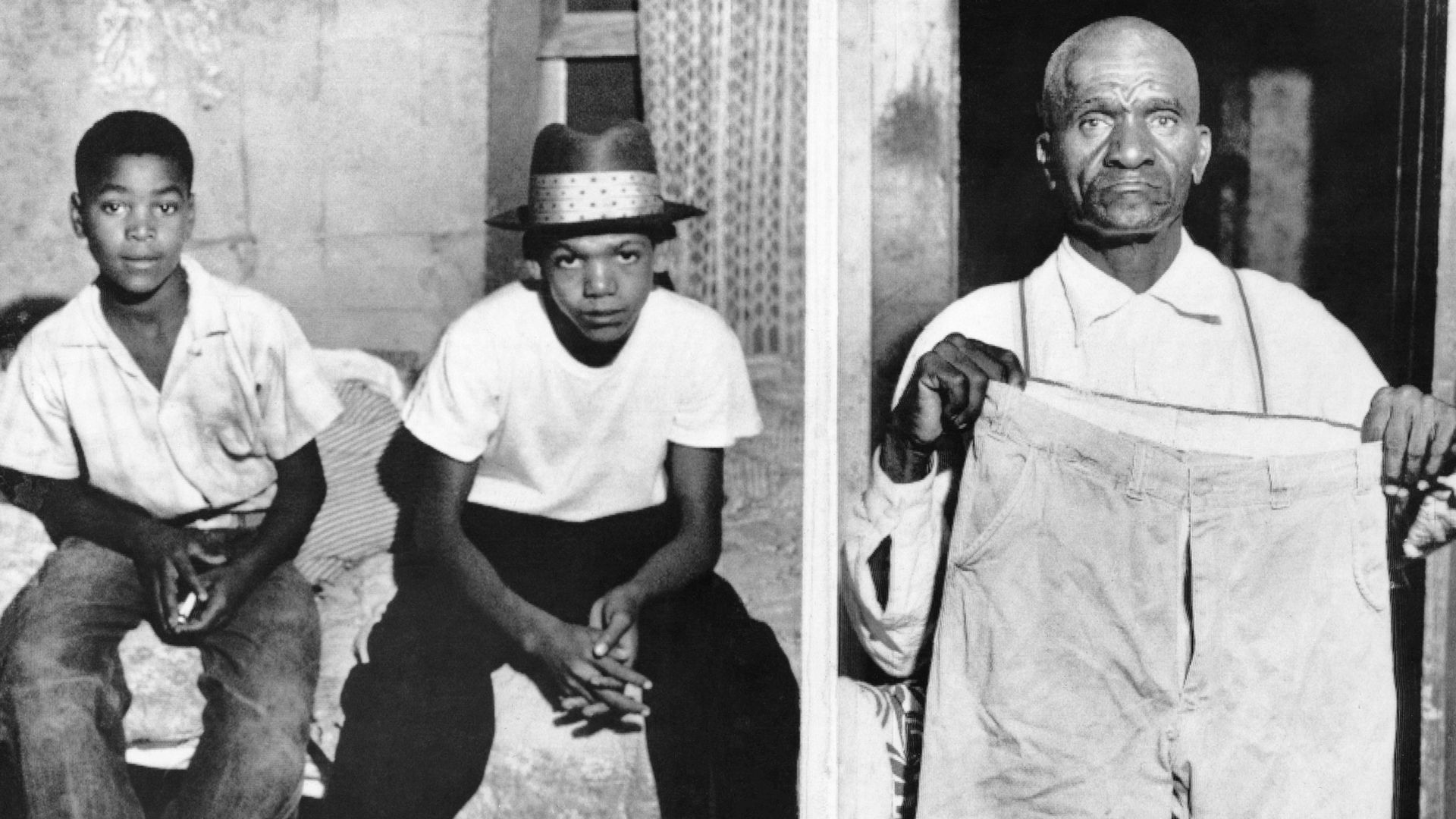
Simeon, 12, and Maurice Wright, 16, cousins of Emmett Till, sit in their home after being questioned after his disappearance. Moses Wright, 64, great uncle of the murdered boy, holds some of Emmett's clothing to show that he was a "large boy for his age." Photo: Bettmann Archive/Getty Images
An Axios review of a new National Archives portal found just three digitized unsolved cases of lynchings, racial violence and murders of Black Americans, spawning several decades.
The big picture: The Civil Rights Cold Case Records Collection portal is the federal agency's latest attempt to index civil rights violations and provide a subject guide, part of an aim spelled out by law to bring justice to the victims in those cases.
Why it matters: After Reconstruction, the federal government — and many states — rarely prosecuted allegations of civil rights violations and racial violence until the beginning of the Civil Rights Movement.
- The lack of action built decades of distrust, and families seldom saw justice for victims.
- The new portal starts with victims in three cases.
They include:
- Hattie Debardelaben, a 46-year-old farmer, who was killed in 1945 by Deputy Clyde White and federal officers in Alabama during a warrantless search of her home for illegal whiskey;
- Leroy Bradwell, a 26-year-old WWII veteran who went missing in Florida in 1946 after being falsely accused of writing an obscene letter to a white woman; and
- Rev. Samuel Earl Sawyer, Sr., a 39-year-old father of five who was killed by a Georgia state trooper in 1948.
State of play: More case records will be released soon, per the National Archives.
- The existing case inclusions were generated in response to the Civil Rights Cold Case Records Collection Act, signed into law in 2019 by President-elect Trump during his first term.
- The bill passed to bring justice for victims established a review board independent of the FBI to oversee the release of documents about cases.
- Trump didn't nominate members to the board during his first term, but the U.S. Senate approved President Biden's nominees in 2022.
Zoom in: Before the Cold Case Collection Act, information about unsolved cases had to be obtained through Freedom of Information Act (FOIA) requests — a slow process often resulting in significantly redacted documents.
- The federal government has long been criticized for its response to racial injustices and often failed to prosecute cases of lynching, racial terror and mob killings throughout the 20th century.
Case in point: The U.S. Department of Justice opened in September its first-ever probe into the Tulsa Massacre more than a century after it happened in 1921.
- It was one of the deadliest race massacres in the nation's history, decimating a prosperous Black community and economic hub known as "Black Wall Street."
Assistant Attorney General Kristen Clarke announced the DOJ review under the Emmett Till Unsolved Civil Rights Crime Act.
- That law allows the federal government to investigate civil rights crimes that resulted in death and occurred on or before Dec. 31, 1979.
- "We have no expectation that there are living perpetrators who could be criminally prosecuted by us or by the state," Clarke said at the time.
- However, Clarke said the department will issue a report analyzing the massacre in light of both modern and then-existing civil rights laws.
Don't forget: In 2021, the DOJ formally closed its second investigation into the 1955 death of 14-year-old Chicagoan Emmett Till, who white supremacists tortured and murdered after a white woman claimed Till grabbed and propositioned her during his trip to Mississippi to visit family.
- Witness statements indicated that he whistled at her.
- And although his accuser, Carolyn Bryant Donham reportedly recanted her testimony that Till harassed her, the department closed its probe after finding no verifiable evidence of the report.
- Donham's alleged recantation wasn't properly recorded or documented, the DOJ said.
- Donham died last year at 88, ending any hope by civil rights advocates that anyone connected to the lynching of Till would be brought to justice.
Go deeper: Uncovering the Tulsa Race Massacre after 100 years
