U.S. tells Israel it is concerned Lebanon ceasefire could unravel

Add Axios as your preferred source to
see more of our stories on Google.
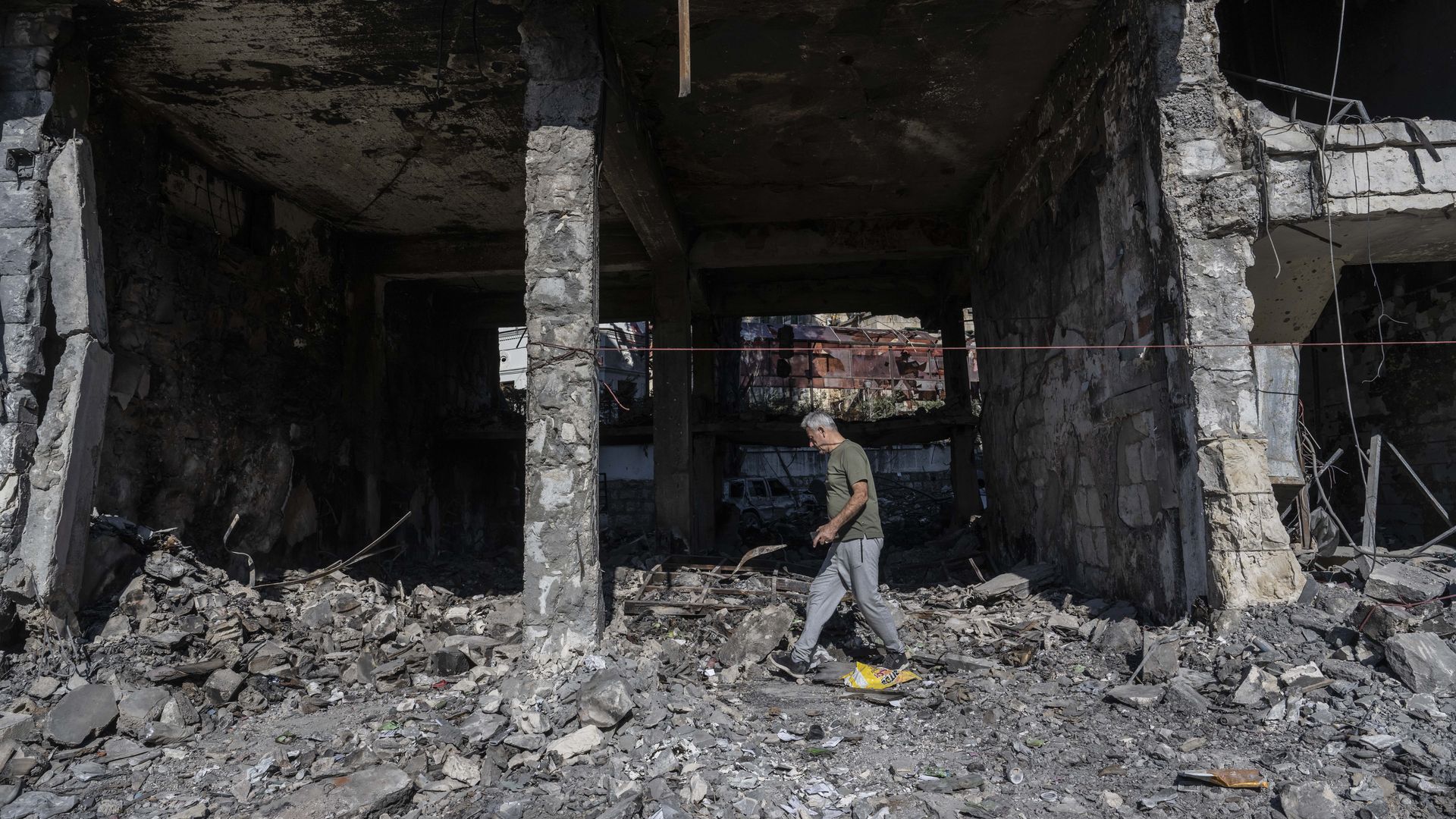
People inspect destroyed buildings in Beirut, Lebanon on Dec. 02, 2024. Photo: Murat Sengul/Anadolu via Getty Images
The Biden administration is concerned the fragile ceasefire in Lebanon could unravel after Israel and Hezbollah exchanged fire in recent days, U.S. officials say.
Why it matters: The ceasefire announced last Tuesday ended more than a year of fighting between Israel and Hezbollah.
- If the ceasefire collapses, Israel could expand its ground operation in southern Lebanon, escalating the war in the region.
State of play: White House spokesperson John Kirby told reporters on Monday that the "sporadic strikes" in recent days were expected.
- "There has been dramatic reduction in the violence. The monitoring mechanism is in full force and is working ... largely speaking the ceasefire is holding," he said.
But the administration has privately expressed concern to the Israelis.
- "The Israelis have been playing a dangerous game in recent days," a U.S. official told Axios.
Catch up quick: Israel and Lebanon agreed to begin a 60-day transition period last Wednesday during which the Israeli military would withdraw from southern Lebanon, the Lebanese Army would deploy in areas close to the border and Hezbollah would move its heavy weapons north of the Litani River.
- The deal includes a U.S.-led oversight committee to monitor implementation and address violations.
- The U.S. agreed to give Israel a letter of assurance that it would support Israeli military action against direct threats from Lebanese territory.
Driving the news: The Israeli Air Force conducted several airstrikes in recent days against Hezbollah operatives in southern Lebanon but also north of the Litani river.
- On Sunday, Israeli drones flew above Beirut for the first time since the ceasefire was announced.
- The Israelis said the strikes targeted areas where Hezbollah violated the ceasefire by moving weapons and were conducted to prevent direct threats by the militia. Israel notified the U.S. in advance about some of these strikes.
The other side: The Lebanese government said Israel has violated the ceasefire more the 50 times since it took effect last Wednesday.
- On Monday, Hezbollah fired two mortar shells towards Israel Defense Forces (IDF) positions on the border with Lebanon. It was the first Hezbollah attack since the ceasefire was announced last week.
- The militia said in a statement it conducted the attack as a response to Israeli violations of the ceasefire.
Israeli Minister of Defense Israel Katz said Israel has committed to act against any violation of the ceasefire by Hezbollah and stressed the mortar attack "will be met with a harsh response."
- Shortly after, the IDF conducted a series of strikes against Hezbollah targets in southern Lebanon.
The latest: Israel conducted another wider attack later on Monday, striking "Hezbollah terrorists, dozens of launchers, and terrorist infrastructure throughout Lebanon," the IDF said in a statement.
Behind the scenes: U.S. officials said President Biden's adviser Amos Hochstein, who brokered the ceasefire, spoke to Israeli officials over the weekend and expressed concern about their ongoing strikes in Lebanon.
- Hochstein told the Israelis they should give space for the ceasefire monitoring mechanism to begin working, the U.S. officials said.
- An Israeli official said Hochstein conveyed the message that Israel is enforcing the ceasefire "too aggressively."
- The official admitted that the current situation could lead to the collapse of the ceasefire but stressed it will depend on how Hezbollah responds to the Israeli retaliation for its attack on Monday.
What to watch: U.S. Gen. Jasper Jeffers arrived in Beirut last week to serve as the military co-chair for the implementation and monitoring mechanism, CENTCOM said in a statement.
- The mechanism will also include French military officers and representative of the Lebanese Armed Forces, the IDF and UNIFIL.
- Israeli Minister of Strategic Affairs Ron Dermer will meet with Secretary of State Antony Blinken on Monday in Washington, DC.
Editor's note: This story has been updated with additional details.
