"This political environment sucked": Harris campaign chiefs defend strategy


Add Axios as your preferred source to
see more of our stories on Google.
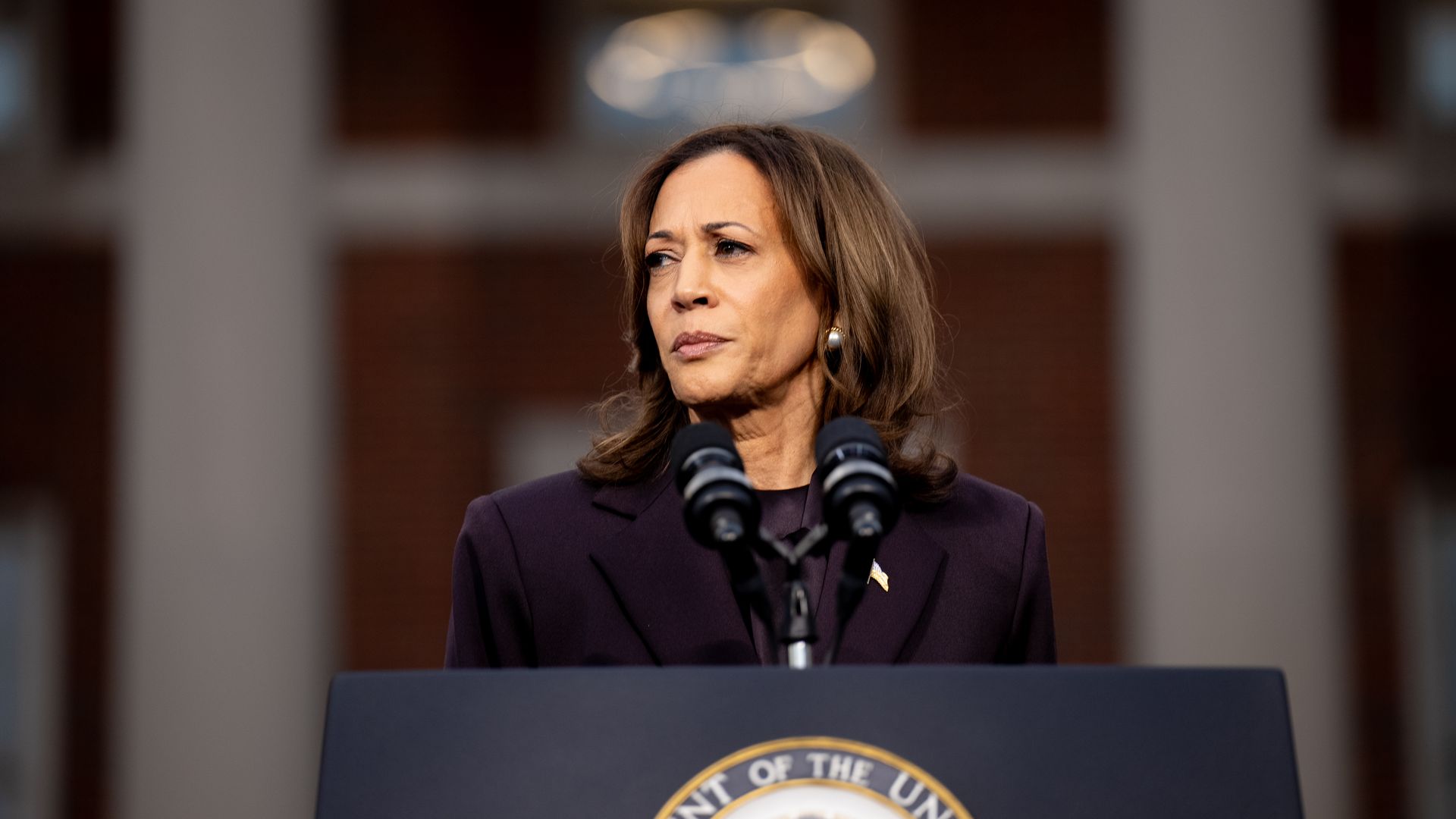
Vice President Harris at Howard University on Nov. 6. Photo: Andrew Harnik/Getty Images
Four top leaders of Vice President Harris' campaign defended their strategy and largely attributed her loss to "headwinds" beyond their control in their first post-election interview on Pod Save America.
Why it matters: Democrats are in soul searching mode, trying to establish why they lost and how to right the ship. The Harris campaign chiefs offered several explanations but none based on mistakes they or their candidate made.
- They defended the overall strategy, from how the campaign spent its billion dollar war chest to the main themes it decided to focus on.
What they're saying: "This political environment sucked. We were dealing with ferocious headwinds, and I think people's instinct was to give the Republicans and even Donald Trump another chance," said Harris campaign senior advisor David Plouffe.
- Plouffe mentioned President Biden's unpopularity, the short campaign timeline, concerns over inflation and the fact that "it's really hard for Democrats to win battleground states" because they need to dominate among moderates to reach 50%.
- "The fact that we got the race to a dead heat was a good thing," Plouffe said, "but we didn't get the breaks we needed on Election Day."
- Campaign chair Jen O'Malley Dillon pointed out that the battleground states the campaign focused on saw a smaller rightward shift than the rest of the country.
- "We needed it to be better than that, and perhaps if we had more time we could have done that," O'Malley Dillon said.
The big picture: Plouffe rejected the idea that the campaign focused too much on the cons of electing President-elect Trump versus the pros of Harris, arguing the campaign was effective boosting her favorability rating.
- Plouffe also rejected the idea that campaigning with former Rep. Liz Cheney and focusing on winning over disillusioned Republicans in the closing weeks hurt turnout among progressives.
- O'Malley Dillon pushed back on the notion Harris hadn't done enough to distance herself from Biden, arguing the campaign "focused from the get-go on how she was different" from both Biden and Trump.
Zoom in: The Harris chiefs dismissed the idea that Harris' position on trans rights or lack of forceful rebuttal to Trump's attack ads on those issues helped influence the election result.
- Harris principal deputy campaign manager Quentin Fulks noted that trans issues are "at the bottom for voters," ranking below the importance of the economy, immigration, crime and inflation.
- "If there's a belief that, if only we had responded to this trans ad with national and huge battleground state ads we would have won, I don't think that's true," Plouffe said.
- However, Fulks acknowledged that Trump's ad claiming "Kamala is for they/them" had successfully painted Harris as "out of touch."
The intrigue: The campaign leaders acknowledged that Trump was more effective than they were at reaching persuadable young men, both organically through social media chatter and through podcast interviews.
- O'Malley Dillon said Harris had been "ready and willing to go on Joe Rogan" but not to leave the campaign trail for a day to tape in-studio, as Rogan requested.
- The interview would have "broken through," but not ultimately changed the outcome, O'Malley Dillon said.
- The campaign reached out to some left-leaning media figures, and popular shows like "Hot Ones," but they wanted to steer clear of politics, O'Malley Dillon said.
- She also argued that the campaign had to deal with the "bulls--t" narrative that Harris was unwilling to do mainstream media interviews.
Reality check: Harris went five weeks before doing her first interview on the campaign.
Friction point: The campaign chiefs stressed that the uniqueness of Trump as a candidate and his ability to reach voters and the challenges this poses for Democrats.
- Stephanie Cutter, a Harris campaign senior adviser, noted deeper conversations are needed about the appeal of Trump's masculine persona and why Democrats are perceived as "squishy."
- Democrats need to "ensure that people in this country see themselves in what we're selling and that we have solutions that make sense to people," O'Malley Dillon stressed.
- Fulks also pointed out that "Republicans don't make Trump apologize" but that Democrats often "punish" members who "step out of line." Republicans "stay in line" because they understand that disunity in the party weakens their candidate, he added.
- "Democrats are eating our own, to a very high degree. And until that stops we're not going to be able to address a lot of things that just need to be said," he added.
The bottom line: "We're losing the culture war and… we are not aligned on where we can be within that," Fulks said. "At the end of the day, we're all Democrats."
